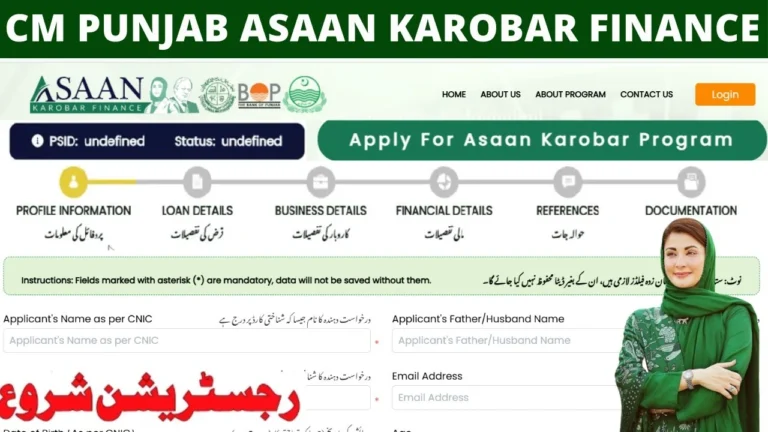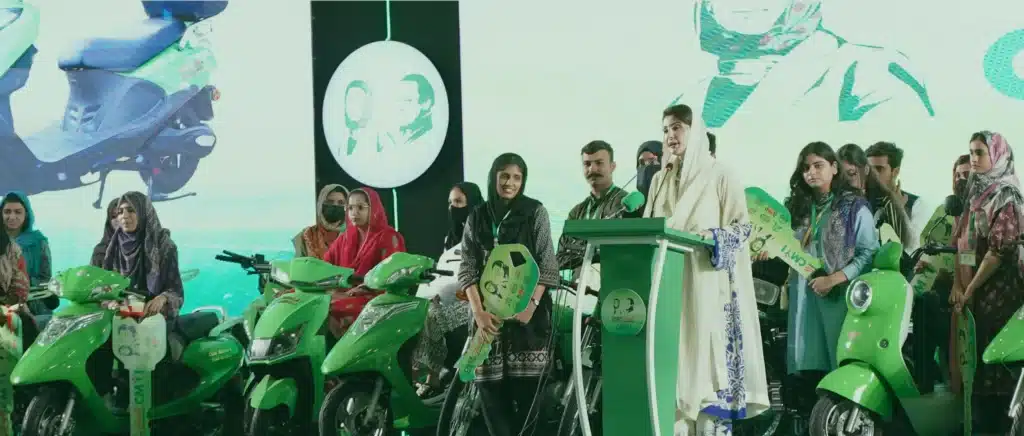
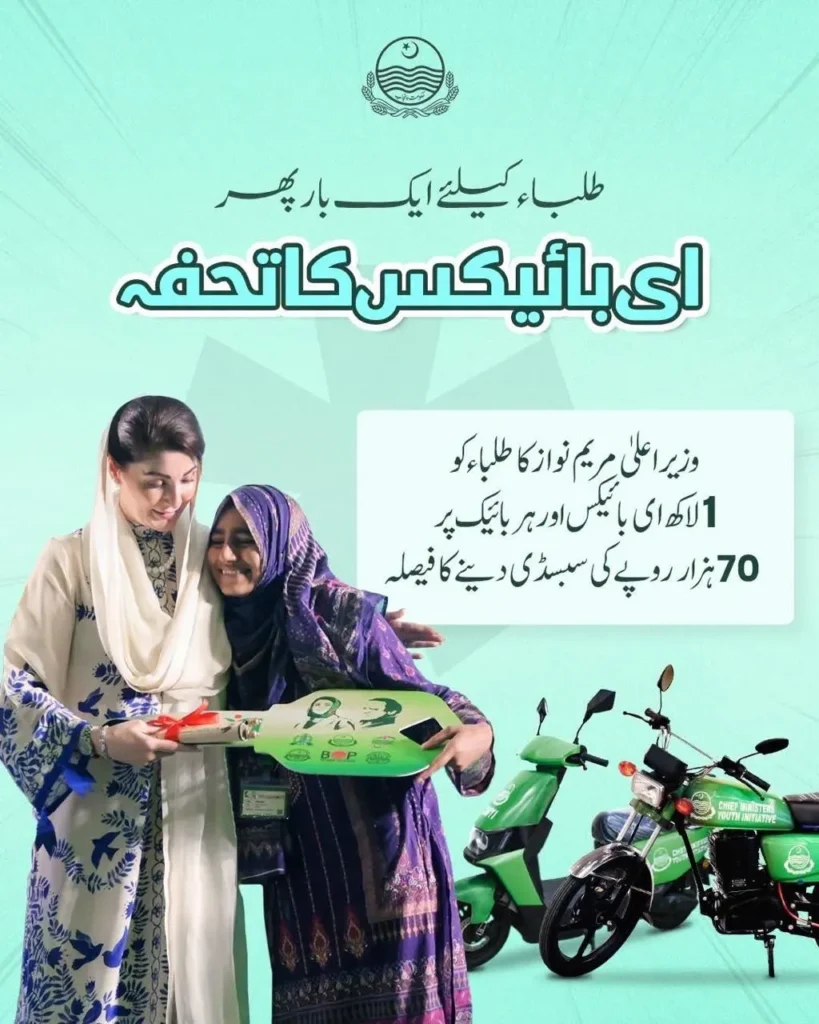
Thousands of students and government employees across Punjab have spent the last few months forwarding one message on WhatsApp: apply now, the CM Punjab Bike Scheme gives a Rs 70,000 subsidy per bike. The number spreads fast because it sounds specific and generous. The problem is that no official Punjab government portal — not punjab.gov.pk, not bikes.punjab.gov.pk, not the Bank of Punjab helpline — publishes that exact figure anywhere in its documentation.
This guide exists to separate the viral number from the verified one, and to walk you through what the scheme actually pays, who actually qualifies, and how the application really works in 2026. Punjab’s bike scheme has gone through two distinct phases since its launch, each with its own subsidy structure, city coverage, and installment plan. Confusing the two — or trusting a screenshot instead of the official portal — is the single biggest reason applicants get disqualified or lose money to fraudulent “registration agents.”
Quick Summary for Busy Readers
| Detail | Verified Information |
|---|---|
| Scheme name | Chief Minister’s e-Bikes / Bikes Scheme, Government of Punjab |
| Official portals | bikes.punjab.gov.pk, ptf.punjab.gov.pk |
| Financing partner | Bank of Punjab (BOP) |
| Phase 1 coverage | 5 cities — Lahore, Faisalabad, Multan, Rawalpindi, Bahawalpur |
| Phase 2 coverage | All 36 districts of Punjab |
| Government-paid equity relief (Phase 1) | Rs 20,000 toward the 30% upfront equity |
| Total subsidy pool (Phase 2) | Approximately Rs 2.6 billion for 27,000+ bikes |
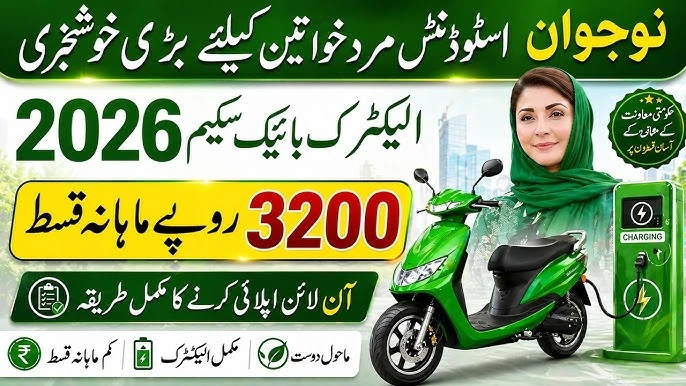
| Reported installment range | Rs 3,600–4,200 per month (bikes); markup fully paid by government |
| “Rs 70,000” figure | Circulating on unofficial blogs; not confirmed on any government page |
Keep this table beside you as you read CM Punjab Announced Bike Scheme With 70000 Subsidy, because the rest of this guide unpacks exactly where each of these numbers comes from.
Background: Why Punjab Built a Subsidized Bike Scheme
Pakistan’s fuel economics changed the daily math for millions of commuters. Petrol prices pushing past Rs 320–450 per litre through 2025 and into 2026 turned a routine campus commute into a real financial burden. A student traveling from a suburb to a university campus can spend Rs 5,000 to Rs 8,000 a month on rickshaws, vans, and buses — a sum that rivals tuition fees at many public institutions. Government school teachers posted in rural tehsils report similarly steep travel costs eating into modest salaries.
Punjab’s provincial government responded with a phased mobility program rather than a one-time cash handout. Phase 1, launched under the Chief Minister’s e-Bikes Scheme, targeted degree college and university students in five major cities and distributed roughly 20,000 bikes — a mix of 1,000 electric units and 19,000 petrol motorcycles — financed through the Bank of Punjab with government-paid equity relief and zero markup.
Phase 2 expanded the ambition considerably. Coverage grew from five cities to all 36 districts of the province, scooties were added specifically for female applicants, and the subsidy pool grew to an estimated Rs 2.6 billion covering more than 27,000 electric and petrol bikes. A parallel initiative — the Bike Petrol Relief Scheme — was also introduced to give existing motorcycle owners a direct fuel discount rather than a new vehicle subsidy, which is a separate program from the bike purchase scheme and should not be confused with it.
This layered rollout, combined with heavy unofficial coverage from SEO-driven “guide” websites, is exactly why conflicting numbers like “Rs 70,000 subsidy” or “Rs 100,000 cash reward” have spread. Several of these figures cannot be traced back to any government notification.
Core Mechanics and Eligibility Criteria
The scheme is not a free giveaway. It is a subsidized installment loan structure where the Punjab government absorbs part of the cost that would otherwise fall on the applicant — either through reduced upfront equity, a government-paid markup, or both.
How the Subsidy Actually Works
For a bike priced around Rs 150,000, a standard bank loan would require the borrower to pay 30% upfront (Rs 45,000) as equity. Under Phase 1 of the scheme, the Punjab government covers Rs 20,000 of that equity on the applicant’s behalf, and pays the entire markup on the remaining loan, meaning the applicant repays only the principal in interest-free installments. That is the verifiable mechanism behind the “subsidy” — not a flat cash figure handed to every applicant.
Who Qualifies
| Category | Phase 1 (Student Scheme) | Phase 2 / Employee Track |
|---|---|---|
| Age | 18 years or older | 18 years or older |
| Status | Regular student, HEC-recognized degree college or university | Active government employee, BPS Grade 1–16 |
| Documents | CNIC, learner’s permit or driving license, admission proof | CNIC, service certificate, department NOC |
| Location | Campus located in one of five original cities (Phase 1) or any of 36 districts (Phase 2) | Punjab domicile required |
| Guarantor | Not typically required for students | Required; installments deducted from salary |
| Bike choice | Either electric or petrol, not both | Electric or petrol, subject to quota |
| Selection method | Computerized e-balloting by domicile district | Balloting plus departmental verification |
A few conditions apply across both tracks. An applicant can hold only one type of bike under the scheme — not one electric and one petrol unit simultaneously. Siblings can both apply, but if more than one sibling from the same household is selected in balloting, only one bike is released per family after financial scrutiny. Female applicants receive an equal quota at the divisional level, plus additional proportional representation across the rest of Punjab, and Phase 2 formalized separate quotas that reportedly reserve roughly a quarter of allocations for women.
Where applications exceed the available quota in any district, the Bank of Punjab and the Punjab Information Technology Board run an electronic ballot rather than a first-come, first-served allocation. This detail matters because plenty of unofficial sites imply speed of application guarantees a bike — it does not. Balloting is randomized within eligible pools.
Step-by-Step Application Process
Follow this sequence exactly. Skipping steps, or applying through a third-party “agent” website instead of the official portal, is the most common reason applications get rejected or flagged as fraudulent.
- Confirm your track first. Determine whether you qualify as a student applicant (Phase 1/2 e-Bikes track) or as a government employee (BPS 1–16 track), since the documents and portals differ.
- Gather documents before opening the portal. You will need a clear scan of your CNIC (front and back), your driving license or learner’s permit, a recent passport-size photograph, and either your student card/admission letter or your employment/service certificate depending on your track.
- Visit the correct official portal only. Students and general applicants use
bikes.punjab.gov.pk; some listings direct employees toptf.punjab.gov.pk. Do not enter CNIC or payment details on any third-party domain that merely resembles the government site. - Create your applicant profile. Register using a mobile number that is registered on your own CNIC, since verification codes and selection notices are sent by SMS.
- Select your bike type. Choose electric or petrol based on your commute distance — electric units suit short daily campus trips, while petrol bikes remain more practical for longer or rural routes with limited charging infrastructure.
- Upload verification documents. Attach your CNIC, license, and academic or employment proof. Blurred or mismatched scans are consistently cited as the top cause of application rejection.
- Submit and note your application reference number. Keep a screenshot; this number is required for any status inquiry through the Bank of Punjab helpline.
- Wait for institutional or departmental verification. For students, your college or university confirms your bonafide status. For employees, your department issues an NOC before your file proceeds.
- Track the electronic balloting date. Balloting is conducted district-wise by the Punjab Information Technology Board. Results are published on the official portal and sent via SMS — never through a phone call demanding payment to “confirm” your selection.
- Complete post-ballot financial scrutiny. If selected, the Bank of Punjab reviews your (or your guarantor’s) financial standing before releasing the bike and setting your installment schedule.
Benefits, Challenges, and Practical Solutions
Genuine benefits are considerable for the target population. The zero-markup structure means applicants repay only the principal, which is rare in Pakistan’s consumer lending market. Reduced upfront equity opens bike ownership to households that could not otherwise afford a 30% down payment. Electric bike options cut fuel dependency entirely, and reserved quotas give women a realistic path to independent transport in a market where personal mobility options remain limited.
The real pitfalls center on information quality, not the scheme’s mechanics. Dozens of non-government websites publish contradictory subsidy figures, invented “cash reward” programs, and fabricated success stories designed purely to capture search traffic and ad revenue. Some list fake helplines or ask users to pay “processing fees” before applying — the official scheme never charges an application fee. Balloting also means guaranteed disappointment for a large share of applicants in high-demand districts, since demand from over 800,000 eligible students far outstrips available quotas in any single phase.
Workarounds that actually help: Bookmark the official domains directly rather than searching each time, since search results are frequently dominated by unofficial aggregator sites. Call the Bank of Punjab helpline (042-111-333-267) to confirm any number, date, or eligibility rule you read elsewhere before acting on it. If you are not selected in one district’s ballot, monitor announcements for the next phase rather than paying anyone who claims they can “guarantee” a slot.
Future Outlook: What Comes Next for Punjab’s Bike Scheme
Phase 2’s district-wide expansion signals that the provincial government intends to treat subsidized mobility as a recurring policy tool rather than a one-off relief measure. Expect continued phased rollouts tied to provincial budget cycles, alongside further quota adjustments for rural applicants and persons with disabilities. The parallel federal New Energy Vehicle Policy (2025–30) suggests electric bike allocations will keep growing relative to petrol units as charging infrastructure expands in major cities. Other provinces are watching closely, and similar student-mobility subsidy programs in Sindh or Khyber Pakhtunkhwa would not be surprising within the next one to two years if Punjab’s balloting and repayment data show low default rates.
The Bottom Line
Punjab’s bike scheme delivers real, bank-verified relief through reduced equity payments and a fully government-covered markup — not through a flat Rs 70,000 handout that no official source confirms. Treat that number, and any similar figure you encounter outside punjab.gov.pk or bikes.punjab.gov.pk, as unverified until the portal itself states it. Apply through the correct channel, keep your documents ready, and let the balloting process run its course rather than trusting anyone who promises a shortcut.