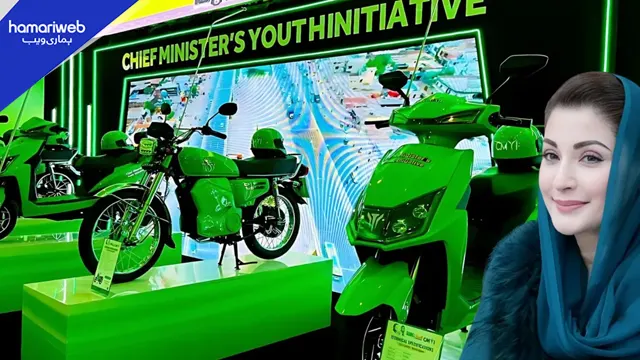
Daily commuting in Punjab has become a financial burden for millions of students and young professionals, and the provincial government’s response is the Chief Minister’s Bike Scheme, now entering a new phase in 2026. Chief Minister Maryam Nawaz Sharif’s administration first rolled out subsidized electric and petrol bikes in five major cities, and officials have since confirmed plans to widen the program’s reach across additional districts. If you’re trying to separate verified government policy from the noise of unofficial blogs promising instant approval, this guide breaks down exactly what’s confirmed, what’s pending, and how the real application process works.
The scheme matters because it tackles two problems at once: the rising cost of getting to campus or work, and the province’s push toward electric mobility. Bank of Punjab handles the financing, the Punjab Information Technology Board runs the digital balloting, and the Punjab government absorbs a meaningful share of the loan markup so applicants aren’t paying market interest rates on a motorcycle.
| Quick Facts | Details |
|---|---|
| Administered by | Government of the Punjab, in partnership with Bank of Punjab |
| Phase 1 e-bikes distributed | 1,000 (700 male, 300 female) |
| Phase 1 petrol bikes distributed | 19,000 (11,676 male, 7,324 female) |
| Initial eligible cities | Lahore, Faisalabad, Multan, Rawalpindi, Bahawalpur |
| Minimum age | 18 years |
| Financing cap | Up to Rs. 250,000 (e-bike) / Rs. 150,000 (petrol bike) |
| Official portal | bikes.punjab.gov.pk |
| Helpline | 042-111-333-267 |
Background: Why Punjab Launched a Bike Subsidy Program
Pakistan’s transport economics shifted sharply over the past several years. Fuel costs climbed, public transport in second-tier cities stayed inconsistent, and students living outside university towns found themselves spending a meaningful slice of their monthly budget just getting to class. Motorcycle ownership has long been the default workaround for middle and lower-income households in Punjab, but even a modest 70cc to 125cc bike now requires either a large upfront cash payment or a commercial loan carrying interest rates that put ownership out of reach for many young people.
The provincial government framed its response around two policy goals: easing the commuting burden on students and government employees, and accelerating adoption of electric vehicles as part of Punjab’s broader environmental commitments. The Chief Minister’s e-Bikes Scheme launched its first phase with degree college and university students as the priority group, reasoning that young commuters represent the largest share of daily, predictable transit demand and stand to benefit most from a structured installment plan.
Phase 1 concentrated resources in five cities with the largest student populations and the most HEC-recognized institutions: Lahore, Faisalabad, Multan, Rawalpindi, and Bahawalpur. The Punjab government’s own portal confirms the program distributed 1,000 electric bikes and 19,000 petrol bikes in this opening round, backed by an estimated Rs. 1 billion in combined government subsidy covering down-payment relief and full markup on the Bank of Punjab loans. With that pilot phase complete, officials have signaled that a wider rollout is in motion, though as of this writing the Punjab government has not published a finalized public timeline, district list, or total bike count for the expanded phase on its official channels.
Eligibility Criteria and Core Mechanics: Who Qualifies and How Financing Works
The Chief Minister Of Punjab launced Bike Scheme 2026, isn’t open to every Punjab resident with a CNIC. Eligibility is built around verifiable enrollment status, age, and licensing, with financing structured through a fixed equity-and-installment model rather than a free giveaway.
Who Can Apply
Under the confirmed Phase 1 framework, an applicant must:
- Be at least 18 years old at the time of application
- Be a regular student of a degree college or university recognized by the Higher Education Commission (HEC), verified directly by the institution
- Hold a valid motorcycle learner’s permit or driving license
- Hold Punjab domicile for petrol bike eligibility, distributed district-wise based on Population Census 2023 figures
- For e-bikes specifically, be enrolled at a campus physically located in one of the eligible cities — students with non-Punjab domicile may still apply for e-bikes if their campus is in one of those cities
Students enrolled in distance-learning programs, specifically Virtual University and Allama Iqbal Open University, were not eligible under Phase 1 because the scheme requires regular, on-campus attendance that the issuing institution can verify.
How the Financing Actually Works
This is the part most unofficial guides get wrong. The scheme is not a free bike giveaway — it’s a subsidized installment loan through Bank of Punjab, structured to meet State Bank of Pakistan equity requirements.
| Financing Component | E-Bike | Petrol Bike |
|---|---|---|
| Maximum financed price | Rs. 250,000 | Rs. 150,000 |
| Standard SBP equity requirement | 30% of bike price | 30% of bike price |
| Government equity relief | Rs. 20,000 paid on applicant’s behalf | Rs. 20,000 paid on applicant’s behalf |
| Loan markup/interest | Fully covered by Punjab government | Fully covered by Punjab government |
| Bike selection | Limited to options listed on the web portal | Limited to options listed on the web portal |
| Cost above the cap | Paid upfront by applicant after balloting success | Paid upfront by applicant after balloting success |
In practical terms: if you select a petrol bike priced at Rs. 150,000, the standard 30% equity requirement would be Rs. 45,000. The Punjab government covers Rs. 20,000 of that, leaving you responsible for Rs. 25,000 as upfront equity, plus your scheduled monthly installments through Bank of Punjab — with zero interest charged on the remaining balance. Choosing a bike above the financing cap means covering that excess cost yourself, in full, before BOP releases the bike.
Step-by-Step Process: How to Apply for the Punjab Bike Scheme
The application runs entirely online through the official Punjab government portal. Treat any site asking for payment before balloting results, or any WhatsApp link promising “guaranteed selection,” as a scam — the real process never works that way.
Step 1: Confirm your eligibility before registering. Check your age, domicile, enrollment status, and whether you hold a valid learner’s permit or license. Applying without meeting baseline criteria wastes your slot and won’t survive verification.
Step 2: Visit the official portal. Go to bikes.punjab.gov.pk directly rather than clicking links shared on social media. Bookmark it, since this is also where you’ll track your application status later.
Step 3: Create your account. Register using your CNIC or B-Form number, an active mobile number, and a working email address. You’ll receive an OTP to verify your phone number — keep that number active throughout the entire process, since SMS is the primary notification channel for balloting results.
Step 4: Complete the application form accurately. Enter your personal details, current address, and academic information exactly as they appear on your official documents. Your institution will independently verify your “regular student” status, so any mismatch between what you submit and your enrollment records can disqualify your application.
Step 5: Select your bike category. Choose between an electric bike or petrol bike, then pick a specific model from the options available on the portal. Remember the financing caps — Rs. 250,000 for e-bikes, Rs. 150,000 for petrol bikes — when making this choice.
Step 6: Upload required documents. Typically this includes your CNIC or B-Form, valid student ID or enrollment proof, a recent passport-size photograph, and your learner’s permit or driving license. Scan everything clearly; blurred or incomplete uploads are a leading cause of rejection.
Step 7: Submit and save your tracking reference. Once submitted, you’ll receive a confirmation with a unique application ID. Save this immediately — you’ll need it to check your status later.
Step 8: Wait for e-balloting. If applications exceed the available quota in your category and district, the Punjab Information Technology Board conducts a computerized, transparent draw. This isn’t first-come-first-served; submitting early doesn’t improve your odds once balloting opens, though it does protect you from missing the registration deadline entirely.
Step 9: Complete Bank of Punjab verification. Successful applicants move to financial verification with BOP, which includes confirming your documents and, in many cases, a physical check tied to any guarantor requirement.
Step 10: Pay your upfront equity and collect your bike. After verification clears, you pay your portion of the equity (the amount remaining after government relief) and finalize loan documents. The bike then transfers to you, while Bank of Punjab retains ownership rights until your installment plan is fully paid off.
Benefits, Challenges, and Practical Solutions
What the Scheme Gets Right
The core appeal is straightforward: a structured path to bike ownership without the burden of commercial loan interest. Students who previously spent a significant chunk of their monthly allowance on rickshaws, vans, or unreliable bus routes gain predictable transportation and meaningfully more free time. Female applicants benefit from dedicated gender quotas at the divisional level, addressing a real mobility gap for women commuting to campuses or workplaces. Electric bike selectors also cut their dependence on volatile fuel prices almost entirely, since charging costs run far below petrol expenses for typical urban commuting distances.
Where Applicants Run Into Trouble
The most common rejection points aren’t mysterious, but they catch people off guard. Mismatched personal details between the application and official documents trigger automatic flags during institutional verification. Applicants who choose Virtual University or AIOU enrollment discover, often too late, that distance-learning programs don’t qualify under the regular-attendance requirement. Document quality is a recurring problem — blurry CNIC scans or expired learner’s permits stall applications before they ever reach the balloting stage. And because the scheme runs on a fixed quota, more eligible applicants exist than available bikes in any given phase, meaning balloting outcomes are genuinely competitive rather than guaranteed.
Practical Fixes
Gather every document before you start the online form rather than scrambling mid-application. Confirm your learner’s permit or license hasn’t expired and won’t expire during the verification window. Double-check that your domicile and current enrollment status match exactly what your institution has on file. If a guarantor is required for your category, choose someone with an active, verifiable address and ideally an existing Bank of Punjab relationship, since this measurably speeds up physical verification. Most importantly, apply only through bikes.punjab.gov.pk and ignore any third-party site requesting payment before official balloting confirmation.
Future Outlook: What Comes Next for the Scheme
Punjab’s government has signaled intent to widen the program well beyond the original five cities, with officials referencing expansion to additional districts and new applicant categories including government employees and teachers in separate, related initiatives. Whether this expanded phase scales to the tens of thousands of additional bikes some reports suggest remains unconfirmed pending an official announcement with finalized numbers and dates. Given Punjab’s continued push on electric vehicle adoption and youth mobility programs, expect the province to keep prioritizing e-bikes within any new allocation, alongside continued petrol bike availability for districts where charging infrastructure remains limited. Applicants should treat bikes.punjab.gov.pk as the only reliable source for confirmed dates rather than third-party predictions.
Final Word
Owning reliable transportation shouldn’t require choosing between tuition fees and a commute that eats half your stipend. The Punjab Bike Scheme addresses that tradeoff directly, backing a genuine subsidy with a transparent, government-run verification process rather than empty promises. Success here comes down to preparation: confirm your eligibility honestly, gather clean documents in advance, and apply exclusively through the official portal. The balloting system means selection isn’t guaranteed for everyone who applies, but every eligible applicant who follows the process correctly gets a fair, traceable shot at one of the available bikes.

One Comment