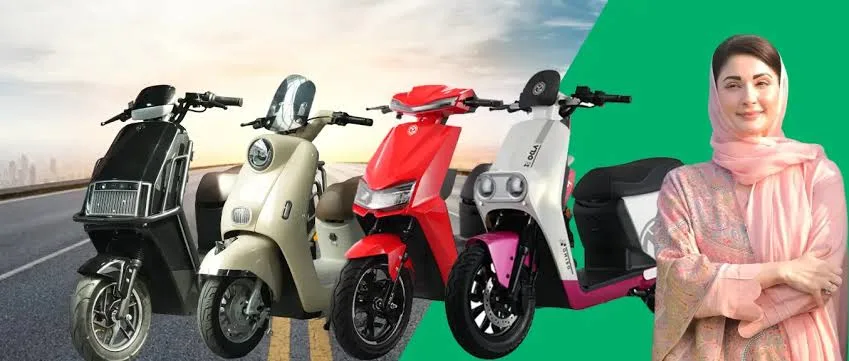
Pakistan has seen dozens of government scheme announcements cycle through social media with nothing behind them. The CM Punjab Bike Scheme is not one of them. Phase 1 is completed — 20,000 bikes were physically distributed. The teacher portal under Phase 2 is open right now. But for students waiting on the next registration window, the honest answer in July 2026 is that the specific opening date has not been officially announced yet, and anyone claiming otherwise is guessing.
This guide When It Starts Registration CM Punjab Bike Scheme 2026, lays out exactly what is live, what is pending, what each category pays, and how to prepare your documents and guarantor before the window opens — because the applications that fail almost always fail at post-balloting BOP verification, not at registration.
Quick Reference Box
| Detail | Current Status |
|---|---|
| Official Student Portal | bikes.punjab.gov.pk |
| Official Teacher Portal | ptf.punjab.gov.pk (Open — April 2026 onwards) |
| Govt Employee Scheme | Approved April 23, 2026 — portal dates to be announced |
| Phase 1 Status | Completed: 19,000 petrol + 1,000 electric bikes distributed |
| Phase 2 Coverage | All 36 districts of Punjab |
| Total Bikes (Phase 2) | 27,000+ |
| Government Subsidy | Rs. 2.6 billion |
| Interest Rate | 0% on all categories |
| Student Installment | Rs. 2,000–4,000/month for 24 months |
| Teacher Installment | Rs. 3,600–4,200/month |
| BOP Helpline | 042-111-333-267 |
Background: From 5 Cities to All 36 Districts
The CM Punjab E-Bike Scheme launched under Chief Minister Maryam Nawaz Sharif as a direct answer to one of Punjab’s most visible and measurable student problems: the cost of getting to campus. A typical student spending Rs. 5,000 to Rs. 8,000 every month on rickshaws, wagon fares, and vans was effectively burning through a significant portion of a household’s disposable income before opening a textbook. When petrol crossed Rs. 320 per litre, the affordability gap only widened.
Phase 1 ran as a controlled pilot: 20,000 bikes — 19,000 petrol motorcycles and 1,000 electric bikes — were distributed to students enrolled in HEC-recognized institutions in five cities only: Lahore, Faisalabad, Multan, Rawalpindi, and Bahawalpur. Financing ran through the Bank of Punjab (BOP) at 0% interest, with the government picking up the full markup subsidy. A PITB computerized e-balloting system handled selection, not recommendations or committee lists.
The expansion to Phase 2 changed the program structurally, not just numerically. Coverage jumped from 5 cities to all 36 districts of Punjab. Two entirely new applicant categories entered the scheme: government school teachers via the Punjab Teachers Foundation (PTF) portal, and government employees in BPS Grades 1–16, approved at the federal level by PM Shehbaz Sharif on April 23, 2026. Scooties were added specifically for female students. The total bike allocation grew to 27,000+, backed by a Rs. 2.6 billion subsidy package.
Core Mechanics: Three Separate Categories, Three Separate Systems
The scheme’s biggest source of confusion — and a genuine gap in most informal blog coverage — is that it isn’t one program with one portal. It is three category-specific schemes running in parallel.
Full Eligibility Comparison
When It Starts Registration CM Punjab Bike Scheme 2026
| Criteria | Students | Teachers (PTF) | Govt Employees (BPS 1–16) |
|---|---|---|---|
| Age | 18–35 years | Up to 55 years | Active service age |
| Portal | bikes.punjab.gov.pk | ptf.punjab.gov.pk | pave.gov.pk (to be confirmed) |
| Registration Status | Next window not yet announced | Open — April 2026 onwards | Approved; portal dates TBA |
| Installment | Rs. 2,000–4,000/month | Rs. 3,600–4,200/month | Deducted from salary |
| Subsidy Structure | Full markup + Rs. 20,000 down payment contribution | 30–40% of bike cost | Full markup |
| Duration | 24 months | 2–3 years | TBA |
| Interest Rate | 0% | 0% | 0% |
| Key Requirement | HEC-enrolled + driving license/permit | PESS number + school posting | Service certificate + dept NOC |
| Guarantor Required | Yes (clean ECIB record) | Installments via salary | Yes |
Electric vs. Petrol — The Decision That Matters
This is not just a preference question; it is a financial calculation with a wrong answer for some applicants:
- Electric bikes: Rs. 2,000–3,000/month, maximum bike price Rs. 2,50,000, monthly energy cost as low as Rs. 30–50 per charge. Right choice if daily commute is under 25 km inside a city with reliable home power supply.
- Petrol bikes: Rs. 3,000–4,000/month, maximum bike price Rs. 1,50,000, monthly fuel cost Rs. 3,000–6,000 depending on distance. Right choice for rural applicants and anyone traveling over 25 km daily.
Choosing electric because the installment is lower, without considering whether home charging is even possible, is the scenario that leaves people stuck with a bike they cannot use — it happens more than the scheme’s promotional material acknowledges.
Step-by-Step: How to Register When the Window Opens
Step 1: Confirm Your Category and Portal
Before anything else, identify which portal applies to you:
- Students → bikes.punjab.gov.pk (next window date TBD — bookmark and check regularly)
- Government teachers → ptf.punjab.gov.pk (currently accepting applications)
- BPS 1–16 government employees → pave.gov.pk or Punjab portal (dates to be announced)
Step 2: Get Your Driving License or Learner’s Permit First
This is the most common document people don’t have when registration suddenly opens. A valid motorcycle driving license or learner’s permit is mandatory for all three categories — male and female applicants alike. This is not waivable. Get it from your nearest Driving License Authority before anything else.
Step 3: Identify and Prepare Your Guarantor
The guarantor (co-borrower) is the single biggest determinant of whether you actually receive a bike after winning the ballot. BOP checks:
- ECIB credit report — any defaulted loan or missed payment automatically disqualifies
- Physical home visit — a BOP representative visits the guarantor’s listed address; the guarantor must be present and the address must match their utility bill
- Debt Burden Ratio (DBR) — the guarantor’s existing loan payments must not exceed 50% of their monthly income
Ask your intended guarantor to pull their own ECIB credit history before registration. A clean guarantor is worth more than any other preparation step.
Step 4: Gather Documents Before the Portal Opens
For Students:
- CNIC (front and back, clear scan)
- Student ID card with current academic year
- Enrollment certificate from an HEC-recognized institution
- Punjab domicile certificate
- Motorcycle driving license or learner’s permit
- 2 recent passport-size photographs (white background)
For Teachers (additional):
- PESS number and salary slip (most recent month)
- Service certificate from the School Education Department
- Department posting details
For Guarantor:
- CNIC, utility bill (within 3 months), income proof, ECIB report, 2 passport photos
Do not upload blurry scans. BOP’s own Phase 1 rejection data points to unclear document images as the most frequent initial filter-out reason.
Step 5: Register on the Correct Portal
- Visit the portal for your category
- Create an account using your CNIC and active mobile number (must be registered in your own name)
- Receive and enter the OTP sent by SMS
- Complete personal information, institution/posting details, bike preference, and guarantor section
- Upload all documents
- Submit and save your application reference number
Step 6: Track and Wait for PITB Balloting
Post-submission, the application enters BOP’s verification queue. After that, PITB runs the computerized random draw. Quotas are maintained for:
- Male and female students (separate allocations — Phase 1: 700 electric for males, 300 for females)
- Disabled applicants — 5% of total quota
- Rural applicants — 30% of total quota
- Minorities — separate reserved allocation
Results arrive by SMS and email to your registered contacts.
Step 7: Prepare for BOP Post-Ballot Verification — This Is Where Most Fail
Winning the ballot doesn’t mean receiving a bike. BOP then runs the full financial review (ECIB, home visit, DBR). Alert your guarantor in advance. Ensure your guarantor’s address, phone number, and availability are all accurate.
Benefits, Challenges, and Practical Solutions
What the Scheme Gets Right
- Genuinely zero-interest financing — the government absorbs the full markup, making this structurally unlike any commercial bank product
- PITB computerized balloting removes the political influence layer that has historically distorted government scheme distributions
- Three-category approach — unlike Phase 1’s student-only design, Phase 2 explicitly opens access for teachers and employees, two groups with stable incomes but real commuting costs
- Geographic expansion to all 36 districts closes the mobility gap that made Phase 1 meaningless for anyone outside the original five cities
Where Friction Is Real
- The student Phase 2 registration window has passed (the last announced window closed), and a new opening date has not been published — the gap between phases leaves eligible students in genuine uncertainty
- BOP post-ballot rejection rates are significant — many applicants who win the computerized ballot still don’t receive bikes because guarantor verification fails; the scheme’s 0% interest promise only delivers if that BOP step clears
- VU and AIOU students were excluded in Phase 1 due to the requirement for regular on-campus enrollment; Phase 2 updates to this position have not been definitively confirmed
- Only one bike per family even if multiple eligible members apply and win balloting separately — a rule that reduces household access for larger families where multiple members commute
What Actually Maximizes Your Chances
- Get your guarantor to run their ECIB report now, not the day before submitting
- Get your learner’s permit immediately if you don’t already have a license
- Set an alert or bookmark bikes.punjab.gov.pk and check it every week — new windows typically open without extended public notice
- If you are a teacher, don’t wait for the student window — ptf.punjab.gov.pk is currently accepting applications now
Future Outlook: What Phase 3 and Beyond Look Like
With 27,000+ bikes planned for Phase 2 and demand vastly exceeding supply, a Phase 3 expansion targeting a broader student batch is expected — though no official announcement has confirmed a timeline as of this writing. The teacher scheme’s Phase 1 target of 5,000 educators is expected to scale to 10,000+ in later phases, with female teachers and rural postings retaining priority. The parallel federal PAVE scheme (pave.gov.pk), approved April 23, 2026, will bring BPS 1–16 government employees into the same zero-interest motorcycle financing model — and students in Punjab can simultaneously apply to both, since they run through different portals and different budgets.
Final Word
The CM Punjab Bike Scheme’s credibility rests on one thing the rhetoric alone wouldn’t guarantee: bikes that actually reached 20,000 students physically during Phase 1. Phase 2 has now extended that track record to teachers and is rolling out across every Punjab district, not just the original five cities. For students waiting on the next registration opening, the productive move right now isn’t refreshing unofficial blogs for a date — it’s getting a learner’s permit, checking a guarantor’s credit, and bookmarking bikes.punjab.gov.pk. The applications that succeed are the ones that were ready before the window opened.

One Comment