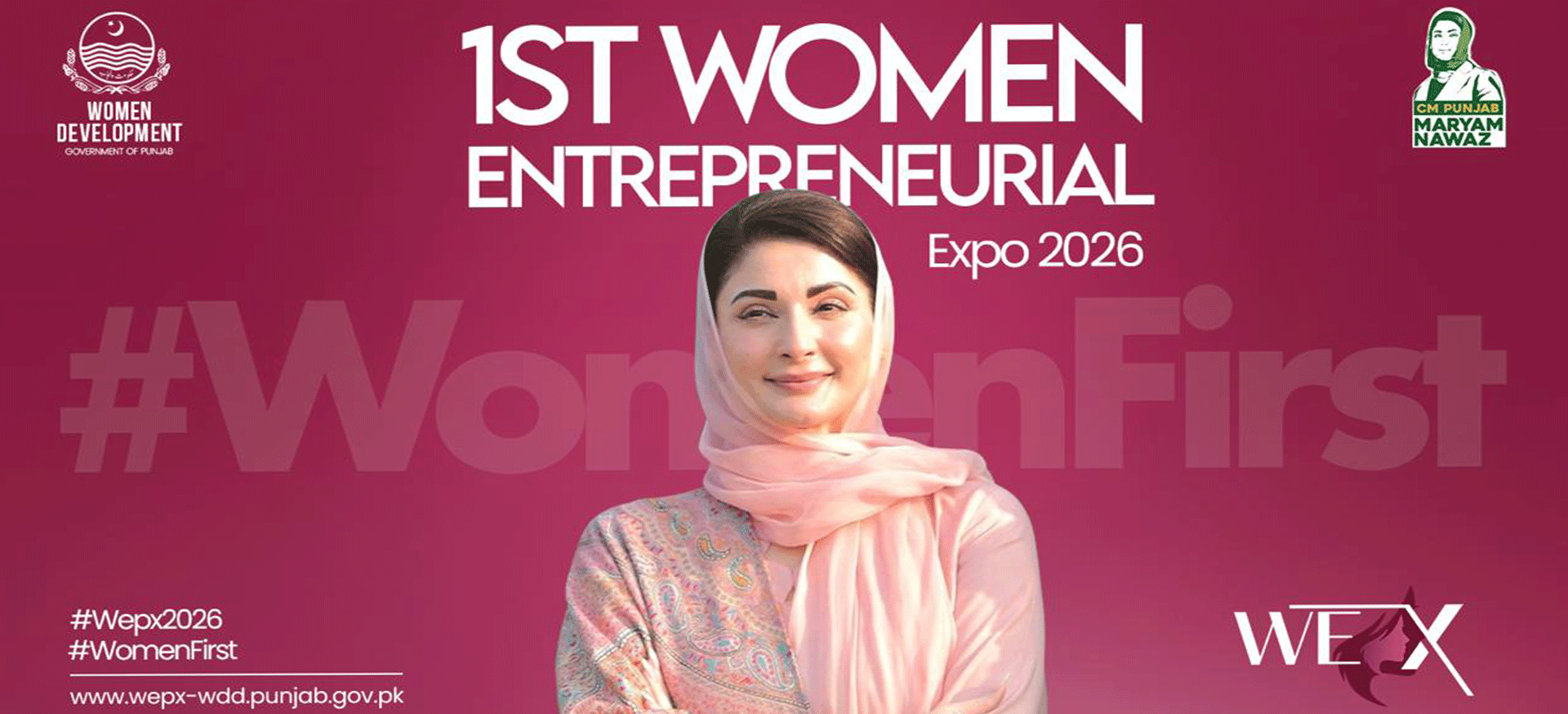
Thousands of women across Punjab are searching for a legitimate way to learn paid digital skills without leaving home, paying tuition, or owning a laptop. The Women Development Department (WDD) Punjab, working with the Punjab Skills Development Fund (PSDF), has answered that need with a free six-month online training initiative aimed specifically at women in the province.
This guide breaks down exactly what the program offers, who qualifies, how the online application actually works, and what to expect once training begins. Every detail below is drawn from the official WDD Punjab portal, not recycled from secondary blogs repeating unverified numbers — a distinction that matters given how much conflicting information currently circulates about Punjab’s various skills schemes.
Quick Summary
| Detail | Information |
|---|---|
| Program Name | Online Digital Skills Development Program |
| Sponsor / Executor | Women Development Department (WDD) Punjab / PSDF |
| Eligibility | Women only, Punjab domicile or valid CNIC |
| Duration | 6 months, online classes only |
| Education Requirement | Minimum 16 years of education or equivalent |
| Stipend | PKR 5,000 per month |
| Extra Support | Free laptop, internet device, 6-month internet package |
| Official Portal | wdd.punjab.gov.pk/DigitalTraining |
If your goal is simply to register correctly on the first attempt, the steps further down cover that in full. If you want to understand why this program exists and how it fits into Punjab’s broader push toward a digital workforce, keep reading.
Background: Why Punjab Is Investing in Women’s Digital Skills
Punjab’s labor market has a persistent, well-documented gap: women make up roughly half the province’s population but a much smaller share of its paid workforce, particularly outside agriculture and informal sectors. Cultural restrictions on mobility, household responsibilities, and limited access to formal-sector jobs near home have kept millions of educated women out of paid work entirely.
Remote, internet-based work changes that equation. A woman doesn’t need to commute to an office to do content writing, social media management, or e-commerce support — she needs a device, a connection, and a skill someone will pay for. That’s the gap this program is built to close.
The initiative sits under CM Punjab Digital Skills Program 2026 broader SEHR (Skill Enhancement through Home Reach) framework, a project explicitly designed to bring employable training to women in remote, semi-urban, and urban areas without requiring them to travel to a training center. SEHR also runs parallel tracks in beauty services and hospitality, but the digital component is the one built specifically around online, work-from-home earning potential.
This matters in the context of Pakistan’s broader economy. Freelancing and remote digital work have grown into a genuine export-earning sector for the country, with platforms like Upwork and Fiverr drawing in foreign currency that doesn’t depend on traditional manufacturing or agricultural exports. The Punjab government’s logic is straightforward: every woman trained to work in this sector is one more household earning income that wasn’t accessible to her before, and one more contributor to a national digital economy the government has repeatedly identified as a growth priority.
What separates this initiative from a typical short course is the layered support system. A free laptop and internet package remove the two most common barriers preventing women — especially in rural households — from completing online training: lack of hardware and lack of connectivity. The monthly stipend, meanwhile, acknowledges that unpaid training time has a real opportunity cost for women managing households or informal income on the side.
Eligibility Criteria and Program Structure
The program’s eligibility rules are built around two priorities: making sure participants can realistically complete a six-month, internet-based course, and ensuring fair geographic and age-based access across the province.
Who Can Apply
- Gender: Open exclusively to women
- Residency: Valid CNIC or Punjab domicile required
- Education: Minimum 16 years of education (a bachelor’s degree or equivalent) or its recognized equivalent
- Location: Both rural and urban women across Punjab are eligible
Seat Distribution
The program does not run on a pure first-come, first-served basis. Seats are allocated using a quota system designed to favor rural participation while still reserving meaningful space for older applicants who are frequently excluded from youth-focused training schemes.
| Category | Seat Share | Age-Based Sub-Quota |
|---|---|---|
| Rural Women | ~70% of total seats | 10% reserved for women above 30 years |
| Urban Women | ~30% of total seats | 10% reserved for women above 30 years |
This structure means a 32-year-old woman from a rural tehsil and a 28-year-old woman from Lahore are competing in two entirely different applicant pools, not against each other. It’s worth understanding this before assuming rejection means you weren’t qualified — quota math affects outcomes as much as individual merit does.
What the Curriculum Covers
Training is delivered entirely online and structured around five core modules:
- English Language — communication skills needed for client-facing freelance work
- Digital Skills — core technical training (the specific tool stack varies by batch and is detailed on the registration portal)
- Content Creation — writing, design, or media skills suited to online platforms
- E-Commerce — running or supporting online stores and digital sales
- Soft Skills — professionalism, communication, and workplace conduct for remote work environments
The course runs for six months at roughly 480 hours of instruction, structured around live, instructor-led classes rather than pre-recorded video — a meaningful distinction, since live classes mean fixed schedules and real attendance accountability rather than self-paced, easy-to-abandon content.
Step-by-Step Online Registration Process
Follow this sequence precisely. Skipping steps or submitting incomplete documentation is the single most common reason qualified applicants get rejected.
Step 1: Confirm your eligibility first. Before opening any form, verify you meet all three core requirements: female applicant, valid CNIC or Punjab domicile, and minimum 16 years of education. Applying without meeting these disqualifies you regardless of how well you fill out the rest of the form.
Step 2: Go to the official WDD portal directly. Open wdd.punjab.gov.pk and navigate to the Digital Training registration page, rather than clicking links shared on Facebook or WhatsApp. Government scheme names get cloned by fake pages constantly, and a misdirected click can expose your CNIC data to a phishing operation.
Step 3: Prepare your documents before you start the form. Have ready: a clear scan or photo of your CNIC, your highest educational certificate or degree, and a working mobile number and email address you check regularly. Selection updates, including interview scheduling, are sent through these contacts — WDD has previously notified shortlisted applicants of interview dates directly via SMS and email, so an inactive number means a missed opportunity.
Step 4: Fill in personal and educational details accurately. Enter your name exactly as it appears on your CNIC. Mismatches between your form and your ID document are a common cause of later disqualification during verification.
Step 5: Select your district and confirm rural or urban classification. Since seats are split by this classification, get it right — your residential address on your CNIC or domicile typically determines which quota you fall under.
Step 6: Upload required documents in the requested format. Most government portals require PDF or JPEG files under a specific size limit. Compress oversized scans beforehand rather than letting the upload fail silently.
Step 7: Review every field before submitting. Once submitted, most portals don’t allow edits. Double-check your CNIC number, contact details, and district selection specifically.
Step 8: Submit and save your confirmation. Screenshot or save any confirmation message, reference number, or acknowledgment email. You’ll need this if you have to follow up about your application status later.
Step 9: Monitor your phone and email for shortlisting updates. Selection has historically involved a screening stage, and in at least one cycle, an interview stage with specific scheduled dates communicated directly to applicants. Don’t assume silence means rejection — check spam folders too.
Benefits, Challenges, and Practical Solutions
What the Program Gets Right
- Removes the hardware barrier. A free laptop and internet device address the exact obstacles that keep many capable women out of remote work entirely.
- Pays you to learn. The PKR 5,000 monthly stipend, while modest, offsets the real cost of dedicating six months to unpaid training instead of informal income work.
- Targets a real, growing job market. Digital marketing, content creation, and e-commerce support are categories with consistent freelance demand, unlike training in oversaturated or declining trade skills.
- Built-in rural access. The 70% rural quota is a deliberate corrective to programs that historically cluster benefits in major cities.
Where It Gets Difficult
- High demand, limited seats. Provincial training programs of this scale routinely receive far more applications than available slots, meaning even qualified candidates can be turned away purely on capacity.
- Live-class scheduling conflicts. Because sessions run live on a fixed Monday–Friday schedule, women juggling childcare or part-time informal work may struggle to attend consistently.
- Verification delays. Document mismatches or unclear scans can stall an otherwise-qualified application in review.
- Connectivity reliability outside the program’s control. A government-issued internet device doesn’t fix poor network coverage in some rural tehsils.
Practical Fixes
If seats fill before you apply, set a calendar reminder to check the WDD portal regularly, since the department has run this training in multiple successive phases rather than as a single one-time intake. If live-class timing is a genuine conflict, contact the helpline listed on the WDD site before assuming you’re locked out — cohort scheduling has varied between batches. For connectivity issues, downloading lecture materials in advance during stronger signal windows is a reasonable workaround until infrastructure catches up.
What Comes Next for Digital Skills Training in Punjab
Punjab’s skills ecosystem is visibly expanding rather than standing still. The provincial government has layered multiple digital and freelancing initiatives — separate from this WDD program — under different implementing bodies, including PSDF-run freelancing tracks and youth-focused programs run through PSDA and TEVTA. That overlap suggests consolidation, clearer differentiation between programs, or a unified application portal is a realistic next step over the coming year, simply to reduce the confusion currently affecting applicants trying to figure out which scheme is which.
Expect continued emphasis on rural access given the existing quota structure, likely expansion of course tracks beyond the current five modules as freelance market demand shifts, and growing scrutiny on completion and post-training employment rates as the government looks to justify continued funding with measurable outcomes rather than enrollment numbers alone.
Final Word
A free laptop, a paid stipend, and six months of structured digital training is a genuinely rare combination for a government scheme to offer at no cost. For women in Punjab serious about building an income from home, this program removes most of the practical excuses that usually stand in the way — but only for those who apply correctly, meet the documented criteria, and follow through once selected. The opportunity is real and verifiable directly through WDD Punjab’s own portal. What happens with it from here depends on showing up prepared.


One Comment