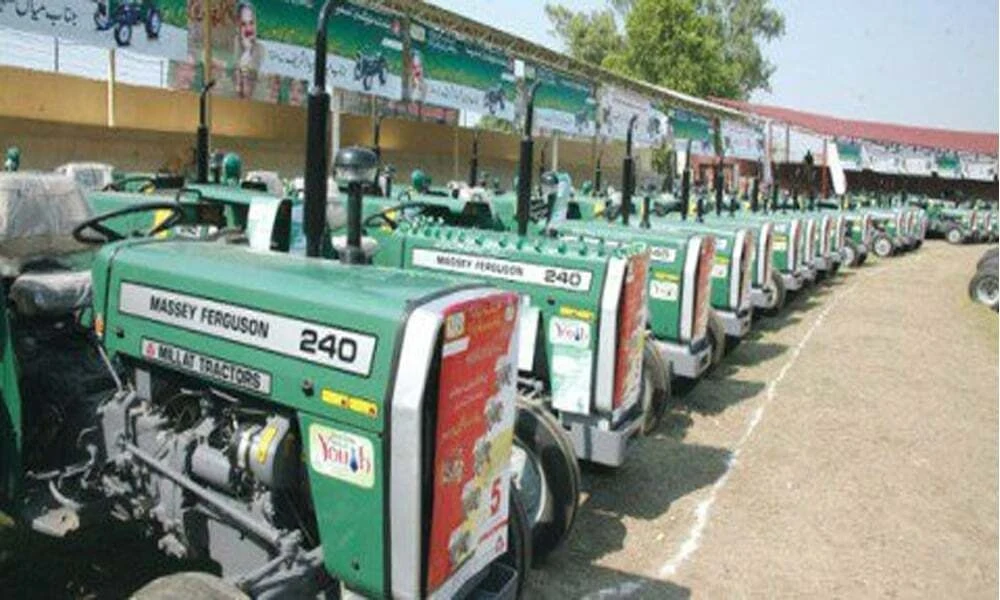
A farmer in Vehari plowing his five acres with a borrowed, decade-old tractor knows the real cost of mechanization in Pakistan — diesel that eats half a harvest’s profit, repair bills that never stop, and a waiting list for rented machinery that stretches across the sowing season. The Punjab Green Tractor Scheme Latest Update 2026, exists to break that cycle. Under Phase III, the Punjab government is distributing thousands of subsidized tractors directly to small and medium landholders, cutting the upfront cost by hundreds of thousands of rupees per unit.
This guide breaks down exactly where the scheme stands right now, who qualifies, how the balloting and verification process works, and what selected farmers must do before the extended payment deadline closes. Numerous unofficial websites are circulating conflicting dates and figures, so every claim here is checked against the most consistent, verifiable information available from official channels.
| Quick Facts | Details |
|---|---|
| Scheme Name | CM Punjab Green Tractor Scheme — Phase III |
| Tractor Category | 50–65 HP (Green Tractor); a parallel Hi-Power category covers 75–120 HP |
| Subsidy Amount | Up to PKR 500,000 per Green Tractor; up to PKR 1,000,000 for Hi-Power units |
| Total Units | Roughly 10,000 Green Tractors plus 9,500 Hi-Power units |
| Application Window | January 6 – January 31, 2026 (closed) |
| Current Stage | Balloting complete; dues-deposit deadline extended to June 15, 2026 |
| Official Portal | gts.punjab.gov.pk |
| Land Requirement | Minimum 5 acres, owned and computerized |
Background: Why Punjab Keeps Subsidizing Tractors
Punjab grows the bulk of Pakistan’s wheat, rice, sugarcane, and cotton, yet a large share of its farms are still cultivated by smallholders working five to twelve acres. For these families, a new tractor priced at PKR 2.5 to 4 million is simply out of reach without crushing debt. Diesel prices, currency depreciation, and rising spare-parts costs have widened the gap between what mechanized farming costs and what a small landholder can actually afford.
The Green Tractor Scheme is the province’s response to that gap. Earlier phases distributed subsidized tractors to thousands of farmers across different districts, building the digital infrastructure — CNIC-linked applications, computerized land records, and online balloting — that now powers Phase III. The current phase runs under the leadership of Chief Minister Maryam Nawaz Sharif and is positioned as part of a broader agricultural relief package that also includes laser land levelers, solarized tube wells, and interest-free credit cards for small traders.
What makes Punjab Green Tractor Scheme Latest Update 2026 Phase III different is scale and integration. Rather than running as an isolated tractor giveaway, it now sits alongside a Hi-Power Tractor Program for larger farms, both managed through the same digital balloting system operated by the Punjab Information Technology Board (PITB). Together, the two tracks aim to bring close to 19,500 new tractors into the province’s fields — a meaningful dent in the mechanization shortfall, even if it barely scratches the surface of total provincial demand.
Core Mechanics and Eligibility Criteria
The scheme runs on three pillars: a verified applicant pool, a randomized digital ballot, and a strict post-selection verification stage. Every applicant’s CNIC is cross-checked against land records before their name even enters the ballot, which is what allows the Agriculture Department to call the process merit-based rather than first-come-first-served.
Who can apply:
- Must hold a valid, computerized Pakistani CNIC.
- Must be a permanent resident farmer of Punjab province.
- Must own at least 5 acres of agricultural land, registered in the applicant’s own name (a manual paper-form route exists for farmers in mouzas where land records aren’t yet computerized).
- Must not have already received a tractor under Phase 1, Phase 2, or the Wheat Grow (Gandum Ugao) Support Program.
- Only one application per CNIC is accepted; duplicate entries are disqualified automatically.
Who gets disqualified during verification:
| Disqualifying Factor | Why It Matters |
|---|---|
| Previous Green Tractor or Wheat Scheme winner | Prevents repeat beneficiaries while thousands wait |
| Land holding under 5 acres | Scheme targets small-to-medium farmers, not landless tenants |
| Non-resident of Punjab | Province-funded subsidy is restricted to provincial residents |
| Mismatched CNIC/land ownership records | Indicates possible fraud or outdated revenue records |
| Outstanding bank loan default | Some scheme variants exclude active loan defaulters |
| Mobile SIM not registered to applicant’s CNIC | OTP verification fails, blocking the application |
Selected farmers choose from locally manufactured tractor models within their HP bracket, with approved manufacturers including Millat Tractors and Al-Ghazi Tractors among the options on the portal. The subsidy is applied directly against the tractor’s ex-factory price, with the farmer paying only the remaining balance through Bank of Punjab.
Step-by-Step: How the Application and Selection Process Works
- Visit the official portal. Go to gts.punjab.gov.pk rather than any third-party “apply now” link — fake portals charging processing fees have circulated heavily on social media.
- Register with CNIC and mobile number. Enter your 13-digit CNIC without dashes and a phone number registered in your own name, then confirm the one-time password sent by SMS.
- Fill in personal and land details. This includes your tehsil, mouza, khewat/khatooni number, and total acreage. The system automatically pulls computerized land records to cross-verify your entry.
- Select your tractor category and model. Choose between the 50–65 HP Green Tractor bracket or the 75–120 HP Hi-Power bracket, then pick a model from the approved manufacturer list.
- Upload required documents. You’ll need a clear scanned CNIC (front and back), Fard or land ownership proof, a recent passport-size photograph, and a signed undertaking confirming you haven’t won a previous phase.
- Submit and save your reference number. Keep the confirmation slip or screenshot — you’ll need this number for any follow-up status check.
- Wait for the computerized ballot. After the application window closes, PITB runs a randomized digital draw. No manual shortlisting or office discretion is involved at this stage.
- Check your result by CNIC. Once balloting concludes, log back into the portal, enter your CNIC, and the system displays “Selected,” “Waitlisted,” or “Not Selected.”
- Visit your district Agriculture Extension Office. Selected applicants must collect a formal offer letter and complete physical document verification in person — this step cannot be done online.
- Deposit your share at Bank of Punjab. Pay the balance amount (full tractor price minus subsidy) before the deadline stated in your offer letter, currently extended to June 15, 2026 for this phase.
- Collect your tractor. Delivery is coordinated through the approved dealership network once payment is confirmed and verified.
Missing any single step — particularly the in-person verification or the deposit deadline — results in automatic forfeiture, with the unit passed to the next name on the waiting list.
Benefits, Challenges, and Practical Solutions
What the scheme gets right:
- It removes the single biggest financial barrier to mechanization — the upfront purchase price — for farmers who would otherwise rely on aging rental equipment.
- Computerized balloting genuinely limits the role of local influence and bribery that plagued older subsidy distribution methods.
- The CNIC-and-land-record cross-check filters out a large share of fraudulent or duplicate claims before they ever reach the lottery stage.
- Pairing Green Tractors (small farms) with Hi-Power units (larger operations) lets the province serve two very different segments of its farming population in one administrative system.
Where farmers run into trouble — and how to fix it:
- Portal congestion during peak hours. Apply or check results early morning or late evening when traffic is lighter, rather than waiting until the deadline’s final day.
- OTP never arrives. This almost always means the SIM isn’t registered to your CNIC. Visit your mobile operator’s franchise to re-register before reapplying.
- Non-computerized land records. Farmers in mouzas without digitized records aren’t locked out — request the manual GTS application form from your district Agriculture Department office instead.
- Fraudulent agents demanding “guarantee fees.” No legitimate official ever charges money for selection. Report any such demand to the district administration immediately; balloting is entirely automated and cannot be influenced.
- Anxiety over “provisional” results. A provisional listing simply means document verification hasn’t finished — it isn’t a rejection, but it also isn’t final until your district office confirms it.
- Three-year resale restriction. Tractors received under subsidy cannot be sold or transferred for three years. Farmers planning to upgrade soon should weigh this lock-in before accepting an allotment.
Future Outlook: What Comes Next for Punjab’s Tractor Subsidy Push
Officials have signaled that Phase III will not be the final round. Provincial planning documents reference an even larger Phase IV rollout, potentially expanding total unit counts and opening eligibility to additional categories of smallholders, including women farmers and tenant cultivators with verified lease agreements. Early discussions also point toward pilot integration of solar-assisted farm machinery in future rounds, aligning the tractor program with Punjab’s broader renewable-energy push in agriculture.
Expect continued digitization too — tighter CNIC-to-land-record matching, real-time SMS status updates, and possibly biometric verification at the collection stage to further reduce fraud. Other provinces are watching Punjab’s balloting model closely, and similar CNIC-linked digital lottery systems for farm subsidies are likely to spread to Sindh and Khyber Pakhtunkhwa over the next two years if Phase III’s verification numbers hold up.
The Bottom Line for Punjab’s Farmers
A subsidized tractor will not fix every problem facing Punjab’s smallholders, but for thousands of families it means the difference between renting equipment at the mercy of someone else’s schedule and owning the means to plow, sow, and harvest on their own terms. The scheme’s real test isn’t the size of the subsidy — it’s whether verification stays clean and whether the next eligible farmer actually gets the unit when someone else defaults. For now, the most useful thing any applicant can do is stay close to the official portal, keep documents ready, and treat every deadline as final, because in this scheme, it usually is.