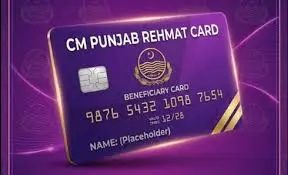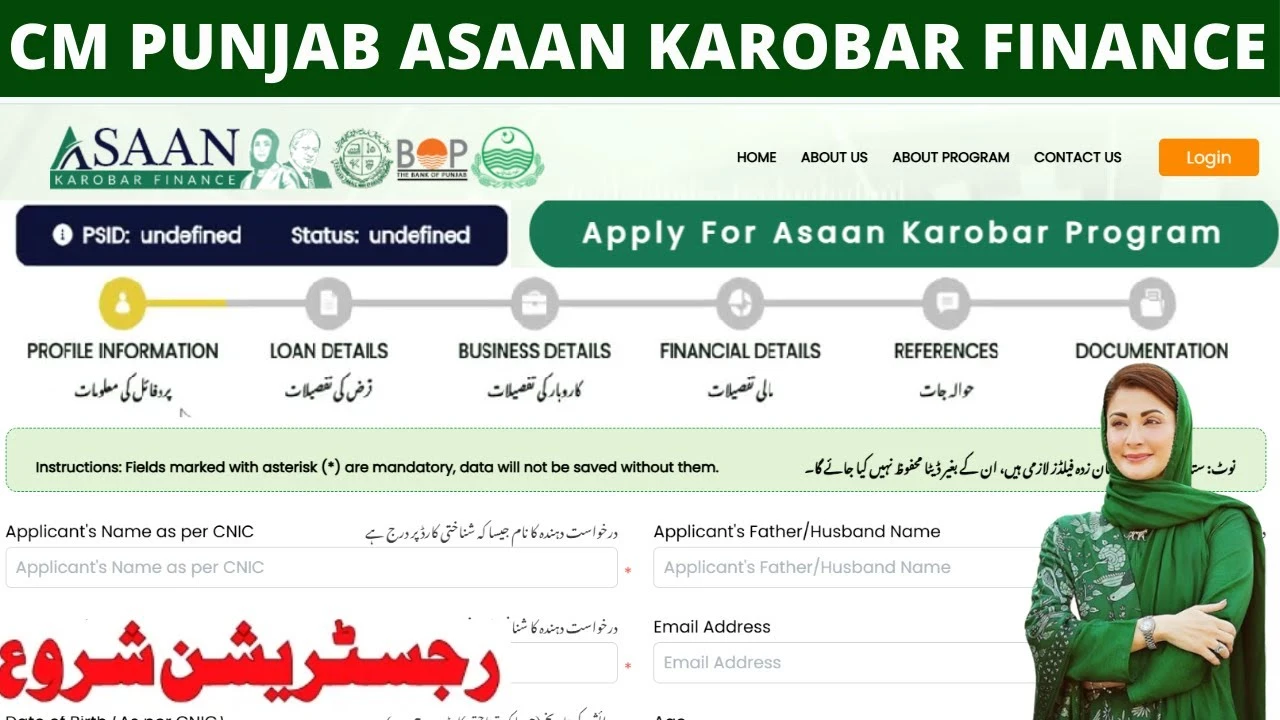
Pakistan’s small traders have historically had two financing options: a bank that wants collateral they don’t have, or an informal lender charging rates that quietly eat their margins before the shop even opens. The Asaan Karobar Loan Scheme was built to remove that choice entirely, offering genuinely interest-free capital through a fully digital application — and with over 1.5 million applications already submitted for the Card component alone, demand has made understanding the process correctly more important than ever.
This guide breaks down both tiers of the program — the smaller revolving Asaan Karobar Card and the larger Asaan Karobar Finance facility — and walks through exactly how to apply, what the real costs are beyond the advertised 0% interest, and why approval odds are tighter than most applicants expect.
Quick Reference Box
| Detail | Information |
|---|---|
| Program Structure | Asaan Karobar Card (up to Rs. 1 million) + Asaan Karobar Finance (Rs. 1 million–30 million) |
| Interest Rate | 0% on both tiers |
| Age Eligibility | 21 to 57 years |
| Card Application Portal | akc.punjab.gov.pk/cmpunjabfinance |
| Processing Fee (Card) | PKR 500, non-refundable |
| Annual Card Fee | PKR 25,000 + FED |
| Helpline | 1786 |
| Total Budget (Card Tier) | PKR 48 billion |
| Applications Submitted So Far (Card Tier) | 1,529,229 |
| Approved So Far (Card Tier) | 100,628 |
Background: Why Punjab Built a Two-Tier Lending System
Small and medium enterprises form the backbone of Punjab’s economy, yet most have operated for years outside formal banking entirely — too small for conventional bank underwriting, too informal for collateral-based lending, and routinely pushed toward high-cost informal credit just to keep inventory stocked. Chief Minister Maryam Nawaz Sharif positioned the Asaan Karobar Finance Scheme and its companion Asaan Karobar Card as a direct response to that gap, inaugurating both programs together and describing financing running from roughly Rs. 10 lakh up to Rs. 3 crore under the larger Finance Scheme, with the Card covering smaller amounts up to Rs. 1 million for entrepreneurs who need working capital rather than a large term loan.
The structure reflects a deliberate split by business size. The Card functions as a revolving SME credit line disbursed through a digital payment instrument, aimed at shopkeepers, small traders, and home-based businesses. The Finance Scheme runs through the Bank of Punjab for larger amounts, split into Tier 1 (roughly Rs. 1 million to 5 million) and Tier 2 (Rs. 6 million to 30 million), targeting more established or scaling businesses that need substantial capital for machinery, expansion, or larger working-capital cycles.
The scale of public demand has been significant. Official Punjab government dashboards show over 1.5 million applications submitted for the Card component against a PKR 48 billion allocation, with roughly 100,000 approved so far — figures that tell their own story about how many small entrepreneurs were waiting for exactly this kind of access. Provincial monitoring has continued closely since launch, with the Chief Minister’s office periodically reviewing disbursement progress and following up directly with individual beneficiaries, including shopkeepers who used their Card limits to restock inventory ahead of Eid.
Core Mechanics: How Each Tier Actually Works
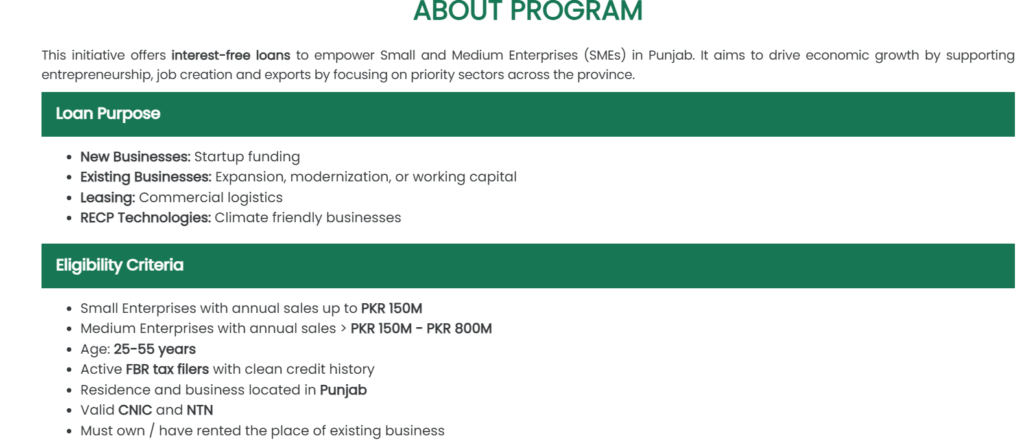
Eligibility Requirements (Asaan Karobar Card)
How to Apply Asaan Karobar Loan Scheme 2026
| Requirement | Detail |
|---|---|
| Age | 21 to 57 years |
| Nationality/Residency | Pakistani national, resident in Punjab |
| Identity | Valid CNIC matching NADRA records |
| Mobile Number | Must be registered in the applicant’s own name, not a relative’s |
| Business Location | Existing or prospective business based in Punjab |
| Application Limit | One application per individual and per business |
| Credit History | Clean record with no overdue loans |
| Assessment | Must pass a creditworthiness and psychometric evaluation |
What the Card Actually Offers
- Maximum limit: PKR 1 million, structured as revolving credit
- Loan tenure: 3 years overall
- First 50% of the limit becomes usable within the first 6 months
- Grace period: 3 months from card issuance before repayment starts
- Remaining balance after the first year is repaid over 2 years through equal monthly installments
- Usage restrictions: funds can only go toward vendor payments, utility bills, government fees and taxes, and limited cash withdrawal — capped at 25% of the limit — for miscellaneous business costs
- Second 50% of the limit only releases after demonstrating regular repayment and completing PRA/FBR registration
What “Interest-Free” Doesn’t Cover
The 0% end-user interest rate is real, but it isn’t the only cost. An annual card fee of PKR 25,000 plus Federal Excise Duty is recovered directly from the approved limit, alongside life assurance and card issuance charges built into the structure. Late installment payments also trigger charges per standard bank policy. None of this makes the scheme expensive relative to informal lending, but treating it as entirely cost-free is a common and avoidable misunderstanding.
The Larger Finance Scheme Tiers
For businesses needing more than Rs. 1 million, the Finance Scheme — administered through the Bank of Punjab — offers a separate path: Tier 1 financing in the Rs. 1 million to 5 million range, and Tier 2 reaching up to Rs. 30 million for larger SMEs, with security requirements and documentation scaling up accordingly at higher amounts.
Step-by-Step: How to Apply for the Asaan Karobar Card
Step 1: Confirm Which Tier Actually Fits Your Business
If working capital needs sit under Rs. 1 million and the business is small or home-based, the Card is the right starting point. Larger capital needs for machinery or significant expansion point toward the Finance Scheme through Bank of Punjab instead.
Step 2: Gather Required Documents Before Starting
- Valid, unexpired CNIC
- A mobile number registered in your own name
- Proof of business address (rent agreement, transfer letter, or registry, whichever applies)
- Names, CNIC copies, and mobile numbers of two references who are not blood relatives
- A basic business plan, especially important for prospective (not-yet-operating) businesses
Step 3: Register on the Official Portal
- Visit akc.punjab.gov.pk/cmpunjabfinance
- Create an account using your CNIC
- Complete the Personal Information section accurately
Step 4: Complete the Loan Details Section
- Select your business’s establishment date
- Choose your tier and enter the requested loan amount
- Provide details of any existing credit history
- Save and proceed to the business information section
Step 5: Submit Business and Reference Information
Enter business name, contact details, employee count, and owner/partner information where applicable, along with your two references.
Step 6: Upload Documents and Pay the Processing Fee
Upload clear scans of your CNIC and supporting documents, then pay the non-refundable PKR 500 processing fee to finalize submission.
Step 7: Track Verification Progress
After submission, expect digital verification of your CNIC and creditworthiness, followed by a physical business premises check conducted by the Urban Unit. Save any tracking reference issued and check status through the portal rather than assuming silence means rejection.
Benefits, Challenges, and Practical Solutions
What This Program Gets Right
- Genuinely interest-free principal, a rare structure in business lending anywhere in the region
- Fully digital application, removing the informal “agent” layer that has historically surrounded government lending schemes
- Flexible revolving structure for the Card tier, useful for inventory cycles rather than a single lump-sum disbursement
- Scales with business size through the two-tier structure, rather than forcing every applicant into one rigid loan product
Where the Real Friction Shows Up
- Approval odds are steep. With over 1.5 million Card applications against roughly 100,000 approvals so far, the realistic acceptance rate sits well under 10%, far lower than many applicants assume going in.
- The “interest-free” framing obscures real costs. The annual card fee plus FED, life assurance charges, and card issuance fees come as a surprise to applicants expecting a completely free facility.
- Mandatory PRA/FBR registration within six months pushes informal traders into the tax system, which some treat as a deterrent rather than a requirement to plan around.
- Physical premises verification can delay approval meaningfully for rural applicants in areas the Urban Unit reaches less frequently.
What Actually Improves Your Odds
- Treat the psychometric and creditworthiness assessment seriously — a vague business plan or inconsistent answers is one of the most common rejection triggers at this stage.
- Budget for the annual card fee from the outset rather than assuming the full limit is available cost-free.
- Register with PRA/FBR proactively, well before the six-month deadline, since the second 50% of your limit depends on it.
- Make sure your business premises are physically identifiable with visible signage and matching address documentation, since this directly affects the Urban Unit verification step.
Future Outlook: Where the Scheme Is Likely Headed
Given a PKR 48 billion allocation against demand running well past a million applications, expect continued phased disbursement rather than a single approval wave, with the Chief Minister’s office maintaining direct oversight of progress, as reflected in periodic public review meetings and beneficiary follow-ups. Statements around export processing zone incentives suggest sector-specific top-ups may follow for businesses tied to export growth. As PRA/FBR registration becomes a standard condition for second-tranche release, expect tighter integration between the Card’s digital verification system and tax authority databases, mirroring the direction other Punjab welfare and finance programs have taken toward database-driven eligibility checks.
Final Word
An interest-free loan sounds like the easiest financial decision a small entrepreneur could make, and the principal genuinely is free of markup — but the real qualification bar sits in the creditworthiness assessment, the documentation discipline required upfront, and a realistic understanding that this program is currently approving a small fraction of the people applying. Entrepreneurs who treat the application with the same seriousness as a conventional bank loan — clean references, a coherent business plan, and accurate documentation — stand a meaningfully better chance than those treating it as a formality, given how many submissions are currently competing for each approved slot.