The Chief Minister’s Green Tractor Scheme (GTS) is one of the largest subsidy programs the Punjab Agriculture Department runs, and because it touches hundreds of thousands of applicants at once, it also attracts an unusual amount of noise — half-true Facebook posts, “result” websites, and agents who claim they can “guarantee” a slot for a fee. None of that helps a working farmer figure out what’s actually true.
This article separates three categories of information: (1) what is directly confirmed by the Punjab Agriculture Department or verified by independent fact-checkers, (2) what is being reported by secondary sources but has not been officially confirmed in the same form, and (3) what is simply false and circulating anyway. Wherever the second category comes up, that is stated plainly, because pretending otherwise would do you a disservice.
A note on this article’s limits: at the time of writing, the Punjab Agriculture Department’s own website (agripunjab.gov.pk) confirms that a “Chief Minister Green Tractor’s Phase III Ballot Result” has been published, with a link directing farmers to the official GTS portal, gts.punjab.gov.pk. Beyond confirming that this result exists and where to check it, the department’s public page does not itself list specific numbers — subsidy amount, tractor count, horsepower range, or exact deadline dates — in the snippet available for review.
A number of privately-run “news” and “result” websites have published very specific figures (subsidy amounts, HP ranges, deposit deadlines) that differ from each other, which is discussed in detail below. Treat any number not attributed to the Agriculture Department or a credible fact-checking outlet as unconfirmed until you see it on your own allotment letter or the official portal.
Read More: Explore the latest updates on theKisan Schemeto find more agricultural subsidies and government support programs for farmers.
What the Scheme Actually Is
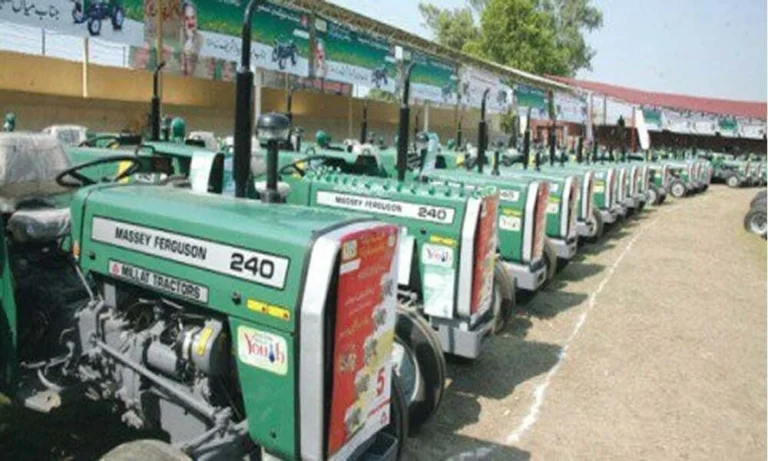
The Chief Minister Punjab Green Tractor Scheme is a subsidy program run by the Agriculture Department, Government of the Punjab, designed to reduce the upfront cost of buying a tractor for farmers who currently don’t own one. It is not a loan and it is not a giveaway of a free tractor — it is a partial subsidy applied against the purchase price of a tractor from an approved manufacturer (historically this has included companies like Millat Tractors/Massey Ferguson, Al-Ghazi Tractors/New Holland, and Fecto Belarus), with the farmer paying the remaining share, sometimes through the Bank of Punjab (BOP) with instalment facilitation for certain categories, cm punjab green tractor scheme 2026 balloting result.
Apply Now: Learn how to secure your interest-free agricultural loan through the step-by-stepCM Punjab Kisan Card Portal 2026registration guide.
The scheme has been rolled out in phases:
- Phase I (2024–25) was the first round under the current provincial government.
- Phase II (2025–26) followed, covering high-horsepower tractor categories for larger landholders, with balloting reportedly completed in early January 2026.
- Phase III (2026) is the round most farmers are currently asking about, and it is this phase whose ballot result has been published on the official Agriculture Department site.
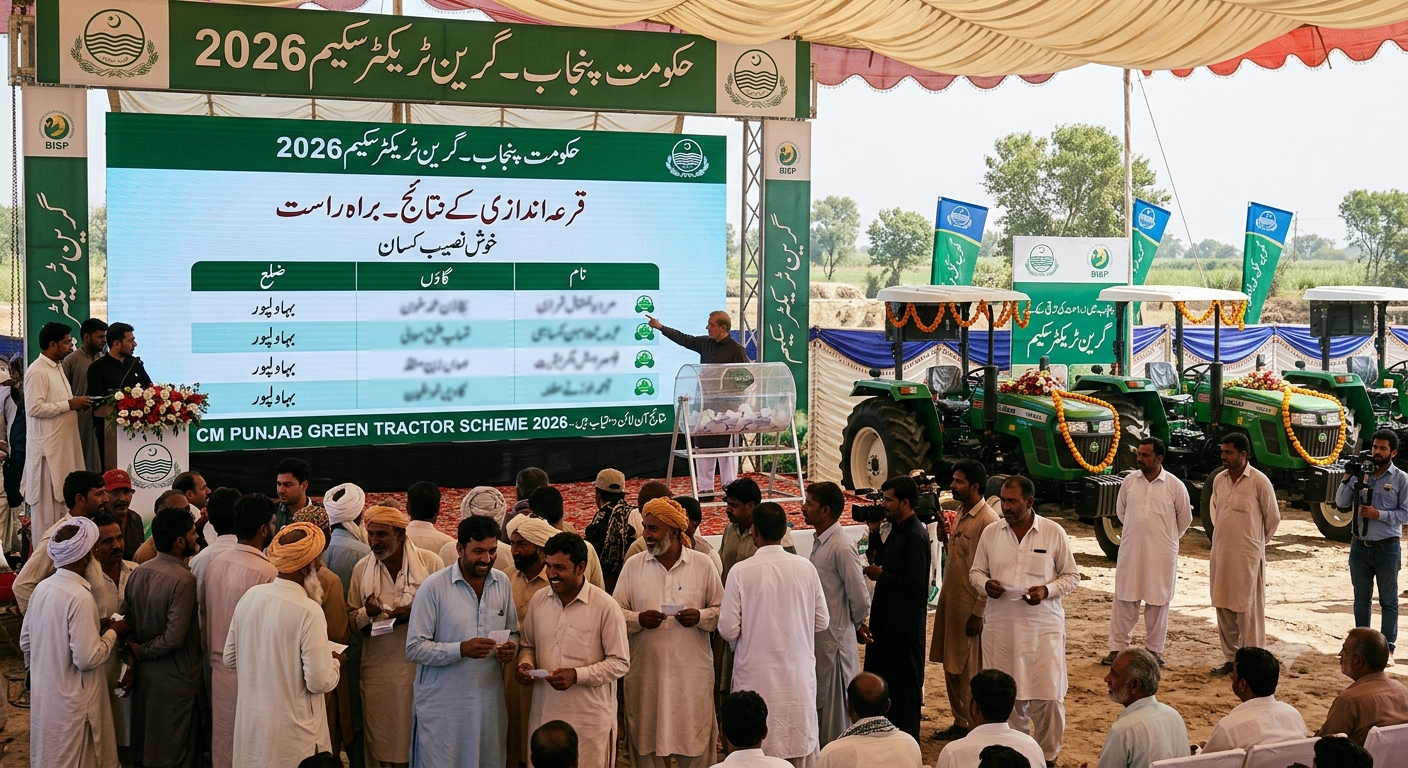
Selection is done through computerized balloting — a digital lottery among eligible applicants, intended to remove human discretion and reduce the scope for political or personal favouritism in who gets selected. This has been an explicit selling point of the program from the start: no agent, MNA, MPA, or local official is supposed to have any influence over who is drawn.
Importantly, in every phase so far, the result of the ballot has been described by the department (and by Geo Fact Check’s reporting, discussed below) as provisional — meaning selection in the draw is not the final word. It is followed by verification of land ownership records and eligibility documents. Only after that verification does an applicant get a confirmed allotment.
One point that has been independently confirmed and is worth repeating clearly: there is no application fee for this scheme. Geo Fact Check, a fact-checking desk affiliated with Geo News, directly quoted a chief technical advisor at the Punjab Agriculture Department stating that farmers face no charges to apply, after a viral social media claim alleged the government had collected billions of rupees in “application fees.” That claim was investigated and found to be false — over a million farmers had applied without paying anything to do so. If anyone tells you there is a fee just to submit your application, that claim does not match the department’s own confirmed position.
Who Is Eligible
Eligibility criteria have varied slightly between phases, and this is one of the areas where public information genuinely conflicts across sources, so read carefully.
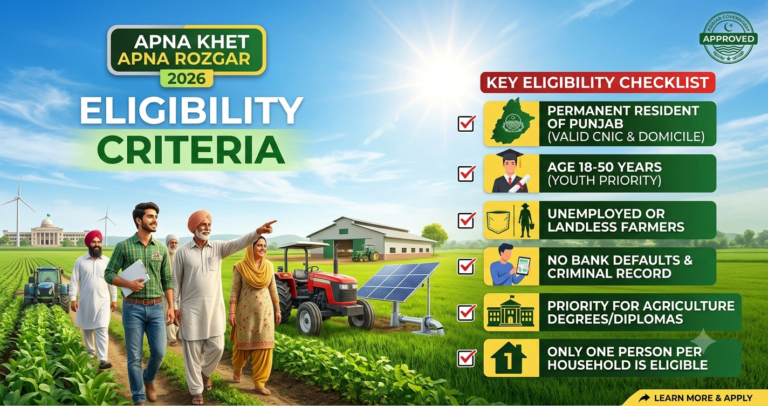
Consistently reported requirements across phases:
- A valid, unexpired CNIC in the applicant’s own name.
- Ownership (or in some structures, tenancy/cultivation rights) of agricultural land in Punjab, matched against land revenue records — several sources specifically mention verification against the Punjab Land Records Authority (PLRA) database.
- The applicant should not have already received a tractor subsidy under a previous phase of this same scheme.
- A mobile SIM registered in the applicant’s own name (used for status-check SMS).
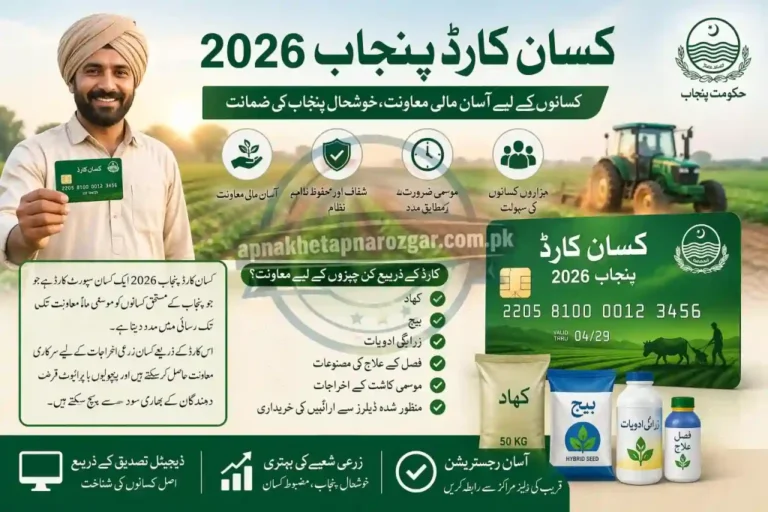
- In several phases, having an active Kissan Card has been described as a requirement or at least a strong advantage for eligibility and faster verification.
Where sources disagree — and what that means for you:
- Minimum landholding size has been reported differently across phases and even within coverage of the same phase: 7 acres and above (for the 75–125 HP category in Phase II), 5 to 12.5 acres, and 5 to 25 acres have all appeared in different write-ups. This strongly suggests that landholding thresholds differ by tractor category (horsepower) and by phase, rather than there being one single province-wide number. Do not assume a specific acreage cutoff applies to you without checking the category you applied under.
- Tractor horsepower ranges on offer have been reported as 75–125 HP, 50–85 HP, and 50–65 HP in different phases and different articles about the same phase. This is very likely because different phases and sub-categories genuinely do cover different HP bands — but it also means you should rely on what your own application/registration confirmation stated, not on a generic HP figure quoted in a news article.
Edge cases people actually ask about:
- “I already registered for the Kissan Card scheme — does that block me from GTS?” No — the Kissan Card is generally described as a facilitating document for GTS, not a competing scheme. Being registered under one Punjab agriculture scheme does not automatically disqualify you from another, unless the specific scheme rules say otherwise (as with “no prior tractor subsidy”).
- “My land is on a non-computerized mouza (i.e., records haven’t been digitized) — can I still apply?” In at least one phase, the department explicitly allowed farmers from non-computerized mouzas to apply by submitting a manual form at their nearest Agriculture Extension Office, rather than applying online. If your area’s land records aren’t digitized, ask your local extension office directly whether this manual route is open in the current phase.
- “I applied but haven’t received any SMS at all — selected or rejected.” This does not necessarily mean anything went wrong. SMS confirmation is reportedly sent only to successful candidates in some communications, while other coverage describes both outcomes appearing on the portal after CNIC entry. Check the portal directly rather than waiting for a text.
- “Can I apply again if I applied in Phase I or II and wasn’t selected?” Generally yes — being unsuccessful in an earlier phase does not appear to disqualify you from applying in a later one, since new phases have opened fresh application windows. Confirm this against the specific Phase III application terms when you check.
Step-by-Step Process (What to Actually Expect)
1. Confirm you meet the basic eligibility for the phase you’re checking. Before doing anything else, check the specific horsepower category and landholding requirement stated in your own registration — not a generic figure from a news article.
2. Go directly to the official portal — type it yourself. The confirmed official Agriculture Department domain is agripunjab.gov.pk, which links through to the dedicated Green Tractor Scheme portal at gts.punjab.gov.pk. Type this address directly into your browser rather than clicking a link shared in a WhatsApp forward or Facebook post, since fraudulent look-alike domains are common during high-traffic periods like result announcements.
3. Locate the Phase III Ballot Result section. On the department’s page this has appeared as a direct link labelled along the lines of “Green Tractor’s Phase III Ballot Result.”
4. Enter your CNIC number as instructed (commonly without dashes, 13 digits). Submit and read the result carefully — it will typically show either a “successful/selected” status or indicate you were not selected in this round.
5. If selected, treat the result as provisional, not final. Multiple sources — including the department’s own general framing of the process — describe the ballot outcome as subject to verification of land ownership and eligibility documents before it becomes a confirmed allotment.
6. Visit your district’s Agriculture Extension Office in person. This is where you collect your official Offer Letter / Allotment Letter, which confirms your selection and lays out your specific payment share, deadline, and tractor category. Bring your original CNIC, land ownership documents, and any application reference number or receipt from your original registration.
7. Deposit your share at the designated Bank of Punjab (BOP) branch by the deadline printed on your specific offer letter. Deadlines have differed by phase and even been extended in some cases — do not rely on a deadline quoted in a general news article; use the date printed on your own letter. Keep the original deposit receipt safely, and submit a photocopy to your Deputy Director (Extension), Agriculture office as instructed.
8. Wait for final confirmation and delivery instructions. The tractor and horsepower/model selected during registration reportedly cannot be changed at this stage in past phases, so this is not the point to try to switch models.
Common Mistakes Applicants Make
- Assuming selection in the ballot equals a guaranteed tractor. It doesn’t. Verification of land records and eligibility can still lead to cancellation if something doesn’t match.
- Missing the payment deadline because they relied on a date from a random website instead of their own offer letter. Deadlines have varied across phases (some reports mention January 20 or January 31 as cut-offs in one phase, and a later extension to mid-June in another phase’s post-ballot process) — these are not interchangeable, and applying the wrong one to your own case can cost you your allotment.
- Entering land data that doesn’t match digital revenue records. Even a small mismatch between what you entered and what PLRA records show can hold up or block your verification.
- Submitting more than one application per household. This has been flagged as a disqualifying error in some phase guidelines.
- Using a mobile SIM not registered in their own name, which then means they never receive the confirmation SMS or, worse, someone else does.
- Trusting a “guaranteed selection” claim from an agent. The scheme uses computerized balloting specifically so that no one — official, agent, or otherwise — can guarantee an outcome. Any such promise should be treated as a red flag, not reassurance.
- Paying someone before actually visiting the extension office themselves. There is no legitimate reason to hand cash to a middleman at any stage of this process.
If Your Application Is Rejected or Delayed
If the portal shows you were not selected in this round: your best option is to watch for the announcement of the next phase, since new application windows have opened repeatedly (Phase I, then Phase II, then Phase III), and being unsuccessful once does not appear to bar you from applying again.
If you believe you were wrongly excluded, or your paperwork is stuck in verification much longer than others in your area: visit your district Agriculture Extension Office in person and ask for a written status update, rather than relying on phone calls to an unofficial number. Several phase communications have also referenced a complaint mechanism through the Chief Minister’s Complaint Cell (CM Punjab Portal) specifically for issues related to agents or suspected fraud — this is the right channel for a formal complaint, rather than social media posts, which rarely produce a resolution.
If your allotment was cancelled for missing a deposit deadline: in most described processes, a cancelled slot is passed automatically to the next name on the waiting list, and appeals after the deadline have generally not been entertained. If you have a genuine reason for the delay (illness, banking issue, etc.), raising it in writing at your district office before the deadline passes gives you a far better chance than raising it afterward.
Is there an official, province-wide appeals timeline or process document? This has not been clearly confirmed in the sources reviewed for this article — if you are in this situation, ask your district Agriculture Extension Office directly what your specific options are, since this can vary by phase and by district office practice.
Red Flags — How to Spot a Scam Version of This Scheme
- Any request for a WhatsApp “application fee” or “processing fee.” The Agriculture Department’s own confirmed position (via Geo Fact Check) is that there is no application fee. A message or webpage asking you to pay to apply, register, or “confirm your slot” is not legitimate.
- Domains that look almost-but-not-quite official. The confirmed official domains are agripunjab.gov.pk and gts.punjab.gov.pk. Some SEO-driven sites use similar-sounding names (e.g. variations with “gts,” “punjab,” or “gov” inserted differently) that are not run by the Agriculture Department. Always type the address yourself rather than clicking a shared link.
- A WhatsApp number presented as the “official” way to apply or check your result. Genuine government portals do not typically ask you to message a personal WhatsApp number to submit an application or “confirm” your win — this is a very common scam pattern across many Pakistani welfare and subsidy schemes, not just this one.
- Anyone claiming they can guarantee you a spot in the balloting for a payment. The entire design of computerized balloting is to remove that possibility. A guarantee claim is, by definition, inconsistent with how the scheme is supposed to work.
- Pressure to act “within 24 hours” from an unofficial contact, especially combined with a request for your CNIC, bank details, or a deposit to a personal account rather than the Bank of Punjab.
- Unverified specific numbers presented with excessive confidence — for instance, a site stating an exact rupee subsidy figure, exact tractor count, or exact HP range as if it were uniform across all applicants, without citing the department. As shown above, several of these figures genuinely differ by phase and category, so a single confident number applied to everyone should make you pause.
Comparison: Green Tractor Scheme vs. Other Punjab Agriculture Support Schemes
| Feature | Green Tractor Scheme (GTS) | Kissan Card | Laser Land Leveler Subsidy |
|---|---|---|---|
| What it provides | Partial subsidy toward tractor purchase | Subsidized inputs (seed, fertilizer, etc.) and access facilitation | Subsidy toward laser leveler equipment |
| Selection method | Computerized balloting | Registration-based, generally not a lottery | Application-based, reported subsidy has appeared alongside GTS promotions |
| One-time or recurring | One-time allotment per phase per eligible farmer | Ongoing/renewable support | One-time equipment subsidy |
| Land requirement | Yes — landholding thresholds vary by HP category and phase | Generally yes, smaller landholders often prioritized | Yes |
| Resale restriction | Reported 3-year resale ban on the subsidized tractor in at least one phase | Not typically applicable | Not clearly confirmed in reviewed sources |
| Where to check status | gts.punjab.gov.pk / agripunjab.gov.pk | Kissan Card portal / agripunjab.gov.pk | Agripunjab-linked application pages |
This table reflects publicly reported program structures as of the sources reviewed. Confirm current terms for each scheme on the official Agriculture Department site before making decisions based on any of these.
Consider “Farmer A,” a composite, illustrative example based on the pattern many applicants describe: he owns roughly 9 acres in southern Punjab, registered online during the Phase III window, and received no SMS for several weeks. Assuming he’d been rejected, he almost gave up checking. When he finally entered his CNIC on the official portal, it showed he had, in fact, been selected — the SMS had simply never arrived, possibly due to a SIM registration mismatch. He then visited his district Agriculture Extension Office in person, collected his offer letter, confirmed his payment share and deadline printed specifically on that letter (not a number he’d seen online), and deposited it at the Bank of Punjab in time.
The lesson this illustrates: don’t treat “no SMS” as a final answer. Check the portal directly, and treat your own offer letter — not a general news article — as the authoritative source for your specific deadline and payment amount.
Practical Checklist (Save or Screenshot This)
- I am checking my status only on agripunjab.gov.pk or gts.punjab.gov.pk, typed directly into my browser.
- I have my 13-digit CNIC ready to enter without dashes.
- I understand a “selected” result is provisional, pending land and document verification.
- I have not paid, and will not pay, any application or “confirmation” fee to anyone.
- If selected, I will visit my district Agriculture Extension Office in person to collect my official offer letter.
- I will use the deposit deadline printed on my own offer letter, not a date quoted in a news article.
- I will deposit only at the Bank of Punjab, and keep my original receipt.
- I will report any suspicious agent, WhatsApp number, or “guaranteed selection” offer through the CM Punjab Complaint Cell rather than ignoring it.
- I know my mobile SIM must be registered in my own name to reliably receive official SMS.
FAQ
What to Do Next
Go directly to gts.punjab.gov.pk right now, check your CNIC status yourself, and if selected, get to your district Agriculture Extension Office in person before doing anything else — including before believing any SMS, WhatsApp message, or third-party website telling you what your deadline or payment amount is.