Every morning before 7 a.m., Iqra Fatima locks her front door in a middle-class mohalla near Bahawalpur and starts the hardest part of her academic day — not her chemistry lecture, but the commute to get to it. Two vans and a shared rickshaw, roughly 90 minutes each way, and close to Rs. 6,000 a month that her father, a shopkeeper, quietly sets aside before anything else. On days when the van is late, she misses her first class. On days when it’s crowded, she stands the whole way.
Iqra isn’t a real name attached to a single news report — she’s a composite of the thousands of young women and men who write into Punjab government Facebook pages every week asking the same question: “Mujhe bhi scooty chahiye, kaise apply karoon?” (I need a scooty too, how do I apply?). Their situation is the reason this scheme exists in the first place, and it’s why, on Monday, June 29, 2026, it became news again.
If you’ve searched for “CM Punjab Electric Scooty (E-Bike) Scheme 2026,” you’ve probably already noticed the problem: dozens of websites, all repeating slightly different numbers — some say 20,000 bikes, some say 27,000, some say a flat 50% subsidy. A few even quote the Chief Minister making statements that don’t check out. That confusion is exactly what this guide is meant to fix.
We spent time going through the official Punjab government portal (punjab.gov.pk), the scheme’s dedicated site (bikes.punjab.gov.pk), Punjab’s CM Special Monitoring Unit, and verified reporting from The Nation, ProPakistani, and Aaj News to separate what’s officially confirmed from what’s just internet noise. Below is everything currently known — clearly marked as confirmed, historical, or still pending — so you can actually plan around it instead of guessing.
How the Scheme Started, and What Changed on June 29, 2026
The Original Launch (2024)
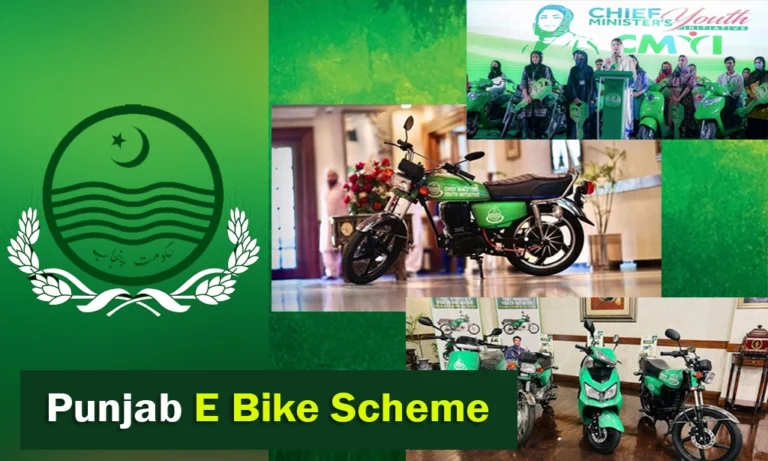
The programme most people now call the “electric scooty scheme” was actually launched as the Chief Minister’s e-Bike Scheme, under the broader Chief Minister’s Youth Initiative. It began with a Memorandum of Understanding between the Punjab Transport Department and the Bank of Punjab (BOP) — signed by Transport Secretary Ahmed Javed Qazi and then-BOP President Zafar Masood — to finance 20,000 bikes (19,000 petrol and 1,000 electric) for students on interest-free monthly instalments.
Announcing it, Chief Minister Maryam Nawaz said the scheme reflected her government’s commitment that “Punjab will always take lead in providing facilities to students like the E-Bike Project.” She also confirmed at the time that battery insurance and warranty would be included with every electric bike, that solar-powered charging points would be installed on campuses, and that the usual requirement of a parental guarantor would be waived for students without a living parent to co-sign.
Phase 1 was limited to students in five cities — Lahore, Faisalabad, Multan, Rawalpindi, and Bahawalpur — enrolled as regular (on-campus, not distance-learning) students at an HEC-recognised degree college or university. Because this eligibility rule was based on “regular” enrolment, students of distance-learning institutions such as Virtual University or Allama Iqbal Open University were generally not covered. By the time the government’s own portal was last updated, official figures showed 19,000 petrol bikes and 8,179 electric bikes already delivered — well beyond the original 20,000 target, showing the scheme kept expanding quietly even before its big 2026 relaunch.
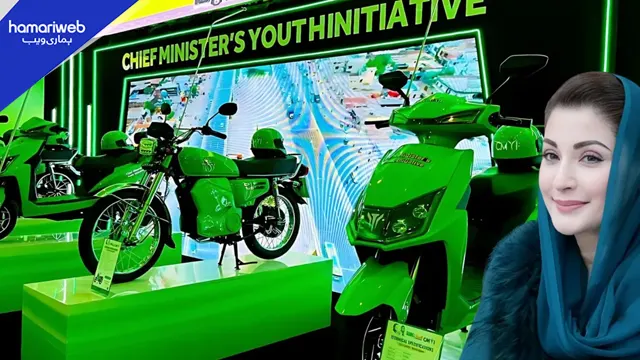
CM Punjab Bike Scheme 2026: Check the latest registration dates, eligibility criteria, and step-by-step application process.
What Changed on June 29, 2026
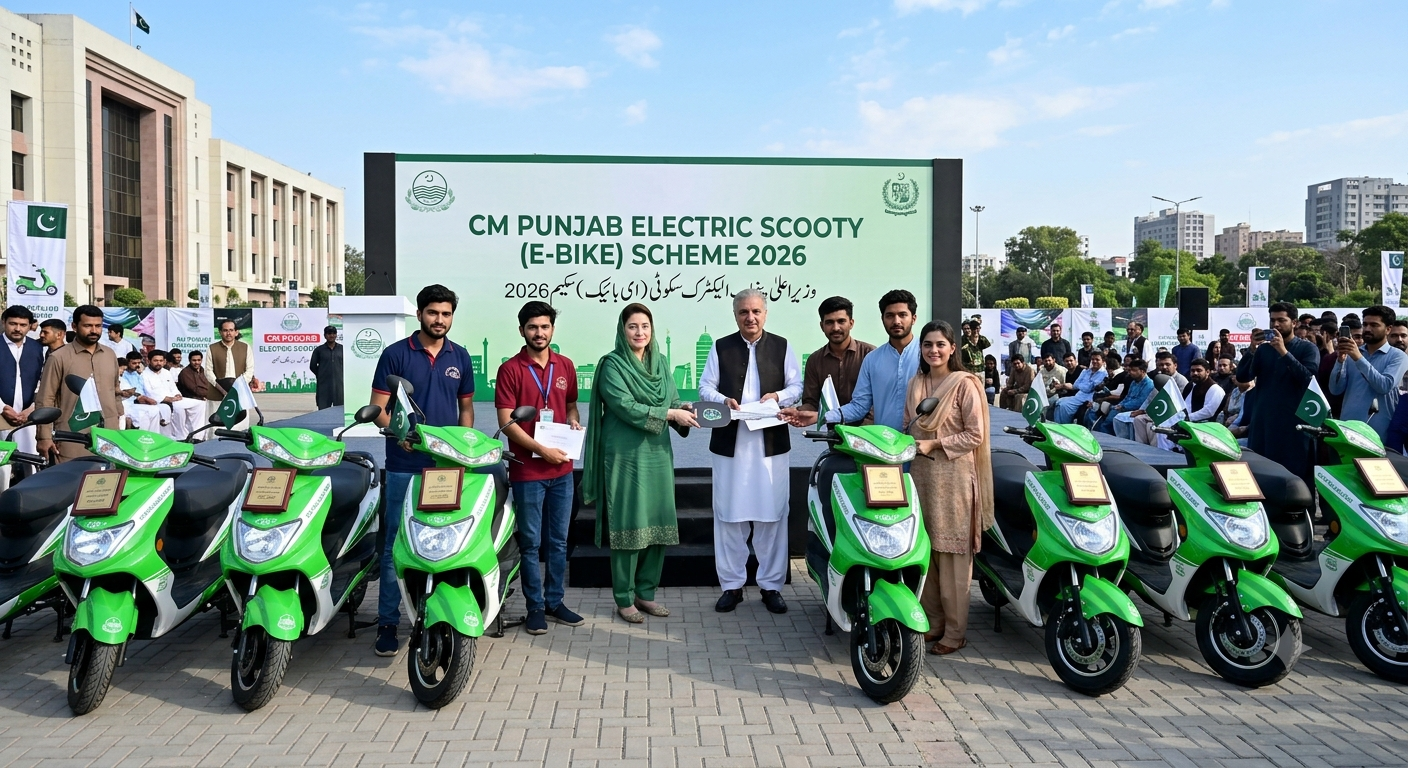
This is the development that makes 2026 genuinely different, and it’s the reason this topic is trending right now. During a meeting of the Transport and Mass Transit Department, CM Maryam Nawaz approved a full relaunch of the e-bike scheme, this time at a much larger scale: 100,000 electric motorcycles to be provided to students over the next year, still on subsidised, interest-free instalments.
According to the official briefing reported by multiple outlets, the new terms are:
- A government subsidy of Rs. 70,000 on every electric bike
- Male students pay a down payment of Rs. 14,000
- Female students have their entire down payment and registration fee paid by the government — a new, women-specific relief that wasn’t part of the original phase
- Everyone pays an interest-free monthly instalment of Rs. 2,100 — noticeably lower than the original phase’s e-bike instalment, which had been “less than Rs. 10,000” per month
- Government employees were, for the first time, named as an eligible category alongside students
The same meeting also touched on Punjab’s wider green-transport push — a new local electric bus assembly plant, 1,500 electric buses planned across 91 tehsils, and directions to launch bus services in several districts — which tells you this e-bike relaunch isn’t a standalone announcement but part of a bigger provincial EV strategy.
Important, and easy to miss: as of this writing (July 3, 2026), this is a policy approval, not yet an open application window. Multiple sources confirm that the online registration portal for this specific 100,000-bike phase had not been activated at the time of publication, and no application deadline had been announced. We’ll walk you through exactly what to watch for below.
E-Bike Scheme Updates: Explore all latest articles, application links, and guide archives for government interest-free electric motorcycle programs.
Electric “Scooty” or “E-Bike”? Clearing Up a Common Mix-Up
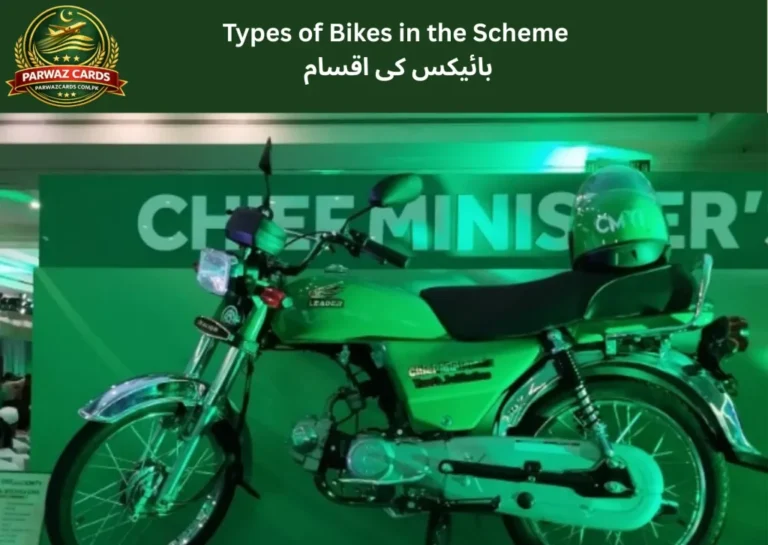
Here’s something almost none of the search results get right: there is no separate, officially named “Electric Scooty Scheme” distinct from the e-Bike Scheme. “Scooty” is simply one of the bike styles available inside the CM Punjab e-Bike Scheme — a step-through, easier-to-ride design, alongside standard motorbike-style electric and petrol bikes. The scheme’s own FAQ confirms both scootie and motorbike versions are offered, and applicants pick from a catalogue on the portal rather than bringing their own preferred brand.
Why does this matter? Because if you go looking for a website with “scooty” in its name expecting a different registration process, a different portal, or a different subsidy, you’ll end up on one of the many unofficial “informational” sites that have sprung up around this topic — some of which openly admit in their own fine print that they are not affiliated with the Punjab government. Bookmark bikes.punjab.gov.pk and the flagship project page at punjab.gov.pk/cm-ebikes-scheme instead; those are the only two domains you should trust for actual application steps.
You may also come across claims of a separate “Pink Scooty Scheme” for women. As of this writing, we could not verify this as an officially, independently named programme through punjab.gov.pk or credible news coverage — it appears mainly on low-quality aggregator sites. What is officially confirmed is that women get substantial, real benefits within the main e-Bike Scheme (the full down payment and registration fee waiver described above), so don’t wait for a separate “Pink Scooty” portal that may not exist — apply through the main scheme when it opens.
Laptop Scheme Updates: Access the latest guides on official portal logins, merit lists, eligibility criteria, and registration updates for student laptop programs.
Eligibility Criteria: Who Can Apply (and Who Cannot)
Based on the scheme’s established rules and the categories confirmed for the 2026 relaunch CM Punjab Electric Scooty (E-Bike) Scheme 2026:
| Category | Requirement |
|---|---|
| Age | Minimum 18 years old |
| Residency | Valid Punjab domicile |
| Education (student category) | Regular (on-campus) student at an HEC-recognised degree college or university |
| Licence | Valid motorcycle learner’s permit or driving licence — mandatory for both male and female applicants |
| Vehicle ownership | Should not already own a registered motorcycle/vehicle in your name |
| Family limit | Only one bike per household, even if more than one sibling qualifies and is balloted |
| New in 2026 | Government employees are now a named eligible category (specific grade/service rules had not been detailed publicly as of writing) |
Who typically does NOT qualify:
- Applicants under 18 years of age
- Distance-learning students (historically, Virtual University/AIOU-style enrolment did not count as “regular” enrolment)
- Anyone without a valid learner’s permit or motorcycle licence
- Anyone who already owns a registered vehicle
- A second sibling from a family where one member has already been selected in balloting
A word of caution: eligibility rules for the newly announced 100,000-bike phase — including whether it’s limited to certain cities the way Phase 1 was, or open across all of Punjab — had not been separately published at the time of writing. Treat the table above as “the rules that have governed this scheme so far,” and confirm the final version the day registration opens.
Required Documents
Keep scanned, clear copies of the following ready so you’re not scrambling once the portal opens:
- CNIC (original + copy) — your primary identity document; since the scheme requires applicants to be 18+, a CNIC (not a B-Form) is what you’ll need.
- Proof of Punjab domicile — confirms provincial residency.
- Valid motorcycle learner’s permit or driving licence — issued by a recognised Licensing Authority; without this, your application won’t clear verification.
- Proof of enrolment — student card or admission/enrolment letter from your HEC-recognised college or university (student category).
- Service certificate / department NOC — for the government employee category, based on how similar BOP-financed employee schemes have worked.
- Recent passport-size photograph — for your online profile and, later, your bike registration.
- Guarantor’s documents — CNIC and contact/income details of a guarantor (typically a parent or close relative), unless you qualify for the parental-guarantor waiver extended to students without a living parent.
- Active mobile number registered in your own name — used for SMS updates on balloting and verification status; mismatched numbers have historically caused delays.
Tip: Have digital copies (not just physical originals) ready in PDF or JPEG format under 2MB each — most government portals in Punjab, including this one, reject oversized uploads.
Step-by-Step Application Process
The steps below reflect how the scheme has run in its established form, since that’s the documented process; the new 100,000-bike phase is expected to follow the same digital-only model once its portal goes live. We’ll flag anywhere the 2026 process might differ.
- Go to the official portal — bikes.punjab.gov.pk (or follow the link from punjab.gov.pk/cm-ebikes-scheme, which is the government’s own flagship-projects listing). What you’ll see: a clean, government-branded homepage with a Punjab flag/emblem, a short scheme description, and a prominent “Register” or “Apply Online” button — no payment request should ever appear at this stage.
- Create your applicant profile using your CNIC number and an active mobile number. You’ll receive an OTP (one-time code) by SMS to verify the number — make sure it’s a SIM registered in your own name.
- Fill in your personal and category details — student or government employee, your institution/department, city, and domicile district. What you’ll see: a multi-field form, typically divided into tabs like “Personal Info,” “Education/Employment,” and “Documents.”
- Select your preferred bike from the official catalogue. You can only choose from models listed on the portal — no outside brand or private dealer purchase qualifies for the subsidy. This is also where you’d indicate electric vs petrol, and scooty vs standard motorbike styling, if both are offered in your category.
- Upload your documents — CNIC, domicile, enrolment/service proof, licence or learner’s permit, photograph, and guarantor details. What you’ll see: individual upload boxes with file-size limits; a green tick usually confirms a successful upload, red text flags a rejected file format or size.
- Submit and note your tracking/reference number. This is what you’ll use for all future status checks and helpline queries — screenshot it or write it down.
- Wait for the e-balloting result. If applications exceed the available quota in your district, the Punjab Information Technology Board (PITB) conducts a computerised, transparent electronic ballot. Results are typically communicated by SMS and published on the portal — there is no interview, no office visit, and no “recommendation” that can move you up the list.
- Guarantor and financial verification by Bank of Punjab. If balloted, BOP verifies your (or your guarantor’s) documents and credit history (ECIB report). This is the stage where a guarantor’s poor credit history most commonly causes rejection — so choose a guarantor carefully.
- Visit your nearest BOP branch with original documents to complete the down payment and financing paperwork. Only after this step is the bike formally allotted to you.
- Collect your bike and begin your interest-free monthly instalments as scheduled. Note that registration/number-plate cost is historically billed separately from the instalment plan, so budget for it.
Benefits & Subsidy Details: The Exact 2026 Numbers
| Item | Amount / Detail |
|---|---|
| Government subsidy per electric bike | Rs. 70,000 |
| Down payment — male students | Rs. 14,000 |
| Down payment — female students | Fully covered by government (waived) |
| Registration fee — female students | Fully covered by government (waived) |
| Monthly instalment (interest-free) | Rs. 2,100/month |
| Markup/interest charged | 0% — government absorbs the full bank markup |
| Bikes to be distributed | 100,000 over the next 12 months |
| Newly eligible category | Government employees (alongside students) |
| Extras confirmed under the scheme | Battery insurance and warranty; parental-guarantor waiver for students without a living parent; solar charging points planned for campuses |
To put the Rs. 2,100 monthly instalment in perspective: if Iqra’s family is currently paying close to Rs. 6,000 a month on vans and rickshaws, an e-bike instalment of Rs. 2,100 — with no fuel cost beyond a home electricity top-up — is close to a 65% reduction in her monthly transport spend, even before counting the time saved.
One clarification worth repeating: this is a subsidised financing scheme, not a free giveaway. Every applicant (male or female) still pays the Rs. 2,100 monthly instalment; what differs by gender is who covers the upfront down payment and registration fee.
Common Mistakes to Avoid
- Paying anyone before allotment. The real portal never asks for “processing fees,” “booking charges,” or payment to secure your balloting slot. Treat any such request as a scam.
- Applying on a look-alike website. Several sites with “e-bike,” “scooty,” or “CM Punjab” in the name are not government-run — some explicitly disclose this in their own footer. Only bikes.punjab.gov.pk and punjab.gov.pk are official.
- Assuming the bike is completely free. It’s zero-interest financing with a government subsidy, not a free distribution — budget for your instalments.
- Ignoring your guarantor’s credit history. A guarantor with a poor ECIB record is one of the most common, and most avoidable, reasons for rejection at the BOP verification stage.
- Uploading blurry or oversized documents. Incomplete or unreadable uploads are rejected automatically before your file even reaches a human reviewer.
- Confusing this with other provinces’ or the federal government’s similar schemes. Balochistan, for instance, has run its own separate CM Scooty Scheme with different subsidy figures — don’t mix up the numbers when researching.
- Assuming Phase 1 eligibility rules (like the five-city limit) automatically carry over. Confirm the exact 2026 rules the day the new portal opens, since these have not been separately published yet.
Frequently Asked Questions
Deadlines, Helpline Numbers & Official Links
- Application deadline: None announced yet for the 100,000-bike 2026 phase. Historically, Phase 1 had rolling/phase-wise cut-offs (for example, bike-selection changes were allowed only until April 29, 2024) — expect similar interim deadlines once applications open.
- Official helpline (Bank of Punjab): 042-111-333-267
- Official support email: support@bikes.punjab.gov.pk
- Official scheme portal: bikes.punjab.gov.pk
- Official government overview page: punjab.gov.pk/cm-ebikes-scheme
- Official Government of Punjab social channels: Facebook and X/Twitter — @GovtofPunjabPK
Save these five details somewhere you’ll actually find them again (a notes app, not just this tab) — they are the only channels through which you should ever share your CNIC or make a payment related to this scheme.
Pros, Cons & Real Impact on Punjab Families
Pros:
- Genuine cost relief: a Rs. 2,100 monthly instalment against typical daily-commute costs of Rs. 5,000–8,000 is a meaningful saving for most student households.
- Zero interest: the government — not the applicant — absorbs the bank’s markup entirely.
- Strong support for women: the full down payment and registration-fee waiver removes the single biggest upfront barrier for female students and workers.
- Built-in protections: battery insurance, warranty, and (per the original announcement) a waived guarantor requirement for students without a living parent.
- Real, demonstrated scale: official figures already show tens of thousands of bikes delivered under the earlier phase before this fresh 100,000-bike expansion was even announced — this isn’t a scheme that exists only on paper.
Cons and realistic limitations:
- The portal isn’t live yet. Anyone telling you they can “register you now” for the 2026 phase should be treated with suspicion.
- Charging infrastructure is still catching up, particularly outside big cities — a real consideration if your daily commute is long or your area has unreliable electricity.
- The bike isn’t yours until fully paid off — historically, ownership stays with the bank/government until the last instalment clears, so it can’t be sold or transferred mid-financing.
- Balloting means selection isn’t guaranteed — high demand in earlier rounds meant many eligible applicants weren’t chosen.
- A weak guarantor can sink an otherwise-strong application — this is worth sorting out before you apply, not after.
- Geographic and category rules for 2026 remain unclear at the time of writing, which means some eligible-sounding applicants may still find themselves excluded once fine print is published.
Real impact: Government figures already put deliveries from the original phase in the tens of thousands, and the province’s own monitoring unit has tracked more than 12,000 bikes reaching students in an earlier count alone. Scaled up five-fold to 100,000 bikes, and paired with a instalment cut to roughly a third of the original e-bike payment, this relaunch has the potential to reach a meaningfully larger share of Punjab’s student population than the first phase ever did — provided the rollout keeps pace with the announcement.
Conclusion: What You Should Actually Do Right Now
The CM Punjab e-Bike Scheme — “electric scooty scheme” in everyday conversation — is real, has already delivered tens of thousands of bikes, and has just been approved for a major, well-funded expansion. But if you take one thing from this guide, let it be this: as of today, the application window for the new 100,000-bike phase has not opened, and no legitimate source can register you early.
Here’s your practical checklist while you wait:
- Gather your CNIC, domicile proof, enrolment/employment proof, and learner’s permit or licence now, so you’re not scrambling later.
- Line up a guarantor with a clean credit history, if you’re a student applicant.
- Bookmark bikes.punjab.gov.pk and check it every week or two rather than relying on random social media posts.
- Ignore any site or page that asks for payment before allotment — that is never how this scheme has worked.
- Once registration opens, move quickly but carefully — incomplete uploads are one of the most common, avoidable reasons applications stall.
We’ll update this guide the moment the official portal for the 2026 phase goes live with confirmed dates. Until then, keep this page bookmarked — it’s the fastest way to separate real updates from recycled rumours.