Imagine getting an electricity bill of Rs. 8,000 or Rs. 10,000 every month — and most of that is fuel adjustments and taxes, not even the electricity you used. Then imagine hours of load-shedding on top of that. This is the daily reality for millions of Pakistani families in 2026.
The good news? The Government of Pakistan — both at the federal and provincial level — has launched one of the biggest solar energy programs in the country’s history. The PM Solar Panel Scheme 2026 (along with the CM Punjab Solar Panel Scheme, also known as the Roshan Gharana Solar Program) is giving away free or heavily subsidized solar systems to eligible low-income households.
No more worrying about monthly bills. No more sitting in the dark during load-shedding. This scheme is a real, government-backed opportunity — and thousands of families are already benefiting from it.
But here is the problem: most people do not know how to apply, what documents they need, or even if they are eligible. Many families miss out simply because of wrong information or small mistakes during registration.
That is why we at DailyAgahi.com have written this complete, easy-to-understand guide — covering every single detail about this scheme in May 2026. Whether you live in Lahore, Multan, Dera Ghazi Khan, or any part of Punjab, this article will walk you through everything step by step.
Always verify the latest updates from the official portal: cmsolarscheme.punjab.gov.pk or by sending an SMS to 8800. Government programs can update their rules at any time.
What Is the PM / CM Punjab Solar Panel Scheme 2026?
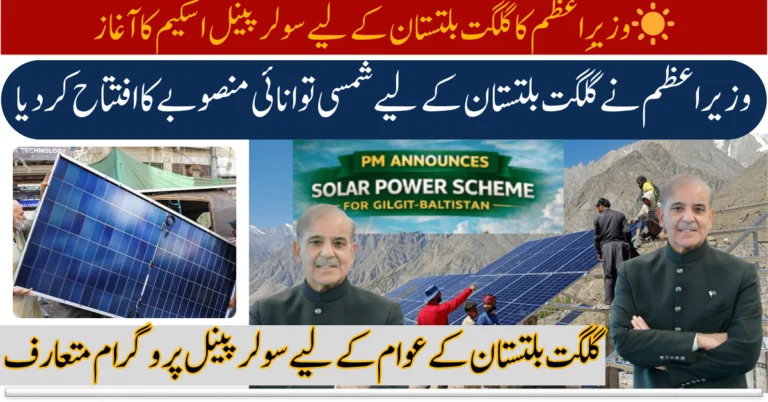
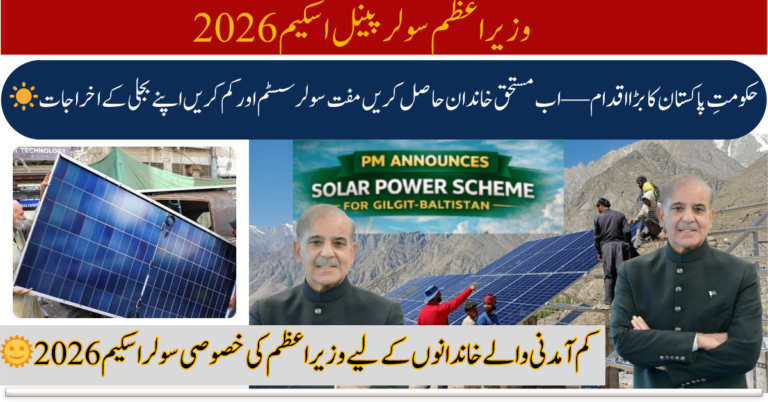
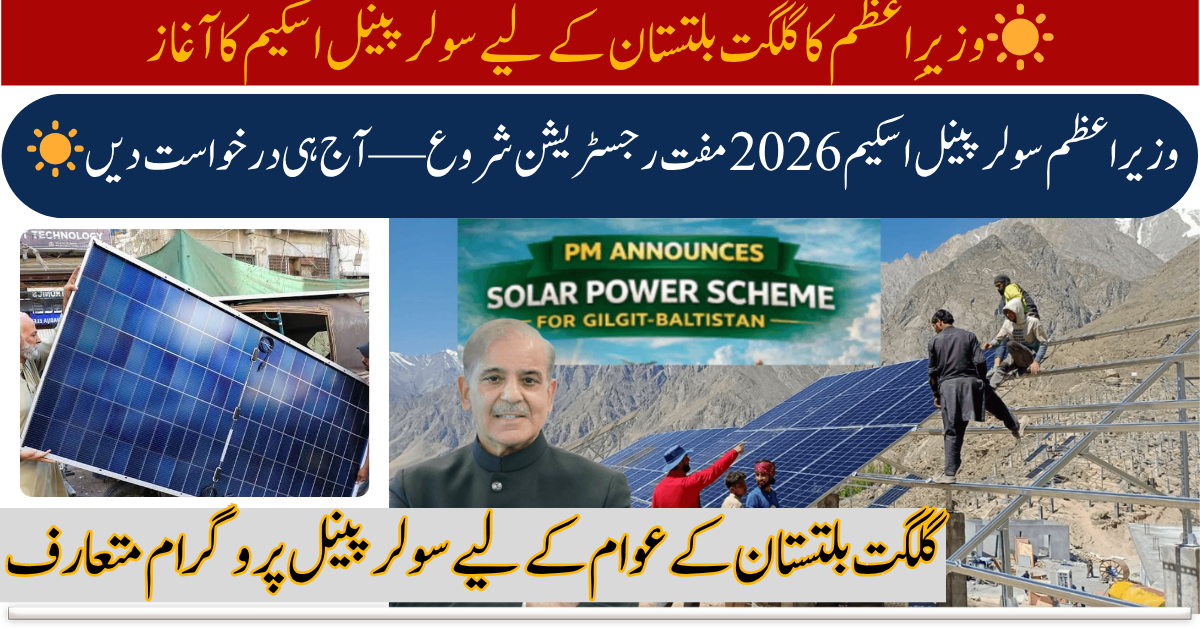
The CM Punjab Free Solar Panel Scheme 2026 — officially launched by Chief Minister Maryam Nawaz Sharif — is a welfare program by the Government of Punjab that provides completely free solar panel systems to deserving households. At the federal level, PM Shehbaz Sharif’s government has also rolled out solar initiatives under the broader national energy strategy, including projects for Gilgit-Baltistan and other underserved areas.
Here is a quick overview of the Punjab scheme — the largest and most widely accessible solar program in Pakistan right now:
| Detail | Information |
|---|---|
| Scheme Name | CM Punjab Free Solar Panel Scheme (Roshan Gharana Program) |
| Launched By | Chief Minister Punjab, Maryam Nawaz Sharif |
| Launch Year | 2024 (Expanded & Active in 2026) |
| Total Beneficiaries (Target) | Up to 100,000 households (Phase-wise) |
| System Size | 2 kW to 5 kW solar systems |
| Cost to Beneficiary | Free of cost (0 rupees) |
| Eligible Provinces | Punjab (primary); Federal scheme for GB & other areas |
| Electricity Limit | 0–200 units per month consumption |
| Official Portal | cmsolarscheme.punjab.gov.pk |
| SMS Registration | Send Bill Ref No. + CNIC to 8800 |
| Registration Status (May 2026) | Open (Extended deadline – December 2026) |
| Selection Method | Transparent computerized balloting |
What Does the Solar System Include?
When you are selected under this scheme, the government installs a complete solar solution at your home — not just panels. Here is what you get:
- Solar PV panels (mono-crystalline, high efficiency)
- Battery backup system (for use at night or during cloudy weather)
- Inverter (converts solar energy to usable electricity)
- Charge controller
- Mounting structure and wiring
- Professional installation by government-certified technicians
- Handover certificate + warranty details
The system capacity (2 kW or 5 kW) depends on your household’s electricity usage and the phase of the scheme you are included in. Larger systems are given to slightly higher-consuming households within the eligible range.
How Is This Different From Commercial Solar?
If you were to buy a solar system commercially in 2026, a basic 3 kW system costs approximately Rs. 400,000 to Rs. 600,000. Under this scheme, eligible families get a similar system completely free. The government bears the full installation cost and handles everything from survey to handover.
Complete Eligibility Criteria
Before you apply, you must check whether you qualify. The government has set clear rules, and applications that do not meet these criteria will be automatically rejected during the verification process.
✅ Who IS Eligible?
| Criteria | Requirement | Status |
|---|---|---|
| Province of Residence | Must be a permanent resident of Punjab | ✔ Required |
| Electricity Consumption | Monthly usage must be 0 to 200 units | ✔ Required |
| Sanctioned Load | Up to 2 kW sanctioned load on electricity connection | ✔ Required |
| Property Type | Must be a residential property (not commercial or rental) | ✔ Required |
| CNIC | Valid Pakistani CNIC (registered in Punjab) | ✔ Required |
| Electricity Connection | Must be a domestic electricity consumer (LESCO, MEPCO, FESCO, GEPCO, HESCO, PESCO) | ✔ Required |
| Priority Categories | Widows, women-led households, disabled persons, low-income families get priority | ✔ Priority Given |
❌ Who is NOT Eligible?
This is equally important to understand. The following people will be rejected even if they apply:
- Households using more than 200 units per month of electricity
- Commercial or industrial electricity consumers
- Rental property owners (the connection must be in your name at your home)
- Applicants who do not reside in Punjab (for the Punjab scheme)
- Anyone who has already received solar panels through a government scheme
- Government employees with higher income brackets (in many phases)
- Households with sanctioned load above 2 kW
Do NOT apply if your monthly bill regularly shows more than 200 units. If your consumption has crossed this limit even temporarily, your application may be flagged. Apply only if you genuinely fall within the eligible range.
Special Priority Groups
If you belong to any of the following groups, your application gets higher priority during the balloting process:
- 👩 Widows and women-headed households
- ♿ Persons with disabilities (PWD)
- 🏘️ Rural and semi-urban area residents
- 👴 Senior citizens (60+ years) as primary bill holders
- 💼 Daily wage workers and low-income families
Required Documents for Application
Having the right documents ready before you apply saves a lot of time and prevents rejection. Here is the complete list:
| # | Document | Details / Notes | Required? |
|---|---|---|---|
| 1 | CNIC (National ID Card) | Must be valid and not expired. Front and back copy needed. | ✔ Mandatory |
| 2 | Latest Electricity Bill | Most recent 1–3 months’ bills showing ≤200 units. Bill Reference Number is essential. | ✔ Mandatory |
| 3 | Active Mobile Number | Must be registered on your own CNIC (for SMS updates and OTP verification). | ✔ Mandatory |
| 4 | Proof of Residence | Domicile certificate, utility bill, or any official document showing Punjab address. | ✔ Mandatory |
| 5 | Passport-size Photograph | Recent photo (for online portal upload — clear background). | ✔ Mandatory |
| 6 | Disability Certificate | Only if claiming disability priority category. | Optional (Priority) |
| 7 | Death Certificate of Spouse | Only for widows applying under priority category. | Optional (Priority) |
| 8 | B-Form / Family Registration | May be requested during physical verification stage. | May Be Required |
Make clear scanned copies or photos of all documents before you start the online application. Blurry or incomplete uploads are one of the top reasons applications get rejected. Use a scanner app on your phone like CamScanner for best results.
Step-by-Step Application Process
There are three ways to apply for the CM Punjab Solar Panel Scheme 2026. Choose the method that is easiest for you.
Method 1: Online Application (Recommended)
This is the fastest and most preferred method. The government’s online portal is available 24/7.
Visit the Official Portal
Open your browser and go to cmsolarscheme.punjab.gov.pk. Make sure you are on the correct official website — double check the URL carefully.
Create Your Account
Click on “Register” or “New Application.” Enter your CNIC number and active mobile phone number. An OTP (one-time password) will be sent to your phone — enter it to verify.
Fill in Your Details
Enter your personal information: full name (as on CNIC), address, district, tehsil. Then enter your electricity Bill Reference Number (found on your electricity bill — it is a 10-14 digit number).
Upload Required Documents
Upload clear images of your CNIC (front & back), latest electricity bill, and passport photo. Make sure each file is under the size limit shown on the portal (usually 2 MB per file).
Review & Submit
Carefully read all information before clicking Submit. Check your CNIC number, bill reference number, and mobile number one more time. A single wrong digit can cause rejection.
Save Your Application Number
After submission, you will receive a confirmation SMS with your Application Number / Tracking ID. Keep this safe — you will need it to track your application status later.
Wait for Balloting Result
Applications go through eligibility screening, then a computerized transparent balloting. If selected, you will receive an SMS notification. Selected applicants then go through physical verification before installation.
Method 2: SMS Registration
For those who do not have easy access to the internet or find online portals difficult, SMS registration is available. This is simple and can be done from any mobile phone.
Type: [Bill Reference Number] [space] [Your CNIC Number]
Send to: 8800
Example: If your Bill Ref is 1234567890 and your CNIC is 3520111234567
Send: 1234567890 3520111234567 to 8800
You will receive a confirmation SMS after successful registration. Standard SMS charges apply.
Your Bill Reference Number is printed on your electricity bill. It is usually labeled as “Reference No.” or “Ref No.” at the top of the bill.
Method 3: In-Person / Offline Application
If you are unable to apply online or via SMS, you can visit the following locations for assisted registration:
- Bank of Punjab branches — across Punjab districts
- Government Facilitation Centers (Khidmat Markaz) — in major cities and towns
- District Administration Offices — for guidance and assistance
- PITB-authorized service centers — in selected locations
Beware of agents and middlemen who claim they can “guarantee” your selection for a fee. This scheme has no agents. Anyone asking for money to process your application is a FRAUD. Register yourself only through official channels.
After Application: What Happens Next?
- Eligibility Verification — System cross-checks your CNIC, electricity bill data, and consumption history against NADRA and DISCO databases.
- Balloting — If eligible, your application enters the transparent computerized balloting (lucky draw) system.
- Physical Verification — Government officials visit your home to confirm the property details and assess installation suitability.
- Installation — Certified technicians install the complete solar system, usually within a few days of approval.
- Handover — You receive a handover certificate and warranty information.
Benefits and Monthly Savings
This scheme is not just about getting free panels — it is a life-changing financial relief for low-income families. Here is what you can realistically expect:
- Rs. 3,000–6,000
- Monthly electricity bill savings
- Rs. 36,000–72,000
- Annual savings per household
- Rs. 4–6 Lakh
- Commercial value of free system
- 20–25 Years
- Expected lifespan of solar panels
Full List of Benefits
- 💰 Zero electricity bill for most of the day during sunny hours
- 🔋 Battery backup ensures power even at night or during cloudy weather
- 🌱 Eco-friendly — reduces carbon footprint and dependence on fossil fuels
- ⚡ Protection from load-shedding — solar + battery keeps lights on during outages
- 📈 Increases property value — a solar-powered home is worth more
- 🛡️ Government warranty — system comes with warranty and official support
- 👩👧 Empowers women — priority for widows and female-headed households
- 📚 Children can study without power cuts at night — better academic outcomes
- 🏭 Supports small businesses run from home (sewing, shops, etc.)
| Before Solar (Average) | After Solar (Estimated) |
|---|---|
| Monthly bill: Rs. 3,000–8,000 | Monthly bill: Rs. 0–500 (minimal grid usage) |
| 8–12 hours of load-shedding daily | Uninterrupted power during daylight + battery backup |
| Cannot run fans/lights during outages | Fans, lights, small appliances run normally |
| UPS batteries need replacement every 2–3 years | Solar battery lasts 5–10 years with proper use |
| Worried about next month’s bill | Financial stress significantly reduced |
Important Dates, Deadlines & Latest 2026 Updates
This section has been updated as of May 2026. Government programs change frequently, so always verify the latest status from the official portal.
| Event / Milestone | Date / Status |
|---|---|
| Scheme first launched | 2024 (Government of Punjab) |
| Phase 1 original deadline | January 5, 2025 |
| Scheme expanded to 2026 | January 2026 |
| CM extended deadline (major update) | Extended to December 2026 |
| Registration Status (May 2026) | ✅ OPEN — Apply Now |
| Phase 2 registrations | Ongoing in 2026 |
| Official Last Date | Not yet officially fixed (apply early!) |
| Gilgit-Baltistan federal solar scheme | Active 2026, 100MW project, target completion 2027 |
🆕 Latest Updates – May 2026
- CM Punjab has officially extended the deadline to December 2026, giving more families a chance to apply.
- The scheme is currently in Phase 2 — if you missed Phase 1, you can still apply.
- The federal government’s solar initiative for Gilgit-Baltistan (100MW project) is also active, targeting remote mountain communities.
- Applications are being processed in batches — selected applicants receive SMS updates at each stage.
- Registration portal cmsolarscheme.punjab.gov.pk is fully functional as of May 2026.
- SMS registration via 8800 remains active.
Even though the deadline has been extended to December 2026, do NOT wait. Server load increases near deadlines, and early applicants get processed first. Apply today.
Common Mistakes and How to Avoid Them
Thousands of applications are rejected every month because of small, avoidable errors. Here are the most common mistakes — and how you can avoid them:
| Common Mistake | Why It Gets Rejected | How to Fix It |
|---|---|---|
| Wrong CNIC number entered | NADRA verification fails immediately | Triple-check all 13 digits before submitting |
| Wrong or old Bill Reference Number | Cannot match your electricity account | Use the latest bill; find Ref No. at top of bill |
| Mobile number not registered on CNIC | OTP cannot be verified; SMS updates won’t arrive | Use a SIM registered on your own CNIC |
| Consumption exceeds 200 units | Auto-rejected at screening stage | Only apply if your bills consistently show ≤200 units |
| Blurry document uploads | Documents cannot be verified during review | Use good lighting; scan at 300 DPI or higher |
| Applying through fake/duplicate portals | Application never reaches government; data stolen | Only use cmsolarscheme.punjab.gov.pk |
| Applying multiple times | Duplicate applications get flagged and all rejected | Apply once and track your existing application |
| Ignoring SMS updates | Miss important steps or deadlines | Keep phone active and check SMS regularly |
| Paying an “agent” for guaranteed selection | Loses money; selection is by balloting — no agents | Never pay anyone; report frauds to authorities |
How to Check Your Application Status
- Visit cmsolarscheme.punjab.gov.pk
- Log in with your CNIC and registered mobile number
- Click “Track Application” or “Check Status”
- Your current application stage will be shown
You can also receive updates automatically via SMS on your registered mobile number at each stage of the process.
Frequently Asked Questions (FAQs)
Conclusion
The PM Solar Panel Scheme 2026 and the CM Punjab Free Solar Panel Scheme are not just government programs — they represent a real, tangible change for millions of Pakistani families who struggle with high electricity bills and constant load-shedding every single day.
If you or someone in your family uses 200 units or less of electricity per month and lives in Punjab, this is one of the biggest financial opportunities of 2026. A solar system worth Rs. 4 to 6 lakh is being given completely free. The monthly savings of Rs. 3,000 to Rs. 6,000 can make a meaningful difference in a household’s budget.
The registration deadline has been extended to December 2026 — but do not wait. Server load increases near deadlines, and early applicants tend to get processed first. Apply today using one of the three methods: online, SMS to 8800, or in-person at your nearest facilitation center.
Remember: this scheme is 100% free. No agent, no middleman, no fee. If anyone tells you otherwise, they are trying to defraud you.