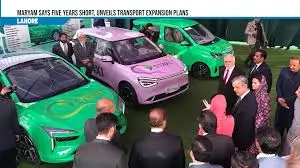
Chief Minister Maryam Nawaz’s landmark vehicle financing initiative is reshaping car ownership for middle-income families across Punjab. Here is everything you need to know before applying.
Published: April 1, 2026Updated: Latest Phase ActiveReading Time: ~9 MinutesCategory: Government Schemes
6–8%Subsidized Markup
Rs. 25KMonthly Installment (est.)
3–7 YrsRepayment Period
25%Quota for Women
“As automation accelerates, staying informed on the AI employment impact predictions 2026-2030 is crucial for workers in the textile and agriculture sectors.”
For millions of families in Punjab, owning a car has long been a distant dream — blocked by high-interest bank loans, steep down payments, and an opaque application process. The CM Punjab Meri Gari Scheme 2026, launched under the leadership of Chief Minister Maryam Nawaz, aims to change that equation permanently.
What Is the CM Punjab Meri Gari Scheme 2026?
The CM Punjab Meri Gari Scheme 2026 is a government-backed vehicle financing program introduced by the Government of Punjab to make car ownership affordable and accessible for low- and middle-income citizens of the province. Unlike conventional commercial auto loans — which typically carry markup rates well above 20% — this scheme provides subsidized financing through partner financial institutions, most notably the Bank of Punjab, at significantly reduced rates.
The scheme is not simply about purchasing a vehicle. It is designed to serve three overlapping goals: improving daily mobility for working families, creating self-employment opportunities through ride-hailing and delivery services, and promoting eco-friendly transport through an integrated Green E-Taxi component. In the 2026 phase, the program has been modernized with a fully digital application system, computerized balloting, and an expanded list of eligible vehicles — making it broader and more transparent than any previous iteration.
“With new car prices soaring, checking out the top 10 cars in Pakistan under 10 lakhs 2026 can help you find a reliable vehicle without overstretching your budget.”
Applications are now being processed through the official Punjab Government vehicle financing portal at e-taxi.punjab.gov.pk, with eligible citizens able to register, upload documents, and track their application status entirely online.
Why the 2026 Phase Is Different
Previous versions of government car financing schemes in Punjab faced criticism over limited vehicle options, manual processes susceptible to corruption, and a narrow eligible population. The 2026 Meri Gari Scheme addresses each of these issues directly.
Expanded vehicle selection: Previously limited to 660cc engine vehicles, the 2026 phase now includes a broader range of compact and mid-range cars — both brand new and certified used vehicles up to three years old. This expansion gives budget-conscious applicants genuine choices instead of a single forced option.
AI-based digital balloting: To eliminate favoritism and manual manipulation, the government has introduced a transparent, AI-assisted computerized e-balloting system for high-demand categories, particularly the Green E-Taxi segment. This ensures fair selection among qualified applicants.
Reserved quotas for underserved groups: A dedicated 25% quota has been reserved for women applicants, with additional priority consideration given to differently-abled individuals and young professionals. Women applicants are also permitted to nominate a licensed family member as the primary driver, removing a barrier that previously excluded many female applicants.
Fully paperless processing: Document verification, income assessment, and application tracking are all conducted through the digital portal. Citizens can monitor real-time status updates via the portal or through SMS alerts sent to their registered mobile numbers.
The CM Punjab Meri Gari Scheme 2026 blends subsidized car financing with a parallel Green E-Taxi model, positioning Punjab toward both economic relief and cleaner mobility — a dual objective that sets it apart from previous vehicle subsidy programs.
Financial Structure: What You Will Actually Pay
Understanding the financial mechanics of the scheme is essential before applying. Here is a clear breakdown of how the financing model works in the 2026 phase:
| Feature | Details |
|---|---|
| Down Payment | 15% to 20% of vehicle price |
| Subsidized Markup Rate | Approximately 6% to 8% per annum |
| Estimated Monthly Installment | Starting from Rs. 25,000 (vehicle-dependent) |
| Repayment Period | 3 to 7 years (flexible) |
| Financing Partner | Bank of Punjab (primary) + approved institutions |
| Vehicle Options | New or certified used (up to 3 years old) |
| Green E-Taxi Markup | 0% (fully interest-free, government-covered) |
To put these numbers in practical context: for a vehicle priced at approximately Rs. 1.6 million, the down payment would range between Rs. 240,000 and Rs. 320,000, with monthly installments of around Rs. 25,000 spread over five to seven years. Financial advisors recommend keeping installments within 35% of monthly income to maintain household financial stability.
The subsidized markup is the key relief factor here. Compared to commercial bank auto loan rates — which frequently exceed 20% to 22% annually in the current economic climate — the 6% to 8% government-subsidized rate represents a saving of tens of thousands of rupees over the lifetime of the loan. The government covers the differential markup cost directly, making this one of the most affordable formal vehicle financing options available in Pakistan.
Eligibility Criteria — Who Can Apply?
The government has kept eligibility practical and accessible, though a clean financial profile is essential. Applicants must satisfy the following conditions:
- Permanent resident of Punjab with valid domicile certificate
- Valid Computerized National Identity Card (CNIC)
- Age between 20 and 50 years at time of application
- Minimum verifiable monthly income of Rs. 30,000 (salary slip or bank statement)
- Clean credit history — no prior loan defaults on record
- Active mobile number registered in applicant’s name
- Valid driving license (or licensed family member nomination for women/differently-abled)
- No existing government-subsidized vehicle scheme benefit in last five years
Both government employees and private sector workers are eligible to apply, provided they can demonstrate income and meet credit requirements. Self-employed individuals and small business owners may also apply by submitting a six-month bank statement as income proof. For unemployed applicants particularly interested in the E-Taxi segment, submitting a basic ride-hailing income plan outlining expected daily trips, fuel costs, and installment coverage can significantly strengthen the application.
Special Priority Categories
Priority consideration under the 2026 scheme is being given to: female students and working women (benefiting from the 25% reserved quota); differently-abled individuals; young professionals under 30 with no prior car ownership history; and applicants from smaller cities and rural areas of Punjab who lack access to quality public transport. This inclusion policy signals a deliberate effort to distribute benefits beyond the major urban centers.
The Green E-Taxi Initiative: Zero-Interest Electric Vehicles
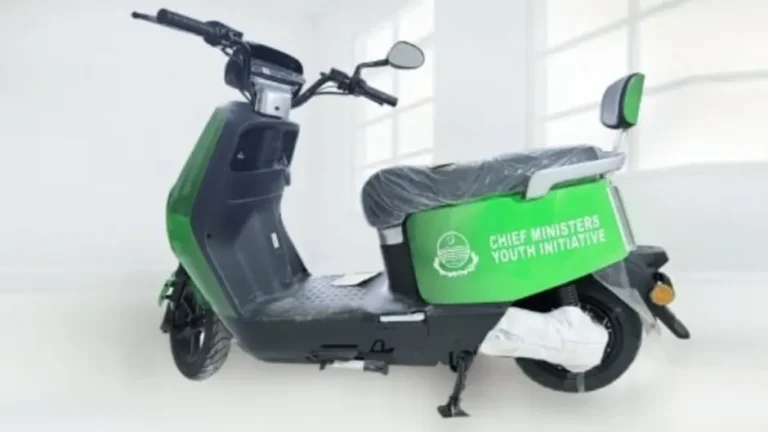
Running parallel to the standard Meri Gari Scheme is the CM Punjab Green E-Taxi Program — one of the most ambitious components of the 2026 transport policy. This segment focuses exclusively on electric vehicles and offers 100% interest-free financing, with the government absorbing the entire markup cost on behalf of qualifying applicants.
The Green E-Taxi initiative has two parallel objectives. First, it aims to reduce Punjab’s dependence on fossil fuel imports by introducing zero-emission electric taxis into urban transport networks. Second, it seeks to create structured, sustainable employment for unemployed youth who hold valid driving licenses but lack the capital to purchase a vehicle independently.
The first rollout phase of the E-Taxi program is targeting four major cities: Lahore, Faisalabad, Multan, and Rawalpindi. Approved electric vehicle models in the pilot phase include compact EVs suitable for ride-hailing and urban commuting. The government has confirmed partnerships with EV manufacturers including MG Motors Pakistan and several Chinese EV producers. Future integrations with platforms like Careem and InDrive are reportedly under discussion, which would allow E-Taxi drivers to begin earning from day one of vehicle delivery.
The government estimates that over 26,000 direct jobs will be created through this phase of the E-Taxi initiative alone — a figure that underscores its significance not merely as a transport policy, but as a youth employment program.
Over 100 EV charging stations are being installed across key cities to support the growing electric vehicle fleet, with the bulk of installations expected to be operational by mid-2026.
Required Documents for Online Application
Before beginning your application, ensure you have clear, readable scanned copies of all required documents in PDF or JPEG format. Blurred or mismatched documents remain the most common cause of application rejection. Prepare the following:
- CNIC (front and back) — must match the domicile province
- Punjab domicile certificate
- Latest utility bill (electricity, gas, or water) for address verification
- Salary slips for the last three months OR six-month bank statement
- Valid driving license (or nomination letter for differently-abled/women)
- Passport-size photograph (recent, white background)
- Bank account details (for financing coordination)
- Income plan (recommended for unemployed E-Taxi applicants)
⚠️ Fraud Warning: The Government of Punjab has made clear that no agents or third parties are authorised to charge fees for application assistance. The entire process is free and must be completed through the official government portal only. Any person claiming to guarantee approval in exchange for payment is committing fraud. Report such individuals to the Punjab Government helpline at 0800-02345.
Step-by-Step: How to Apply Online
The 2026 application system is entirely digital and designed to be user-friendly. Follow these steps carefully:
1 – Visit the Official PortalGo to the official Punjab Government vehicle financing portal at e-taxi.punjab.gov.pk. Do not use any third-party websites.
2 – Create Your AccountRegister using your CNIC number, active mobile number (registered in your name), and a valid email address.
3 – Fill in the Digital FormEnter your personal details, employment information, monthly income, and vehicle preference (new car or certified used car). Ensure all information matches your CNIC exactly.
4 – Select Your Vehicle CategoryChoose from approved new vehicle models or certified used cars up to three years old. E-Taxi applicants should select the Green E-Taxi option in this step.
5 – Upload DocumentsAttach all required documents as clear PDFs or JPEGs. Double-check that scans are legible and that names match across all documents.
6 – Submit and Save Your Tracking IDAfter submission, you will receive a unique Application Tracking ID. Save this number — it is your key to monitoring application status through the portal and SMS alerts.
7 – Verification and BallotingVerification typically takes 3–4 weeks. High-demand categories undergo computerised e-balloting. Successful applicants are notified via SMS and portal update, then contacted by the financing bank for down payment and documentation.
The application window for each phase is expected to remain open for 30 to 45 days from the official launch date. Given the overwhelming demand seen in previous phases, applicants are strongly advised to complete their application within the first week of the registration window opening.
How Beneficiaries Are Using Their Vehicles
Beyond simple transportation, many Meri Gari scheme beneficiaries are actively using their financed vehicles as income-generating assets — turning a monthly installment into a self-sustaining investment. Common income models include:
- Registering on ride-hailing platforms such as Careem, Uber, and InDrive
- Providing school pick-and-drop services in residential areas
- Courier and parcel delivery services through platforms like Bykea
- Airport and intercity passenger transfers
- Daily rental or women-only transport services
For many applicants, the monthly income generated through these services comfortably covers the installment payment — effectively making the car pay for itself over the financing period. Including a brief income usage plan in your application is recommended, as it demonstrates financial planning to the reviewing authority and can strengthen approval prospects.
Tracking Your Application Status
Once submitted, applicants can monitor progress through three official channels: the online portal (by logging in with your CNIC), automated SMS alerts sent to your registered mobile number, and in-person assistance at any Punjab e-Khidmat Centre across the province. The Punjab Government helpline at 0800-02345 also provides telephone support for technical issues and eligibility queries.
Why This Scheme Matters in 2026’s Economic Climate
Pakistan’s economic conditions in 2026 have made vehicle ownership increasingly difficult for salaried households. Persistent inflationary pressure, elevated fuel costs, and the sharp depreciation of the rupee have pushed commercial auto loan rates to levels that place traditional financing out of reach for the majority of Punjab’s 130 million residents. At the same time, urban public transport infrastructure in cities like Lahore, Faisalabad, and Multan remains chronically underfunded — leaving commuters dependent on costly rickshaws and informal transport options.
The Meri Gari Scheme addresses both sides of this equation. By subsidizing markup rates and lowering entry barriers for first-time buyers, it restores a pathway to vehicle ownership that inflation had closed. By integrating the Green E-Taxi component, it simultaneously builds the infrastructure for cleaner, cheaper urban transport — with each electric taxi representing one fewer petrol vehicle adding to the smog that blankets Punjab’s cities every winter.
Punjab’s 2026 transport financing model signals a broader shift — from traditional subsidy politics toward structured, technology-driven public policy. If managed with sustained transparency and adequate funding, the combination of the Meri Gari Scheme and the Green E-Taxi initiative could meaningfully reshape how families move, how youth earn, and how Punjab breathes.
Important Warnings and Advice
Apply only through the official government portal. Dozens of unofficial websites and social media accounts claim to offer application assistance, guaranteed approval, or fast-track processing — all for a fee. These are fraudulent. The government has issued repeated warnings that no intermediary is authorized or necessary.
Assess your finances carefully. The scheme offers real relief, but monthly installments are a multi-year financial commitment. Before applying, calculate whether your household can sustain the installment alongside existing expenses. Defaulting on installments can lead to late fees and, in persistent cases, vehicle repossession.
Act early. Registration windows have closed quickly in previous phases due to overwhelming demand. Once the portal opens for the current phase, delays of even a few days can mean missing the window entirely.
Quick Facts
Launched ByCM Maryam Nawaz
ProvincePunjab, Pakistan
Age Limit20 – 50 Years
Min. IncomeRs. 30,000/mo
Down Payment15% – 20%
Markup Rate6% – 8%
E-Taxi Markup0% (Free)
Tenure3 – 7 Years
Women Quota25%
Financing BankBank of Punjab
Official Helpline
Punjab Government Helpline0800-02345Free | Mon – Sat | 9am – 5pm
You can also visit any Punjab e-Khidmat Centre for in-person application assistance.
Documents Checklist
- CNIC (front & back)
- Punjab Domicile
- Latest Utility Bill
- Salary Slips / Bank Statement
- Driving License
- Passport Photo
- Bank Account Details
E-Taxi Cities (Phase 1)
Lahore — Capital priority zone
Faisalabad — Industrial belt coverage
Multan — South Punjab expansion
Rawalpindi — Twin-city corridor