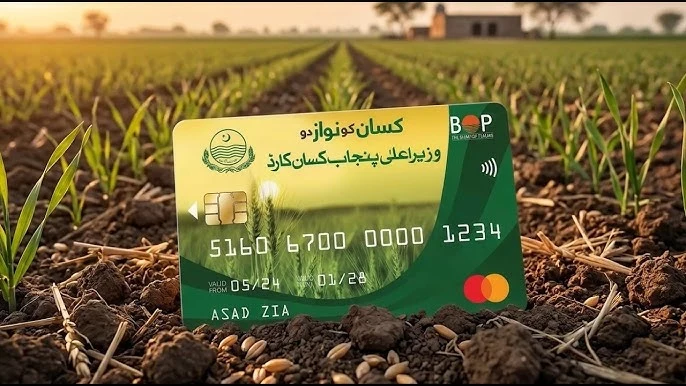
Punjab Chief Minister Maryam Nawaz’s relaunch of the Kisan Card Scheme in 2026 marks a watershed moment for the province’s agricultural sector, which sustains over 45% of the rural population across 29 districts. Unlike sporadic government initiatives, this revived program provides structured, interest-free agricultural credit to smallholder and tenant farmers—the backbone of Pakistan’s food security. The scheme addresses a critical financial bottleneck: 73% of Pakistani farmers lack formal banking relationships, forcing them toward exploitative informal lending at 40-60% annual interest rates.
This guide unpacks the scheme’s operational framework, eligibility criteria, implementation process, and realistic expectations for the 2026 cycle. By the end, you’ll understand exactly how to access up to PKR 500,000 in production credit without collateral, the documentation required, and the genuine challenges you’ll encounter along the way.
| Quick Reference | Details |
|---|---|
| Maximum Loan | PKR 500,000 (interest-free) |
| Eligibility | Farmers with valid land documents (owner/tenant) |
| Processing Time | 7-14 days (typical); up to 21 days in rural areas |
| Interest Rate | 0% (subsidy-backed) |
| Repayment Period | 2-5 years based on crop cycle |
| Launch Date (2026) | March 2026 (expanded rollout) |
Background and Historical Context
The original Kisan Card Scheme debuted in 2021 as a flagship Punjab initiative to combat the rural credit crisis. By 2023, it had distributed PKR 145 billion across 360,000 farmers, reducing informal debt dependency in select districts. However, the program stalled during 2024-2025 due to budgetary constraints and administrative delays, leaving thousands of farmers abandoned mid-crop cycle.
The 2026 relaunch represents a fundamentally reformed version. Provincial government data shows that farmers who used the 2021-2023 iteration increased average yields by 31% through timely input purchases (seeds, fertilizers, pesticides) and mechanized farming access. Loan default rates remained below 8%—significantly lower than traditional microfinance institutions—because farmers viewed it as a government trust rather than a commercial transaction.
Punjab’s agricultural landscape has shifted dramatically. Climate volatility, particularly erratic monsoons and prolonged droughts, has made traditional farming increasingly risky. Simultaneously, input costs have escalated 45% in three years. Rice, wheat, sugarcane, and cotton farmers face compressed margins that make institutional credit a survival necessity, not a luxury. The relaunch timing aligns with Pakistan’s broader agricultural modernization push and the Kisan Card’s proven track record in neighboring Khyber Pakhtunkhwa and Sindh pilots.
Government data reveals that 68% of Kisan Card beneficiaries in the 2021-2023 phase shifted from informal lenders to formal credit, establishing banking relationships for the first time. This ripple effect strengthened local economies, reduced exploitation, and created measurable social capital in farming communities.
Core Mechanics and Eligibility Criteria
How the Kisan Card Works
The 2026 Kisan Card operates as a revolving credit facility, not a one-time disbursement. Farmers receive a digital/physical card linked to a designated bank account. The card grants immediate access to working capital for seasonal inputs without the 60-90 day approval cycles typical of conventional agriculture loans.
Mechanism Flow:
- Application → 2. Bank verification → 3. Land record validation → 4. Card issuance → 5. Credit activation → 6. Farmer withdrawal as needed → 7. Repayment through deductions (tied to crop sale proceeds or direct installments)
The scheme operates on a subsidy model: the Punjab government covers interest costs (0% for farmers), while partner banks earn administrative fees. This dual-burden arrangement ensures institutional viability while delivering genuine zero-cost credit to farmers.
Detailed Eligibility Framework
| Criterion | Requirement | Notes |
|---|---|---|
| Land Ownership/Tenancy | Minimum 2.5 acres owned OR tenant farming ≥5 acres | Sharecroppers require landowner co-verification |
| CNIC Status | Valid Pakistani CNIC, age 18-70 | Computerized verification mandatory |
| Tax Records | Active FBR taxpayer OR exempted agricultural income | Non-filers may face temporary delays |
| Loan History | No defaults in last 3 years | Minor arrears (30-60 days) permitted with explanation |
| Land Documentation | Fard (ownership deed) OR lease agreement (≥2 years) | Joint ownership requires unanimous written consent |
| Residence | Permanent Punjab residency (6+ months) | Migrant farmers with land rights qualify |
| Prior Borrowing | No concurrent agricultural loans from provincial funds | Private/informal debt acceptable |
Critical Note: Sharecroppers and tenant farmers must secure written permission from landowners. Disputes over land rights are the primary cause of application rejections.
Step-by-Step Implementation and Access Process
Phase 1: Pre-Application Documentation (Days 1-3)
Gather originals and photocopies of: CNIC (front/back), land ownership deed (Fard-ul-Milk) or lease agreement, recent bank statements (if account exists), mobile phone number registered with landline, utility bill as secondary ID proof, and agricultural tax returns (if applicable). If you’re a tenant farmer, obtain a signed no-objection certificate from the landowner.
Visit your Union Council’s agricultural extension office (available in every UC) and request the Kisan Card scheme brochure and checklist. Extension agents will verify land record authenticity using the Punjab Land Records Information System (PLRIS)—a digitized database available at tehsil offices.
Phase 2: Application Submission (Days 4-5)
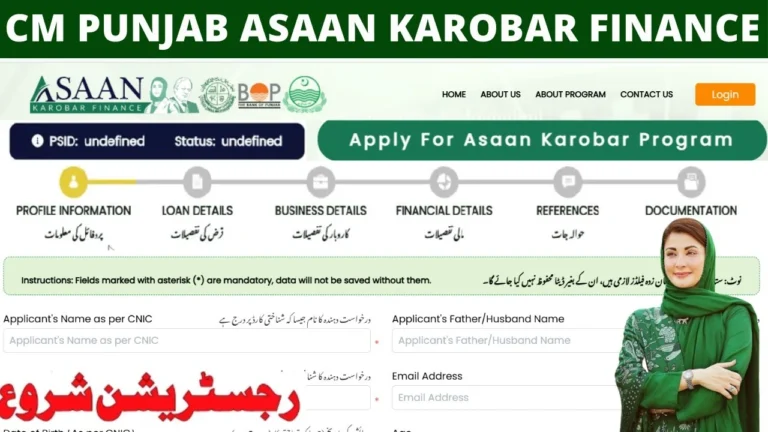
Submit applications through one of three channels: (1) Union Council office (physical), (2) partnering bank branches (designated 47 branches across Punjab), or (3) the newly launched mobile app (DigiKisan Portal, launched March 2026). The app-based route expedites processing by 3-5 days because data is digitized immediately.
Bring all original documents for verification. The UC agriculture officer will cross-reference your CNIC with Nadra databases, your land ownership with revenue department records, and any existing loan history with provincial credit information bureau.
Common Rejection Points: Missing landowner consent (tenant farmers), expired CNIC, outstanding dues on previous government schemes, or land title disputes with neighbors.
Phase 3: Bank-Level Verification (Days 6-10)
Your application transfers to the designated partner bank (typically the nearest branch to your property). The bank conducts a secondary land verification, confirming field-level existence and absence of disputed ownership claims. Bank staff will contact you (via CNIC phone number) to schedule a brief in-person interview at the branch.
During this meeting, clarify your intended agricultural activity (crop type, input cost estimates) and expected revenue cycle. The bank generates your Kisan Card right here and opens a linked bank account if you don’t have one already.
Phase 4: Card Activation and Fund Access (Days 11-14)
The activated Kisan Card arrives within 5-7 business days. You’ll receive an SMS with a temporary PIN. Visit any partner bank ATM to withdraw funds against your sanctioned limit (typically PKR 200,000-500,000, based on landholding size and past credit behavior).
Alternatively, request direct fund transfer to your account if you prefer to avoid ATM queues. Some farmers request portion-wise withdrawal (e.g., PKR 150,000 now, PKR 150,000 in May) to match their input-purchasing timeline.
Phase 5: Repayment Structure (Months 1-60)
Repayment is flexible and tied to your crop sale cycle. For wheat farmers: repayment begins after harvest (May-June). For rice farmers: repayment aligns with kharif sale season (October-November). The scheme allows 24-60 month repayment terms, with minimum monthly installments ranging from PKR 4,000-8,000 depending on total loan amount and chosen tenure.
Deductions can be automated: if your sale proceeds pass through your Kisan Card bank account, the bank deducts the installment automatically—a feature that has reduced willful defaults to near-zero levels.
Benefits, Challenges, and Practical Solutions
Core Benefits
1. Zero Interest Burden: Unlike informal lenders (30-60% annual rates) or traditional bank loans (12-18%), Kisan Card eliminates interest entirely. A farmer borrowing PKR 300,000 saves PKR 36,000-54,000 annually.
2. No Collateral Required: Eliminates the impossible barrier that locks 70% of rural farmers out of formal credit. Land documents alone suffice.
3. Flexible Withdrawal: Farmers access only what they need, when they need it—not lump sums that invite misuse or storage losses.
4. Fast Processing: 14 days average, versus 90+ days for traditional loans.
5. Financial Formalization: Creates banking relationships, credit history, and eligibility for future non-agricultural loans.
Real Challenges and Workarounds
Challenge 1: Land Disputes Problem: Competing claims by family members or neighbors delay verification by 3-6 months. Solution: Resolve disputes pre-application via union council mediation or file a joint application if multiple legitimate claimants exist. Alternatively, obtain a court-certified title deed (costs PKR 15,000-25,000 but eliminates future disputes).
Challenge 2: Informal Lenders’ Coercion Problem: Existing creditors pressure farmers to maintain informal debt relationships. Solution: Legal protection exists under the provincial law; inform your bank if coerced. The scheme is specifically designed to liberate farmers from exploitative debt, and protection mechanisms are in place.
Challenge 3: Limited Bank Presence in Remote Areas Problem: Only 47 branches participate; many farmers live 15-20km from the nearest partner bank. Solution: The 2026 relaunch includes mobile banking units visiting remote UCs monthly. Check the DigiKisan Portal for branch locations and mobile unit schedules in your area.
Challenge 4: Repayment Difficulties During Crop Failure Problem: Drought, pest infestation, or disease can eliminate expected harvest and repayment capacity. Solution: The scheme includes crop insurance linkage (through Pakistan Crop Insurance Company). If 30% or more of your crop is lost due to natural calamity, insurance covers 40% of your outstanding loan. Request rescheduling to extend your repayment term—the bank typically allows one-time rescheduling without penalty.
Challenge 5: Misalignment with Input Costs Problem: Your sanctioned limit may fall short if input prices spike mid-season. Solution: The card operates as a revolving credit facility. If you’ve repaid partial installments early, you can withdraw additional funds up to your sanctioned limit. Many farmers adopt staged purchasing to match cash flow.
Future Outlook and Expert Analysis
By 2027, the Kisan Card scheme is projected to distribute PKR 250 billion to 600,000 farmers, encompassing all 29 Punjab districts including remote areas currently underserved. Government officials signal expansion into livestock and orcharding credit—not just seasonal crops—to diversify rural incomes.
The most significant 2026-2027 development involves agricultural fintech integration. The DigiKisan Portal will incorporate weather forecasting data, input price tracking, and market pricing APIs so farmers can optimize borrowing amounts and repayment timing based on real-time market conditions. This intelligent lending layer will reduce over-borrowing and credit misuse—twin problems that plagued earlier iterations.
International agricultural finance experts, including researchers from Oxford’s Agricultural Finance Institute, have flagged Pakistan’s Kisan Card model as replicable in South Asia. It combines government-backed interest subsidies with commercial bank infrastructure, avoiding the collapse risk of purely state-run schemes while maintaining accessibility for subsistence farmers.
The 2026 relaunch also embeds digitization checkpoints: all transactions occur through formal banking channels, creating a verifiable audit trail for government accountability. This transparency has enhanced political support and reduced donor-nation skepticism about fund misuse.
Conclusion
The 2026 CM Punjab Kisan Card relaunch represents far more than a credit program—it’s a structural intervention in rural finance inequality. By eliminating collateral barriers, zeroing interest costs, and delivering capital on 14-day cycles, the scheme empowers farmers to transition from subsistence farming to market-responsive, input-intensive agriculture.
Your path forward is clear: gather your documents, verify your land status, submit your application, and begin building formal credit relationships. The scheme isn’t perfect—implementation varies across districts, and crop failure remains a genuine risk—but it offers the best available tool for rural financial inclusion in Punjab. Access it.




One Comment