By Daily Agahi | April 16, 2026
Over 800,000 applications received under Punjab’s Roshan Gharana Solar Scheme alone. The scheme deadline has just been extended to December 2026. Here is everything you need to know — eligibility, how to apply, how to check your status, what every status message means, and what to do if your application is rejected.
Pakistan is living through an electricity emergency. Load shedding stretches to 8 hours in cities and 16 hours in rural areas. Tariffs have more than doubled since 2021. Fuel supply disruptions from the Middle East — triggered by the ongoing Iran-related regional tensions — have knocked 4,000 megawatts of generation offline just this month. Against this backdrop, federal and provincial governments have launched some of the most ambitious solar distribution programmes in the country’s history. For millions of Pakistanis who have applied — or are thinking of applying — the most urgent practical question right now is simple: how do I check my solar scheme application status in 2026?
This is the definitive guide. Whether you are in Punjab, Sindh, Khyber Pakhtunkhwa, or Balochistan, whether you applied last year or want to apply today, this article covers every scheme currently active, every method to track your application, every status message and what it means, and what your options are if you have not been selected yet.
Why These Schemes Matter Right Now
Pakistan’s electricity crisis has made solar energy not a luxury but a survival strategy for millions of households. The country’s net-metered solar capacity has crossed 6 gigawatts as of 2025, driven almost entirely by citizens desperate to escape the grid. But that solar revolution has been concentrated among households that could afford to pay — middle-income families, factory owners, commercial retailers — who imported Chinese panels at rapidly falling prices.
The poorest households — the ones paying the highest proportion of their income on electricity, suffering the most from load shedding, and with no savings to invest in panels — have been left behind. Government solar schemes exist precisely to close that gap: to deliver clean energy, free or heavily subsidised, to the families who need it most but cannot afford the market price.
The scale of demand tells you everything. Punjab’s scheme alone has received over 800,000 applications. Against a target of 94,000 solar systems, that means roughly one in every nine applicants will be selected in the current phase. Understanding the process, maintaining accurate documentation, and knowing how to track and respond to your application status are not minor administrative tasks — they are the difference between receiving a life-changing solar system and missing out entirely.
PART 1: CM PUNJAB SOLAR PANEL SCHEME 2026 (ROSHAN GHARANA PROGRAM)
What Is It?
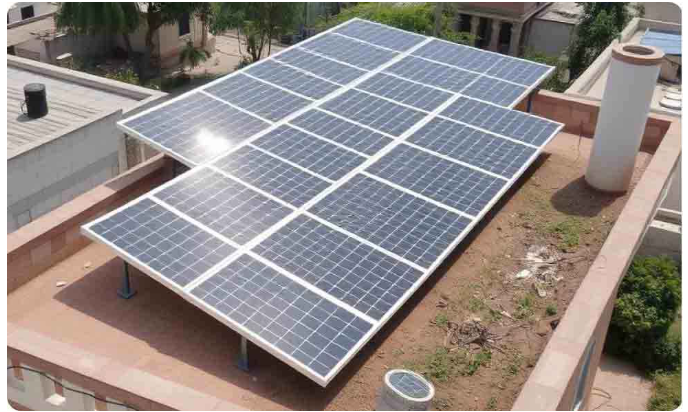
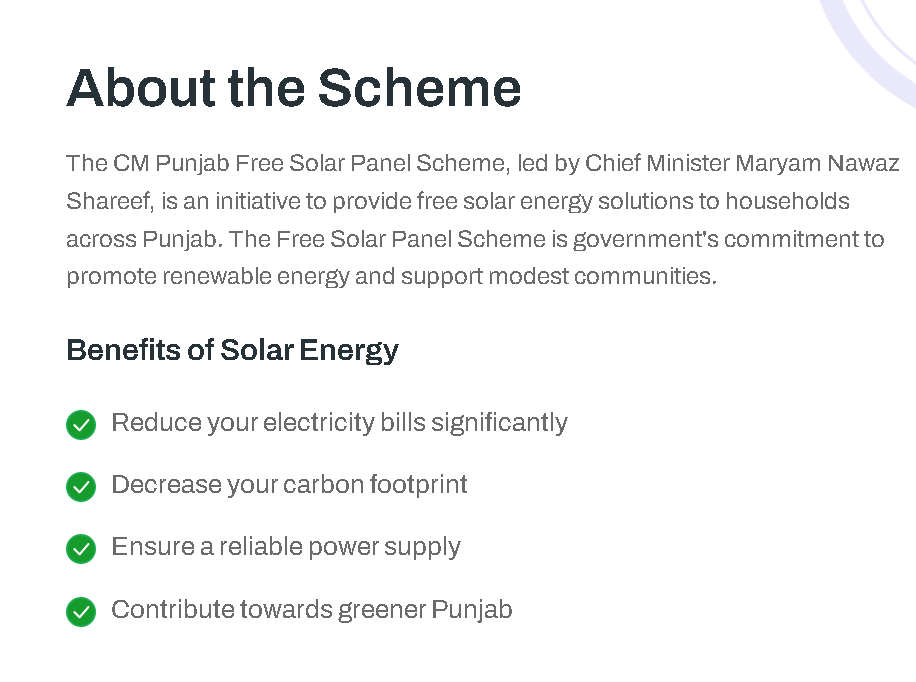
The CM Punjab Free Solar Panel Scheme — also officially known as the Roshan Gharana Solar Programme — is the flagship renewable energy welfare initiative of the Government of Punjab, launched in 2024 under Chief Minister Maryam Nawaz Sharif and significantly expanded in 2026. Its goal is to provide free solar power systems to low-income households across all districts and tehsils of Punjab, reducing electricity bills and providing relief from load shedding.
On April 14, 2026 — just two days ago — the Punjab government announced a major extension of the scheme. The programme’s deadline, originally set for June 2026, has been extended to December 2026 on the instructions of Chief Minister Maryam Nawaz. Under the revised plan, more than 94,000 solar systems will be provided at an estimated cost of nearly Rs 10 billion. The scheme will now reach all districts and tehsils of Punjab, with the computerised balloting process determining which households receive systems first.
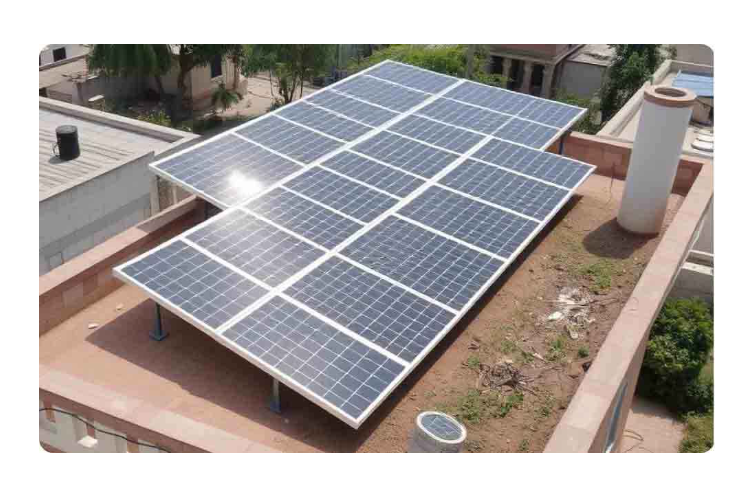
The scale of public response has been extraordinary. Officials report that over 800,000 applications have already been received, reflecting the desperate demand for energy relief across the province.
Key 2026 Upgrades to the Scheme
The 2026 iteration of the Punjab solar scheme is meaningfully better than its predecessor in several respects. The beneficiary target has been doubled to 100,000 households. Application processing time has been reduced to 30 days through a new digital system. A dedicated mobile app was launched allowing applicants to track progress and receive real-time notifications. The eligible consumption band has been expanded — households using up to 300 units per month can now apply, up from the previous limit of 200 units. Field teams are now conducting on-site verifications to speed up the installation pipeline. Solar panels and inverters are linked to consumers’ CNICs to prevent theft and ensure systems reach genuine beneficiaries.
What Do You Receive?
The system provided depends on your monthly electricity consumption tier. Households consuming 0 to 100 units per month receive a 550-watt solar system. Households consuming 101 to 200 units receive a 1,100-watt (1.1 kW) system. Higher-consumption households in the expanded category may receive systems up to 3 kW. Each complete package includes high-efficiency Tier-1 monocrystalline solar panels, a certified hybrid inverter, battery backup for night-time use and load-shedding cover, professional installation with safe electrical wiring, and warranty coverage for both panels and inverters.
Families in Punjab enjoy an average of 4.5 to 5.5 kWh of solar energy per square metre per day, making these systems highly productive. A 1 kW system generates roughly 120 to 150 kWh of electricity per month, translating into monthly bill savings of Rs 6,000 to Rs 9,000 depending on the applicable tariff rate. For the lowest-income families, this is genuinely transformative — more than their typical monthly grocery budget.
Eligibility for CM Punjab Solar Scheme 2026
To qualify, you must meet all of the following criteria:
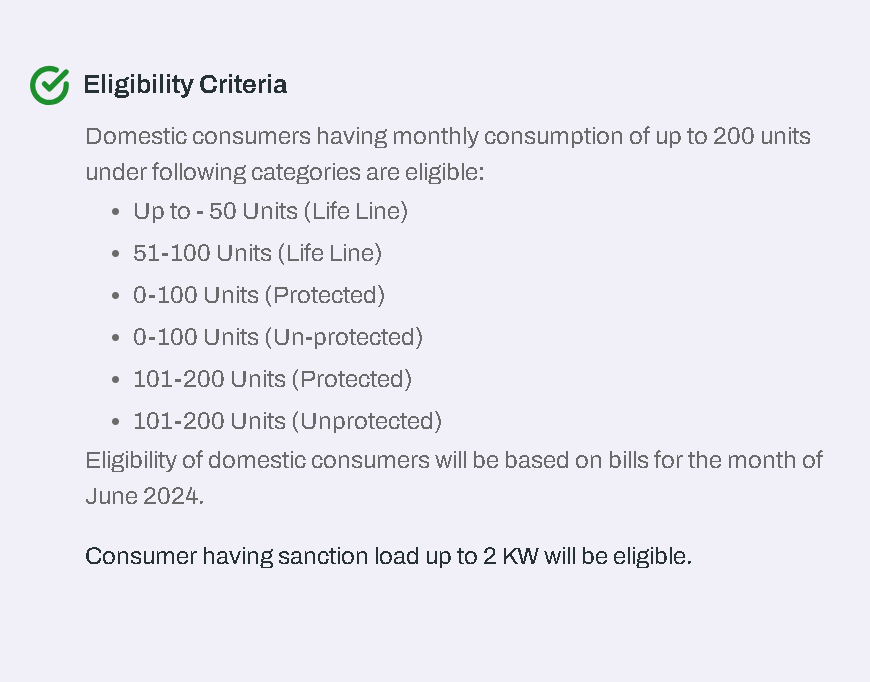
You must be a permanent resident of Punjab province with a valid CNIC reflecting a Punjab address. Your electricity connection must be a residential (domestic tariff) connection registered under your name or your household. Your average monthly electricity consumption must fall within the 50 to 300 units per month band — verified automatically by the system against your DISCO records. You must have a clean payment record with no history of electricity theft or outstanding defaults. You must not have received a solar system under any previous government scheme. Commercial buildings, factories, and shops are not eligible.
Priority in the balloting process is given to women-headed households, widows, senior citizens, disabled citizens, and rural residents — categories the government has identified as facing the greatest energy vulnerability.
How to Apply for CM Punjab Solar Scheme 2026
The entire application process is online and completely free. No fees of any kind are charged at any stage. Anyone asking you to pay money to apply for this scheme is a fraudster.
Visit the official Punjab government solar scheme portal at cmsolarscheme.punjab.gov.pk. Create an account or log in using your CNIC and mobile number. Enter your CNIC number and your 14-digit electricity bill reference number — printed at the top of your monthly bill. The system automatically cross-checks your consumption data, connected load, and CNIC against DISCO records to verify eligibility. If you meet all criteria, your application enters the balloting system. You can also send an SMS with your CNIC and bill reference number to 8800 as an alternative application method.
Keep your CNIC and a recent electricity bill ready before starting. The reference number is critical — without it, the system cannot verify your consumption data.
HOW TO CHECK YOUR CM PUNJAB SOLAR SCHEME APPLICATION STATUS 2026
This is the most frequently searched question, and the answer is straightforward.
Method 1: Official Government Portal (Most Reliable)
Visit cmsolarscheme.punjab.gov.pk or solarscheme.punjab.gov.pk. Log in using your CNIC number and the mobile number you registered with. Click on the “Application Status” or “Check Status” tab. Your current application stage will appear on screen. You can download or screenshot your status for your records. If the portal is slow due to heavy traffic — which does happen given the volume of applicants — try again during off-peak hours (late night or early morning), use a different browser, or switch to incognito mode.
Method 2: Punjab Solar Scheme Mobile App
Download the official Punjab Solar Scheme app from the Google Play Store (Android) or Apple App Store (iOS). Log in with your CNIC number. The app provides real-time updates on your application stage and sends push notifications whenever your status changes. This is the most convenient method for regular monitoring.
Method 3: SMS Notification
Automatic SMS alerts are sent to the mobile number linked to your CNIC whenever your application status changes. Ensure your registered mobile number is active and receiving messages. Official SMS communications come from government shortcodes — not random mobile numbers.
Method 4: Balloting Results Page
Once district-level balloting is completed, results are published on the official Punjab government portal and the Punjab Energy Department website. Open the portal, locate the “Balloting Result” section, and enter your CNIC (without dashes) along with your 14-digit electricity bill reference number. Some portal versions also request a mobile number for OTP verification. After entering your details, your selection status is displayed immediately.
UNDERSTANDING YOUR APPLICATION STATUS: WHAT EACH MESSAGE MEANS
The most confusing part of the process for many applicants is interpreting the status messages that appear on the portal. Here is a plain-language explanation of every status you might see:
Submitted: Your application has been received by the system and is waiting to be reviewed. No action is needed from you at this stage. Check back regularly.
Under Review: Your documents are actively being checked by the verification team. This stage typically takes a few days to two weeks depending on the volume of applications in your district.
Verified: Your application has passed all initial checks — your CNIC, electricity data, and residency have been confirmed as valid. You are now eligible to enter the balloting process.
Selected / Approved: Congratulations — you have been chosen through the computerised balloting process. Your solar system installation will now be scheduled. You should receive an SMS confirmation from official government shortcodes. Do not pay anyone who contacts you claiming to arrange installation in exchange for a fee.
Installation Scheduled: A field team will visit your home soon to conduct a physical verification of your roof’s condition, sunlight direction, and wiring requirements. Be available at your registered address and have your CNIC and electricity bill ready for the team.
Completed: Your solar system has been professionally installed and is now operational. Your electricity from the sun is free.
Under Verification / Pending Verification: There may be an issue with one or more of your submitted details — typically a mismatch between your CNIC name and the electricity bill name, a consumption figure that needs re-checking, or a duplicate entry detected. Log in to the portal for specific guidance on what to correct.
Rejected: Your application has not been accepted. The most common reasons are: monthly consumption exceeding the eligible limit, connected load above 2 kW, a duplicate CNIC entry in the system, not meeting residency criteria, or previous receipt of government solar assistance. If you believe the rejection is in error, contact the scheme helpline or visit your nearest DISCO office with your original documents.
PART 2: SINDH SOLAR SCHEMES 2026
Sindh has been running parallel solar distribution programmes through two distinct mechanisms — one targeting rural off-grid households and BISP beneficiaries, and one targeting low-consumption urban domestic consumers.
Sindh Solar Home Systems (SHS) Project
This is the larger of the two. The Sindh Energy Department, under its Special Initiatives for Renewable Energy, aims to distribute 275,000 solar kits free of cost to low-income households across the province. The total includes 132,000 off-grid systems and 143,000 on-grid systems, distributed through the Sindh Rural Support Organisation (SRSO).
As of early 2026, more than 170,000 solar kits have already been distributed under this programme, making it one of the largest rural electrification projects in Pakistan’s history. The scheme is actively expanding — on April 16, 2026 — today — the Sindh government launched the scheme across four additional districts: Khairpur, Larkana, Qambar Shahdadkot, and Shikarpur, with approximately 100 beneficiaries receiving systems at each district-level ceremony.
Each solar kit under the Sindh scheme includes a 180-watt solar panel, a DC fan, three LED lights, a charge controller, a mobile charging facility, and a 50 Ah lithium battery with an inverter — enough to cover basic household energy needs and eliminate monthly electricity bills for off-grid families.
Who is eligible for the Sindh SHS scheme? Priority is given to families enrolled in the Benazir Income Support Programme (BISP), households whose homes were damaged during the 2022 floods, residents of remote villages without grid access, and low-income families consuming under 100 units per month consistently.
How to apply in Sindh: Contact your nearest HANDS Pakistan field office or Sindh Energy Department desk. Provide your CNIC and your latest electricity bill. If you are a BISP beneficiary, your eligibility is verified through the BISP database directly. The scheme allows only one solar kit per verified household.
Sindh Free Solar System Scheme 2026 (Urban Low-Consumption Households)
Separately, the Sindh government has launched a scheme targeting urban domestic consumers with consistently low electricity consumption — specifically households whose monthly usage has not exceeded 100 units for the preceding six months. Applicants must be confirmed Sindh residents with a valid CNIC, and must not have previously received solar assistance from any government programme.
Application process for urban Sindh scheme: Obtain the official application form from designated government offices or official websites. Fill out all sections carefully, attach your valid CNIC copy and latest electricity bill. The form must be verified by a Union Council Chairman or a gazetted officer before submission. Submit the complete verified application to the designated district office. Status tracking is available through the Sindh Energy Department website using your CNIC and reference number.
PART 3: KHYBER PAKHTUNKHWA (KPK) SOLAR SCHEME 2026
The KPK government launched its free solar panel scheme targeting 130,000 households registered under the Ehsaas Programme and Benazir Income Support Programme. The scheme is administered by the KPK Energy and Power Department and focuses heavily on the province’s many off-grid communities where the national electricity grid has historically not reached.
KPK’s solar programmes also include the Solarization of Tube Wells scheme for agricultural communities, and pilot solarisation of government buildings including the Civil Secretariat, with plans to expand across the province.
Eligible KPK residents can check scheme status and apply through the KPK Energy and Power Department portal at ep.kp.gov.pk or by contacting their nearest district energy office. BISP and Ehsaas-registered households receive priority processing without requiring a separate application — their eligibility is verified through the social protection databases directly.
PART 4: SOLAR TUBEWELL SCHEME FOR FARMERS (PUNJAB)
Alongside the residential solar scheme, the Punjab Agriculture Department has launched the Solar Tubewell Scheme 2026, specifically for small farmers. This is a separate programme from the household solar scheme and requires a separate application through agriculture.punjab.gov.pk.
Under this scheme, over 8,000 solar tubewell systems are being distributed province-wide. Systems are available in 10 HP, 15 HP, and 20 HP sizes, with the government covering 80% of costs — representing a subsidy of between Rs 400,000 and Rs 800,000 per unit. Eligible farmers can save up to Rs 200,000 per year on diesel and electricity costs alone.
To be eligible, you must be a Punjab resident with a valid CNIC, own at least one acre of cultivable land, and not have previously received solar assistance under government schemes.
PART 5: BANK OF PUNJAB SOLAR FINANCING — THE ALTERNATIVE IF YOU ARE NOT SELECTED
The sheer volume of applications — over 800,000 for Punjab alone against a 94,000 unit target — means that the majority of applicants will not be selected in any single balloting round, no matter how deserving they are. If you are not selected in the free scheme, you have a practical alternative: the Bank of Punjab (BOP) Solar Financing programme.
BOP Solar financing is available to both salaried and self-employed individuals. For salaried applicants, the minimum age is 25 years, maximum 60, with a minimum gross monthly salary of Rs 40,000 and at least one year of employment experience. For self-employed applicants, the age range is 25 to 65, with a minimum net income of Rs 50,000 per month and at least three years of business experience.
Repayment tenures extend up to seven years with affordable markup rates, fast-track processing, and built-in insurance. This route is ideal for households consuming more than 200 units per month — ineligible for the free scheme — but who want to reduce their electricity bills through structured financing.
HOW TO PROTECT YOURSELF FROM SOLAR SCHEME FRAUD
With over 800,000 applications filed and enormous public interest in these programmes, fraud targeting applicants has become a serious problem. Here is how to protect yourself.
No fees of any kind are charged at any stage of the legitimate application process. No individual, agent, or WhatsApp contact can legitimately process your application faster in exchange for payment. Official SMS communications come from government shortcodes — not from ordinary mobile numbers. Never share your OTP code with anyone, including someone who claims to be from the scheme helpdesk. Always verify information exclusively through official .gov.pk websites. If someone approaches you claiming your application has been selected and asking for an advance payment to arrange installation, report them to the Punjab Energy Department helpdesk immediately.
The government has linked all solar panels and inverters to applicants’ CNICs specifically to prevent theft and misuse. Any attempt to transfer or sell a government-issued solar system is a criminal offence.
THE BIGGER PICTURE: WHAT THESE SCHEMES MEAN FOR PAKISTAN
Pakistan’s government solar distribution programmes exist within a national energy transformation that is already well underway. The country imported 17 gigawatts of solar panels in 2024 — more than any other nation on earth. Solar has become the largest single electricity source in Pakistan, accounting for more than 25% of total production in 2025. Government schemes are now targeting the segment of the population that the market-driven solar revolution bypassed: the poorest households, rural communities, flood-affected families, and BISP beneficiaries who could never afford commercial panels.
The extension of the Punjab scheme to December 2026, with Rs 10 billion in fresh funding, is a direct response to the current energy emergency — the same gas shortage and Middle East supply disruption that has pushed load shedding back to crisis levels this week. For the families who receive systems, the impact is immediate and permanent. Monthly electricity bills drop by Rs 3,000 to Rs 9,000 per month. Load shedding becomes largely irrelevant during daylight hours.
Children can study in the afternoon heat without fans cutting off. Refrigerators keep food safe. Businesses can operate. And for rural and off-grid communities, a solar kit represents electricity for the first time — not a reduction in bills, but the end of darkness altogether.
QUICK REFERENCE: SOLAR SCHEME STATUS CHECK — ALL METHODS
Punjab (CM Punjab / Roshan Gharana Scheme): Official portal: cmsolarscheme.punjab.gov.pk or solarscheme.punjab.gov.pk Mobile App: Download “Punjab Solar Scheme” app from Play Store or App Store SMS: Send CNIC and bill reference to 8800 Required information: 13-digit CNIC (without dashes) + 14-digit electricity bill reference number
Sindh (SHS Project / Sindh Free Solar Scheme): Contact: HANDS Pakistan field office or Sindh Energy Department district office For BISP-registered households: Verification is automatic through the BISP database Portal: Sindh Energy Department official website
KPK: Portal: ep.kp.gov.pk For Ehsaas/BISP registered households: Automatic verification Contact: KPK Energy and Power Department district office
Solar Tubewell Scheme (Punjab Farmers): Portal: agriculture.punjab.gov.pk or agripunjab.gov.pk
Bank of Punjab Solar Financing (alternative for non-selected applicants): Contact: Nearest Bank of Punjab branch Online: BOP official website
FINAL ADVICE: WHAT TO DO RIGHT NOW
If you have already applied and are waiting, check your status on the portal or app at least twice a week. Ensure your registered mobile number is active — it is the channel through which official selection notifications are sent. If your status shows an error or mismatch, do not wait — address the issue immediately through the portal or at your nearest DISCO office.
If you have not yet applied and meet the eligibility criteria, apply as soon as possible. The Punjab scheme has been extended to December 2026, but the balloting process is conducted in rolling phases — later applicants are entered into later phases, which may have fewer available slots as distribution progresses.
If you are in Sindh, are a BISP beneficiary, or are in a flood-affected community, contact your nearest SRSO or HANDS Pakistan field office directly — your priority status means that the route to a solar system may be faster and more straightforward than the general public portal.
And if you are not selected in the free scheme, the Bank of Punjab solar financing option remains a serious and accessible alternative. The electricity bills you are currently paying may well be higher than the monthly instalment on a financed system — which, unlike rent, builds you a permanent energy asset that belongs to you.
Pakistan’s solar revolution is happening. These schemes are the government’s attempt to ensure that the poorest households are not left behind in it.