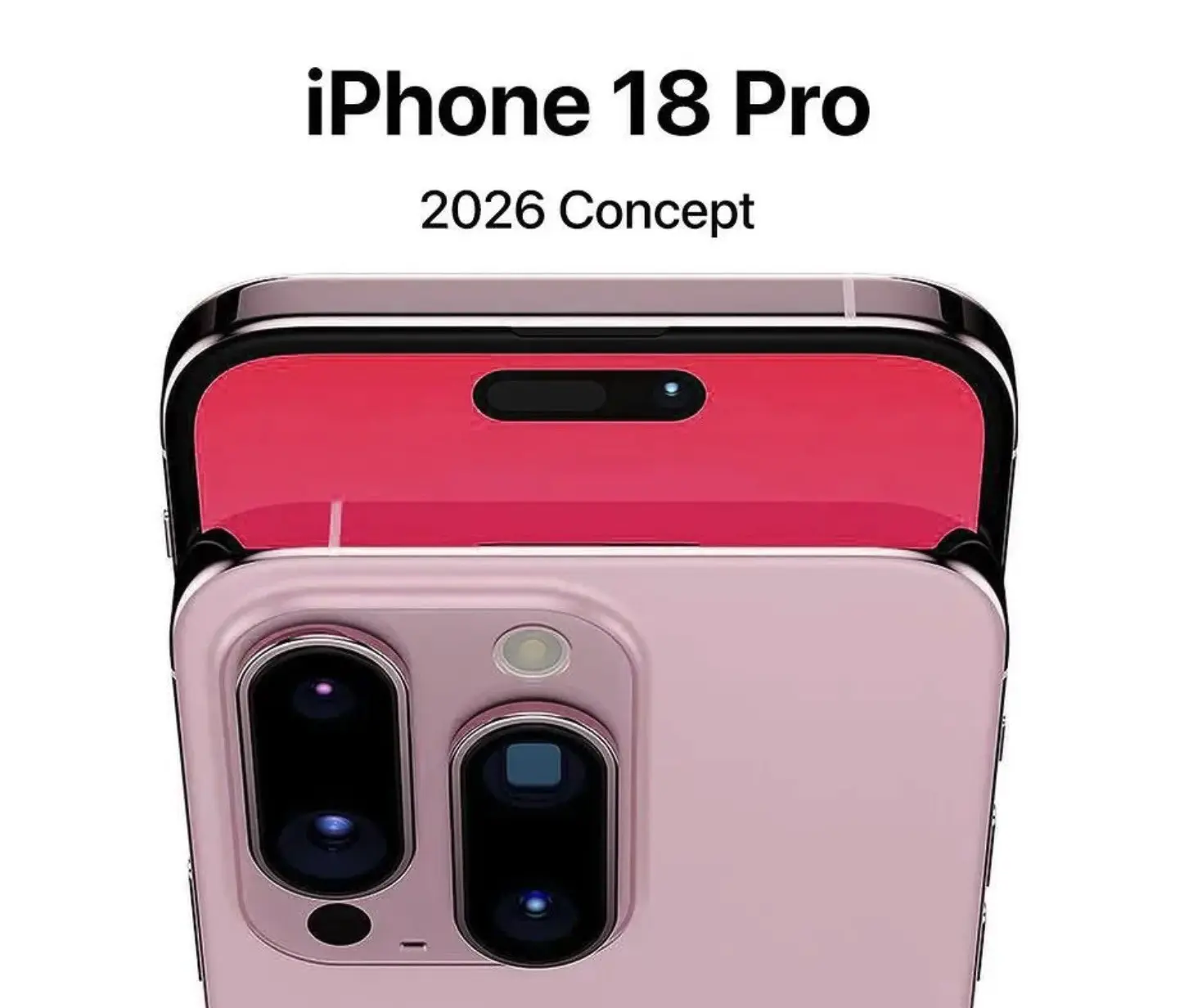
Apple’s iPhone 18 Pro is still roughly six months from its expected September 2026 debut, but the leak pipeline is already running at full capacity. In the past 24 hours alone, two of the most closely watched tipsters on Weibo — Ice Universe and Digital Chat Station — have dropped fresh details that simultaneously clarify some long-standing questions while opening new ones. The picture emerging from this latest wave of leaks is one of measured evolution: meaningful internal improvements, subtle but noteworthy design refinements, and at least one potentially divisive revelation about what Apple may be saving for the iPhone 19 generation.
Here is everything iphone 18 pro max design 2026, we know right now about the iPhone 18 Pro’s design, dimensions, camera system, chip, battery, and the colors Apple may be preparing to shake up its premium lineup.
“As we look toward future tech shifts like the iPhone 18 Pro Max design, it is equally important to consider how these advancements shape the workforce. Check out our analysis on AI employment impact predictions for 2026–2030 to see how the tech landscape is changing.”
A Thicker Frame — But Not By Much
The most concrete measurement to emerge from today’s leaks comes from Ice Universe, one of the most reliable hardware leakers covering Apple’s supply chain. According to his latest post, the iPhone 18 Pro Max will measure 8.8mm in thickness. That is a marginal increase over the iPhone 17 Pro Max, which came in at 8.75mm, and a more meaningful jump compared to the iPhone 16 Pro Max’s 8.25mm profile.
What this tells us is that Apple’s multi-year trend toward slightly thicker handsets — driven almost entirely by battery capacity ambitions — continues in 2026, but at a much more restrained pace than the year before. The jump from iPhone 16 to iPhone 17 was significant at half a millimeter; the move from 17 to 18 is essentially a rounding difference at 0.05mm. Most users would be unable to distinguish the two devices by feel alone.
Don’t Miss: Today’s Gold Rate in Pakistan (2026 Updates)
The reason for any increase at all, however slim, is battery. Multiple supply chain reports corroborate that Apple is targeting a Pro Max battery in the 5,100mAh to 5,200mAh range — the first time the Pro lineup would break the 5,000mAh barrier. Combined with the efficiency gains expected from the A20 Pro chip, early estimates suggest the iPhone 18 Pro Max could deliver well over 40 hours of typical mixed usage, putting it firmly in the conversation with the longest-lasting flagship Android devices on the market.
“Apple is targeting a battery capacity of over 5,000mAh in the Pro Max for the first time — a significant milestone for iPhone endurance.”
Dynamic Island: Staying Put, But Possibly Shrinking
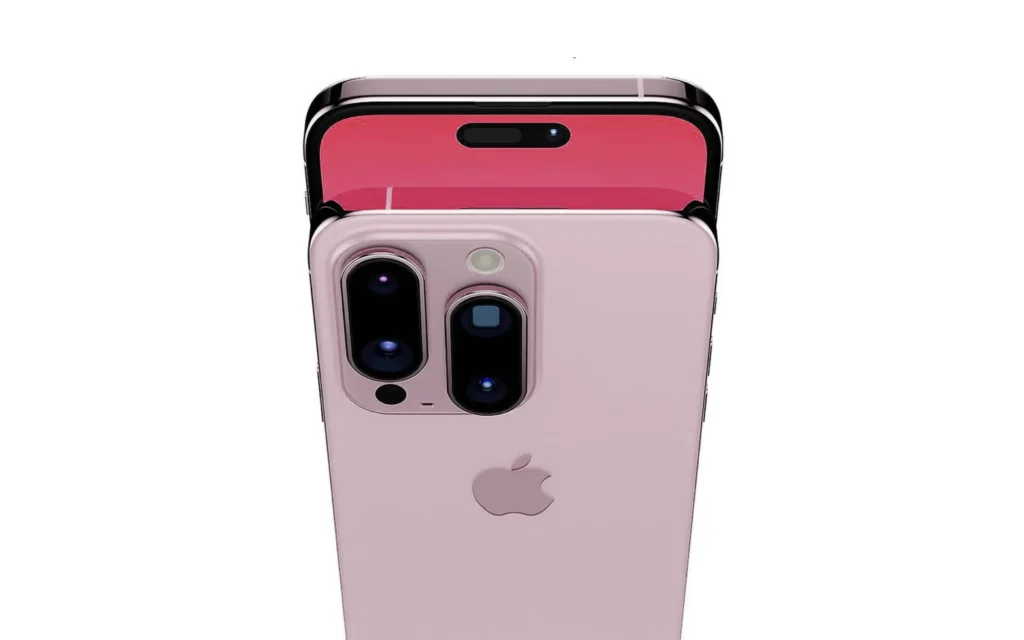
One of the most eagerly anticipated design changes for the iphone 18 pro max design 2026 has been the fate of the Dynamic Island — the pill-shaped cutout Apple introduced in 2022 that houses Face ID sensors and the front-facing camera. Earlier this year, rumors suggested Apple was working toward a near-full-screen experience, potentially pushing Face ID hardware entirely under the display and leaving only a minimal punch-hole for the selfie camera.
Today’s leak from Digital Chat Station throws cold water on the most optimistic version of that scenario. The tipster reports that Apple may be reusing molds from the iPhone 17 Pro for the 18 Pro lineup — a development that would have significant implications for the Dynamic Island. If the physical chassis remains unchanged from the previous generation, integrating under-display Face ID becomes considerably more constrained, as that technology requires specific structural accommodations in the device frame and display stack.
The current consensus among leakers is that under-display Face ID is now more likely to debut with the iPhone 19 Pro, with the iPhone 18 Pro carrying forward the same front-facing architecture as its predecessor. Some sources, however, still hold out the possibility that the Dynamic Island could shrink in size — one early estimate suggested a reduction of approximately 35% in footprint, even without full sensor relocation beneath the display. This would be achievable if Apple makes incremental improvements to its Face ID module miniaturization without going the full under-display route.
For consumers, this means the defining visual identity of iPhone Pro models for 2026 will look familiar. Whether that reads as design continuity or missed opportunity will depend heavily on what Apple delivers on the inside.
Colors: Apple Gets Bolder
If there is a clear area where the iPhone 18 Pro promises genuine novelty, it is color. Multiple independent sources have converged on a similar set of rumored hues that represent a meaningful departure from the restrained, neutral tones that have historically defined Apple’s Pro palette.
Leaked renders and supply chain color specifications point toward three standout options: burgundy, a rich coffee-inspired brown, and deep purple. Of these, burgundy has received the most attention — Bloomberg’s Mark Gurman reported in February that Apple has been actively testing a deep red variant for the Pro models, with some early indications that a striking red option could become the headline color of the lineup. This would mark the first time a bold, saturated red has appeared on a Pro iPhone rather than being reserved for the standard or special edition models associated with Product (RED) charitable campaigns.
Apple is also reportedly exploring a more unified aesthetic across the rear panel, with refinements to how the glass finish integrates with the titanium or aluminum frame. Leaks suggest the surface texture of the back glass may be subtly updated to create a more seamless visual flow between materials — a detail-oriented change that would be most noticeable in hand rather than in product photography.
The standard lineup of more understated options — likely including a near-black, a silver or natural titanium, and potentially a muted desert tone — is expected to remain available for buyers who prefer the traditional Pro aesthetic.
The A20 Pro: A Genuine Generational Leap
While the exterior of the iPhone 18 Pro may be conservative, the silicon story is anything but. The A20 Pro chip, universally expected to power the Pro models, represents Apple’s first move to TSMC’s 2-nanometer manufacturing process — a transition that promises meaningful gains in both raw performance and power efficiency.
The move from the 3nm A19 Pro to a 2nm A20 Pro is a significant node jump, and historically Apple has leveraged such transitions to deliver CPU performance gains of 15 to 25 percent alongside notable improvements in GPU throughput. For everyday users, the most tangible benefits will likely manifest in two areas: battery life (as the chip runs cooler and draws less power during background and moderate tasks) and Apple Intelligence performance (as the on-device neural engine gains substantially more capacity for real-time AI processing).
Perhaps the most technically interesting rumored feature of the A20 Pro is its potential use of Wafer-Level Multi-Chip Module packaging — a manufacturing approach that integrates RAM directly onto the same wafer as the CPU, GPU, and Neural Engine, rather than placing memory as a separate component on the motherboard. This tighter integration would reduce latency between the processor and memory, free up physical space inside the chassis, and improve thermal behavior. If accurate, it would position the A20 Pro as one of the most architecturally novel chips Apple has shipped since the original M1.
“The A20 Pro on a 2nm process could deliver up to 25% better CPU performance and dramatically faster on-device AI — the biggest chip leap in years.”
Camera System: Variable Aperture Leads the Way
On the camera front, the iPhone 18 Pro is shaping up to continue Apple’s aggressive push toward professional-grade imaging capability. The centerpiece rumor is a variable aperture system on the main 48MP Fusion camera — a feature that would allow users and the camera software to dynamically adjust how much light enters the lens. Variable aperture has long been a staple of dedicated camera systems but remains rare on smartphones, where the fixed aperture design is typically dictated by space and cost constraints.
Analyst Jeff Pu and several supply chain sources have corroborated the variable aperture claim, noting that Apple is also exploring the addition of a teleconverter element to the optical system — a lens component that could extend effective focal length for improved zoom reach. The technical challenge of implementing a teleconverter in a smartphone form factor is significant, and it remains unclear how this would be packaged alongside the existing triple-camera array, but the ambition signals that Apple views the Pro camera as a primary battleground for differentiation in 2026.
The ultrawide and telephoto lenses are also expected to receive aperture upgrades aimed at improving low-light performance — a weakness that has historically affected the secondary cameras more than the main sensor. And across all models in the iPhone 18 lineup, a 24-megapixel front-facing camera upgrade (up from 18MP) is expected to arrive, delivering a significant boost to selfie and video calling quality.
Apple is also reportedly developing an upgraded C2 modem for the iPhone 18 series, featuring closer performance parity with the Qualcomm chips it continues to replace and potentially adding support for mmWave 5G and satellite-based 5G connectivity — an expansion of the existing Emergency SOS satellite feature into a broader communications capability.
The Bigger Picture: An Intentional Placeholder?
Stepping back from the individual specifications, the pattern that emerges from the iPhone 18 Pro leaks is one of deliberate restraint. Apple appears to be concentrating its most dramatic changes — full under-display Face ID, a major form factor redesign, and potentially new materials — for the iPhone 20, which would coincide with the 20th anniversary of the original iPhone’s 2007 debut. By that logic, the iPhone 18 Pro occupies a transitional position: meaningful enough in its improvements to justify an upgrade for users two or three generations behind, but consciously conservative in its exterior design to preserve maximum visual impact for the anniversary model.
This strategy is consistent with how Apple has managed milestone anniversaries historically. The iPhone X — the 10th anniversary device — received the most dramatic visual overhaul in the product’s history up to that point, including the elimination of the home button, the introduction of Face ID, and the all-screen OLED design. A similar leap is widely anticipated for the 20th anniversary device, making the intervening models like the 18 Pro part of a carefully managed runway toward that moment.
For consumers making purchasing decisions in the near term, the question is whether the internal improvements — the A20 Pro chip, the larger battery, the enhanced camera system, the bolder color options — constitute sufficient reason to upgrade. For anyone on an iPhone 15 Pro or older, the answer will almost certainly be yes. For iPhone 17 Pro owners, the calculus is less clear, and may hinge on how much Apple’s variable aperture camera and Apple Intelligence enhancements matter in day-to-day use.
What to Expect: September 2026 and Beyond
Apple is expected to follow its traditional release cadence with the iPhone 18 Pro and Pro Max, targeting a September 2026 announcement event with sales beginning within approximately ten days of the keynote. Pre-orders are likely to open immediately following the event, following the pattern Apple has maintained for several consecutive years.
Pricing remains speculative at this stage, though recent trends suggest incremental increases are more likely than not. The iPhone 17 Pro launched at elevated price points compared to the 16 generation, and supply chain pressures related to advanced 2nm chip manufacturing and new camera components could factor into Apple’s 2026 pricing strategy.
One important note: the iPhone 18 lineup is unusually complex this year. The Pro and Pro Max will launch in September 2026 alongside the new foldable iPhone — tentatively referred to as the iPhone Fold — while the standard iPhone 18 and a lower-cost model are not expected until early 2027. This staggered release strategy represents a significant departure from Apple’s traditional simultaneous launch approach and reflects the company’s prioritization of premium hardware in an increasingly competitive high-end smartphone segment.
With production tests reportedly already underway and leaks intensifying as the year progresses, the iPhone 18 Pro story is only beginning to take shape. As always, the final product will carry its own surprises — but for now, the picture forming from today’s leaks is one of a device that quietly raises the bar in the areas that matter most to serious iPhone users, even as it saves its most headline-grabbing ambitions for another day.