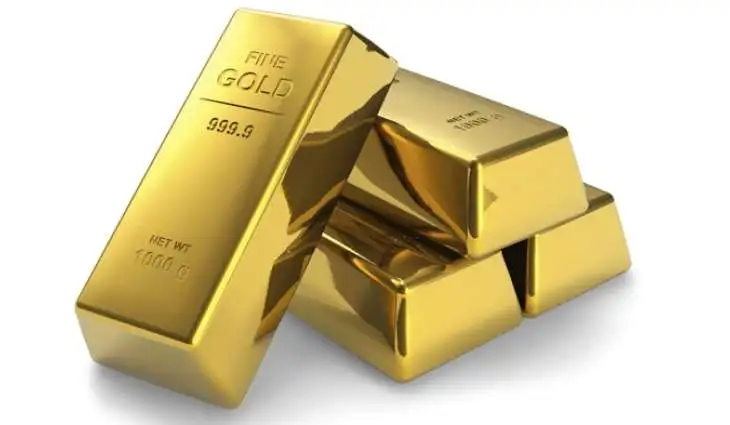
Everything you need to know about today’s gold rates, why prices are swinging wildly, what is driving global markets, and what experts say comes next.
Gold in Pakistan is never just a commodity. It is a store of wealth, a cultural cornerstone, and for millions of families across the country, it is the most trusted financial safety net available. Gold Prices in Pakistan Today On March 19, 2026, however, that safety net has been swaying dramatically — because today has been one of the most volatile single sessions in recent Pakistani gold market memory.
Multiple authoritative sources are reporting different figures today because gold prices shifted substantially between morning and evening trading sessions. Here is the full picture:
Gold rates in Pakistan stood at Rs 523,762 per tola in the morning session, showing no change from the previous day. 591284 Prize Bond Winner 2026 – check complete winning details here: The price of 10 grams stood at Rs 449,041. But as the global session progressed and news from the Middle East intensified, the market turned sharply.
Following the global trend, local bullion markets recorded a major decrease later in the day. The price of gold per tola was slashed by Rs 24,300, settling at Rs 499,462 per tola. Similarly, the price of gold per 10 grams in the domestic market declined by Rs 20,833, reaching Rs 428,208.
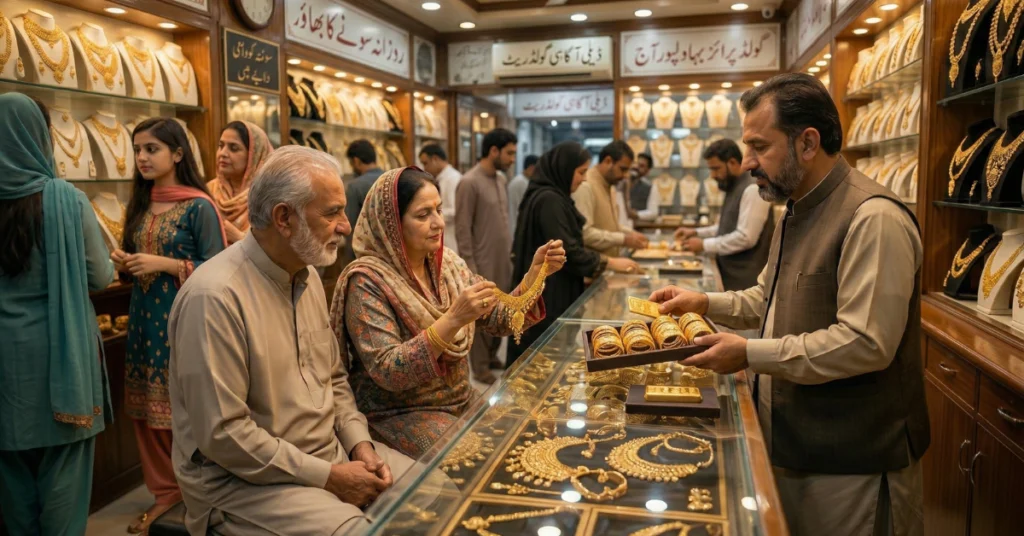
As of the latest rates provided by local gold markets and Sarafa Markets, 24K gold stands at Rs 512,000 per tola, Rs 438,965 per 10 grams, and Rs 43,896.50 per gram. International rates show gold at $4,851.40 per ounce and silver at $75.70 per ounce.
Complete Gold Rate Table — March 19, 2026
| Purity | Per Tola (PKR) | Per 10 Grams (PKR) | Per Gram (PKR) |
|---|---|---|---|
| 24 Karat (99.9%) | Rs 499,462 – 523,762 | Rs 428,208 – 449,041 | Rs 43,896 – 44,904 |
| 22 Karat (91.6%) | Rs 458,007 approx | Rs 392,857 approx | Rs 41,162 |
| 21 Karat (87.5%) | Rs 435,925 approx | Rs 373,700 approx | Rs 39,276 |
| 18 Karat (75%) | Rs 373,650 approx | Rs 321,171 approx | Rs 33,678 |
Gold Prices in Pakistan Today stands at Rs 44,904.10 per gram for 24 karat gold (99.9% purity), Rs 41,162.10 per gram for 22 karat gold (91.6% purity), and Rs 33,678.10 per gram for 18 karat gold (75% purity).
Silver Rates — March 19, 2026
The silver price in Pakistan today stood at Rs 8,494 per tola, recording a decline of Rs 75 from the previous session. Champions League last 8 teams → The price of 10-gram silver also stood at Rs 7,282 after a dip of Rs 64.
In the global market, silver fell by $7.60 per ounce to $72.50. In local markets, the price of silver per tola declined by Rs 760 to Rs 7,734, while the rate per 10 grams dropped by Rs 652 to Rs 6,630.
Why Did Gold Prices Drop So Sharply Today?
Today’s dramatic intraday decline in Pakistan’s gold market is being driven by a perfect storm of global forces — and understanding them is critical for any investor, buyer, or jeweller tracking the market.
The Iran-UAE Conflict and Dubai Gold Disruption
The single biggest factor behind today’s sharp fall is the escalating conflict in the Middle East. Gold and silver prices recorded a significant decline in both global and local markets amid escalating tensions in the Middle East and disruptions in regional trade. The intensifying conflict, particularly Iran’s attacks on the United Arab Emirates, has led to a suspension of gold and jewellery exports from Dubai, a key global gold hub. Additionally, discount sales by Emirati traders have further accelerated the downward trend in precious metal prices worldwide.
The price of gold per ounce dropped sharply by $243 in the global bullion market, bringing the new international rate down to $4,767 per ounce. Market experts attribute the decline to disruptions caused by the ongoing conflict involving the United States, Israel, and Iran, which has affected flight operations across Gulf countries and severely impacted trade activities. In this environment, gold traders in the UAE are offering discounted rates to sustain sales.
This is a paradox that confuses many casual observers. Normally, wars and geopolitical tensions push gold prices higher as investors seek safe haven assets. But in this particular case, the disruption of Dubai — the world’s most important physical gold trading hub — has created a supply chain distortion where traders are dumping gold at discounts simply to move inventory.
The US Federal Reserve Decision
The Middle East chaos was compounded by a major policy announcement from Washington. Precious metal prices slumped on March 19 after the US Federal Reserve maintained a status quo on interest rates. Gold futures were trading nearly 4 per cent lower than the previous session. Meanwhile, silver futures were trading over 6 per cent down from the previous close
The Fed’s dot plot signals a single rate cut during the year, but if inflation remains consistently above the central bank’s 2 per cent target, it could deter interest rate cuts in the near term. A sharp surge in crude oil prices due to the war has resurfaced concerns of inflation remaining elevated over a longer period. A higher interest rate scenario tends to temper demand for precious metals.
Profit-Taking After Historic Highs
Experts have attributed the recent dip in gold prices in the global market to a dramatic sell-off as investors have started taking profits after the precious metal reached all-time highs. However, they are not sure if the decline continues as the prevailing tensions between Iran and the US could reverse the situation. US President Donald Trump has pressed Iran to hold negotiations for a nuclear deal, while Tehran threatened retaliation against the US, Israel, and allies.
Gold often rises during periods of geopolitical stress, but the reaction is not always immediate. The gold price drop in March 2026 is a good example — Iran’s Strait of Hormuz threats sent crude surging, yet gold initially sold off as dollar strength squeezed leveraged traders.
Gold’s Extraordinary Journey in 2025-2026
To truly appreciate what is happening in Pakistan’s gold market today, it is essential to understand the breathtaking run that gold has been on over the past 12-18 months.
The price of 24K gold in PKR was up 65.86% in 2025. The average price of gold in 2025 was Rs 970,907 per ounce. The high point for 24K gold during 2025 was Rs 1,270,226 per ounce on December 26, 2025. The low point was Rs 730,825 per ounce on January 1, 2025.
In just twelve months, gold in Pakistan more than doubled from its starting point to its year-end peak. No bank savings account, no property investment, no stock market portfolio came close to matching that return in 2025.
Spot gold has gained 19% in 2026 so far, supported by global turmoil, following a 64% surge in 2025. Meanwhile, silver was up over 16% this year.
Increasing geopolitical tensions between Iran, the US, and Israel drove safe-haven demand in early March, pushing gold above the $5,200 per ounce level temporarily. That peak represented an extraordinary milestone — gold had surged from around $2,600 per ounce just one year earlier.
Pakistan Gold Price — From 1947 to 2026
The story of gold prices in Pakistan is really the story of Pakistan’s entire economic journey — from a newly independent nation to a complex, $375-billion economy navigating a turbulent 21st century.
The journey from Rs 57 per tola in 1947 to over Rs 540,000 in 2026 reflects nearly eight decades of economic transformation. Rising inflation, currency depreciation, global financial crises, and strong cultural demand have all contributed to this remarkable increase.
Key Historical Price Milestones
| Year | Approx. Price Per Tola (PKR) | Key Driver |
|---|---|---|
| 1947 | Rs 57 | Independence — agricultural economy |
| 1980 | Rs 3,000 | Zia era inflation, oil shock |
| 2000 | Rs 7,200 | Post-nuclear sanctions, rupee pressure |
| 2010 | Rs 40,000 | Global financial crisis safe-haven buying |
| 2020 | Rs 1,22,800 | COVID-19 pandemic, all-time high at the time |
| 2023 | Rs 2,10,000 | Post-IMF deal, rupee stabilisation |
| 2025 | Rs 3,20,000 – 4,60,000 | Dollar demand, global gold bull market |
| March 2026 | Rs 4,99,462 – 5,23,762 | Middle East war, Fed policy, profit-taking |
In early 2020, gold traded near Rs 88,000 per tola. Fast forward to 2025, and prices touched Rs 350,000–360,000 per tola. That is nearly a 4x increase in five years. This was not hype — it was survival economics. First came COVID-19, then inflation surged. By 2023, prices of daily essentials had jumped at a record pace. Meanwhile, the Pakistani rupee continued to decline. Each dip in the rupee quietly pushed gold higher.
Five Key Factors That Control Gold Prices in Pakistan
1. International Gold Price in USD Per Ounce
Since Pakistan imports much of its gold, local prices are directly influenced by international market trends. When global gold prices rise, Pakistan’s domestic gold rates typically increase as well. Today’s international price of approximately $4,767–$5,010 per ounce is the primary anchor for Pakistan’s local rates.
2. The Pakistani Rupee vs. US Dollar
Because gold is valued in dollars worldwide, any weakening of the Pakistani Rupee makes gold more expensive locally. Even if global prices remain stable, a weaker rupee can push domestic gold prices higher. The current USD/PKR rate sits around Rs 279.31 per dollar. At the close of recent trading, the local currency settled at Rs 279.31 per dollar, gaining Rs 0.01 compared with the previous session — a marginal improvement but one that traders are watching carefully.
3. The Karachi Sarafa Market and APSGJA
Pakistan’s gold rates are officially set by the All Pakistan Sarafa Gems and Jewellers Association (APSGJA) based on Karachi Sarafa Market benchmarks. Karachi is the main hub of gold trading in Pakistan. In every city, gold brokers and jewellers follow the trend of the Karachi gold market for today’s gold prices. The gold rates in Pakistan are updated daily and vary depending on several factors. Every jeweller in Lahore, Islamabad, Peshawar, and Quetta ultimately prices their gold according to what Karachi’s Sarafa market declares each morning.
4. Geopolitical Tensions and War
Conflicts in the Middle East, Ukraine, or elsewhere can trigger investor panic, causing gold prices to rise sharply. The Iran-US-Israel conflict that erupted at the end of February 2026 has created unprecedented volatility — initially pushing gold higher before today’s sharp reversal driven by Dubai trade disruption.
5. Seasonal Pakistani Demand — Eid and Wedding Season
Wedding seasons and economic fears spike gold purchases in Pakistan. Cultural traditions also play a major role in maintaining strong demand for gold. With Eid ul Fitr approaching in late March 2026, demand from jewellers and individual buyers remains elevated — making today’s price dip potentially attractive for buyers.
City-by-City Gold Rates Across Pakistan
While Pakistan’s gold rates are nationally standardised through the Karachi Sarafa Market benchmark, small variations exist between cities due to local taxes, transportation costs, and regional demand dynamics.
Karachi: The national benchmark. All APSGJA official rates originate here. Home to Pakistan’s largest Sarafa Bazaar at Jodia Bazaar and Bolton Market.
Lahore: Typically within Rs 100–500 per tola of Karachi rates. The famous Heera Mandi Sarafa in the old city remains the city’s gold trading heart.
Islamabad/Rawalpindi: Closely mirrors Karachi rates. The Raja Bazaar area in Rawalpindi is the twin cities’ primary gold trading hub.
Peshawar: Culturally, one of Pakistan’s most gold-intensive cities per capita. Qissa Khwani Bazaar’s Sarafa Market is renowned. Tribal traditions drive extraordinary jewellery demand.
Quetta: Proximity to the Iranian and Afghan borders creates occasional price variations. Local rates may differ by Rs 200–800 per tola from Karachi.
Is Today’s Price Drop a Buying Opportunity?
This is the question on every Pakistani investor’s mind right now. The answer depends on your time horizon and financial goals.
The structural reasons gold ran from $2,600 to over $5,000 in twelve months have not changed. Central banks are still buying. The dollar outlook is still soft. US fiscal deficits are not shrinking. And now you can add a hot war in the Middle East with real oil supply implications to the list. J.P. Morgan’s 2026 gold target is $6,300. Deutsche Bank sees $6,000. Both were set before the Iran escalation. If anything, today’s news strengthened the fundamental case. The $5,000 level is the line to watch. As long as gold holds above it, this is a correction inside a bull market.
If you own physical gold: sit tight. You bought it for exactly this kind of environment. If you have been sitting on the sidelines, flush events like this have historically been decent entry points for physical purchases.
Gold prices are expected to remain highly volatile this week amid the release of February Producer Price Index data, US initial jobless claims, other macroeconomic indicators, and the Federal Reserve’s interest rate decision. Gold prices are expected to post moderate gains over the next month. The main drivers of the bullish trend will likely be geopolitical uncertainty, the escalating conflict in the Middle East, and expectations of monetary easing by major central banks.
Global Banks’ 2026 Gold Forecast — What Experts Are Saying
The world’s leading financial institutions remain overwhelmingly bullish on gold for 2026, despite this week’s turbulence:
Bank forecasts remain bullish despite the short-term volatility. J.P. Morgan predicts prices will reach $6,300 per ounce by the end of 2026, while Deutsche Bank is standing by a $6,000 year-end target.
Goldman Sachs has issued a forecast of $5,500 per ounce by end of 2026. Pakistan analysts suggest that if PKR hits 320 per USD and international gold hits those levels, 24K gold could potentially exceed Rs 600,000 per tola in Pakistan.
Gold prices in Pakistan are expected to remain bullish for the rest of 2026. Market analysts anticipate that rising inflation, weak currencies, and global economic instability will sustain demand for gold.
A Major New Development — Gold Found in Pakistan
Alongside the global market story, there is a genuinely exciting domestic development that could reshape Pakistan’s relationship with gold over the coming decades. A major gold discovery has been reported along the Indus River in Punjab’s Attock district. The Geological Survey of Pakistan (GSP) identified placer gold deposits — small gold particles in river sand and gravel — near the confluence of the Kabul River and Indus River. This could bring new hope for Pakistan’s gold production capacity.
If developed successfully, domestic gold production could reduce Pakistan’s dependence on imported gold, potentially stabilising local prices and reducing the rupee-dollar exchange rate’s impact on Pakistani consumers.
Buying Tips for Pakistani Gold Investors
Before making any gold purchase in Pakistan’s current market, keep these key principles in mind:
Buy when prices dip, usually between wedding seasons. Focus on 24K bars or coins for higher resale value. Check purity certifications and market reputation. Track USD-PKR exchange rates for timing purchases. Experts predict continued volatility but an overall upward trend.
Additionally, always verify the hallmarking of any gold you purchase. In Pakistan, the Pakistan Standards and Quality Control Authority (PSQCA) certifies gold purity. Purchasing from APSGJA-registered jewellers provides the best protection against sub-standard gold.
Conclusion: Gold in Pakistan Remains a Long-Term Safe Haven
Today’s session has demonstrated everything that makes Pakistan’s gold market simultaneously fascinating and nerve-wracking. A morning price of Rs 523,762 per tola giving way to an evening price of Rs 499,462 — a swing of Rs 24,300 in a single day — reflects the extraordinary forces currently shaping global precious metals markets.
The journey of gold prices in Pakistan — from Rs 57 per tola in 1947 to over Rs 540,000 in 2026 — reflects nearly eight decades of economic transformation. Rising inflation, currency depreciation, global financial crises, and strong cultural demand have all contributed to this remarkable increase. Despite changing economic conditions, gold continues to remain one of the most trusted assets for preserving wealth in Pakistan.
The immediate outlook is volatile. The Iran-UAE conflict, the Federal Reserve’s cautious stance, and profit-taking after historic highs will continue to create sharp daily swings. But the long-term structural bull case — central bank buying, dollar weakness, persistent global uncertainty — remains fully intact.
For Pakistanis buying gold for a wedding, as an investment, or to protect savings against inflation: today’s dip may well look like an opportunity when reviewed from the vantage point of 2027.
All rates correct as of March 19, 2026. Gold prices change throughout the trading day — always confirm with your local Sarafa Market or APSGJA-registered jeweller before buying or selling. This article is for informational purposes only and does not constitute financial or investment advice.