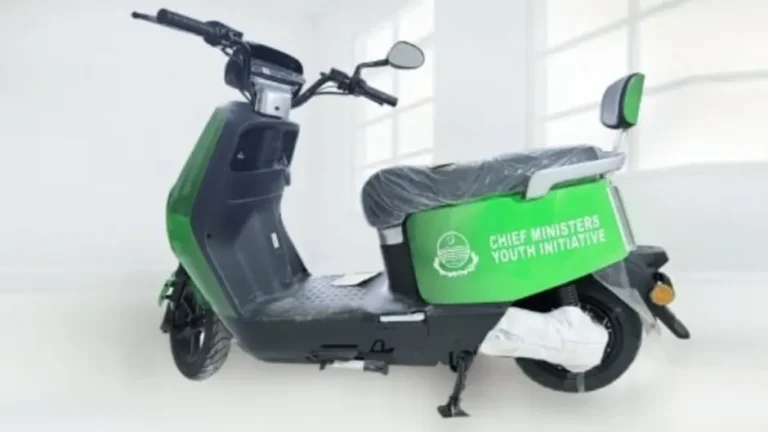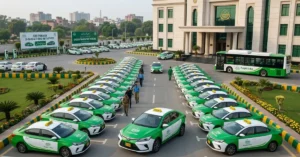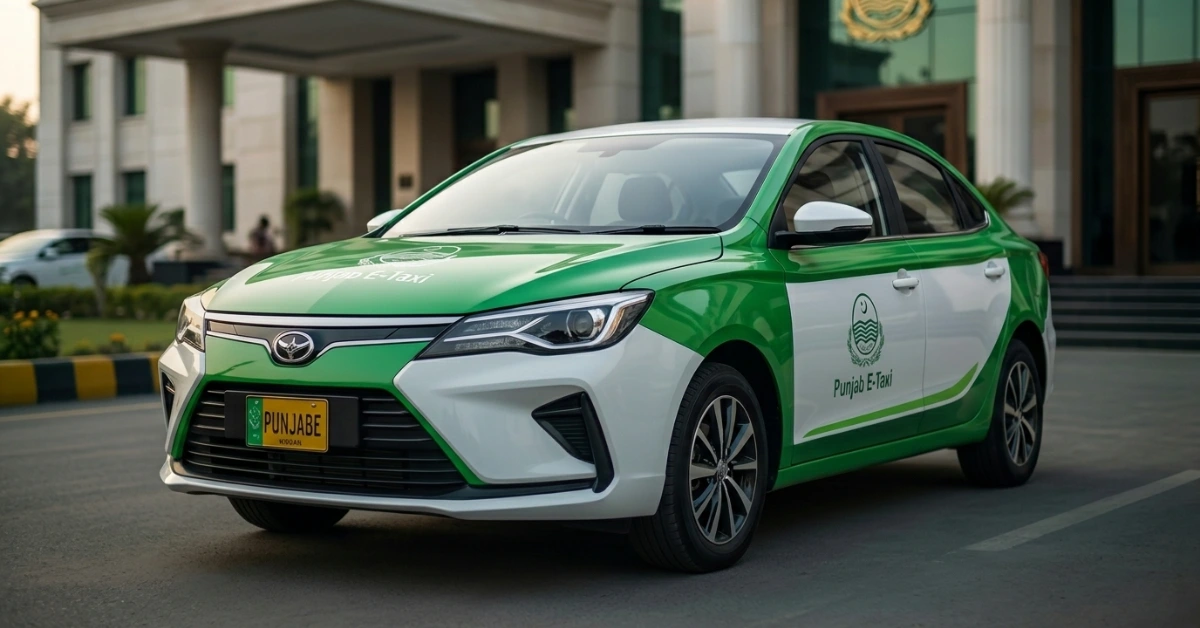
The CM Punjab E-Taxi Scheme 2026 represents one of the most significant economic opportunities launched in the province this year. Chief Minister Maryam Nawaz Sharif has rolled out this flagship initiative with over 1,100 fully electric taxis in the first phase, backed by a PKR 3.5 billion subsidy from the Punjab government (Government of Punjab, 2026). The scheme aims to provide subsidized electric vehicles to eligible drivers and unemployed youth, offering interest-free financing over five years with the government covering substantial down payment subsidies—50 percent for men and 60 percent for women (CM Punjab E-Taxi Scheme Portal, 2026).
If you’re struggling with rising petrol prices, earning inconsistent income as a taxi driver, or looking for a stable self-employment opportunity, this scheme offers a genuine pathway forward. According to recent data, selected applicants can expect to earn approximately PKR 60,000 monthly after accounting for reduced fuel costs and financing obligations (CM Punjab E-Taxi Scheme 2026 Portal, 2026). The application process is entirely online through the official portal at etaxi.punjab.gov.pk, with the computerized balloting scheduled for March 1, 2026. This guide walks you through every step of applying, understanding your eligibility, logging into the portal, and preparing for selection.
What Is the CM Punjab E-Taxi Scheme 2026? Understanding the Program
The CM Punjab E-Taxi Scheme Apply Online Login a government-backed program designed to accomplish multiple objectives simultaneously. On the environmental side, it promotes clean energy adoption by introducing fully electric vehicles into Punjab’s taxi fleet, reducing pollution and carbon emissions that contribute to the province’s infamous smog problems (Government of Punjab Transport Department, 2026). Economically, it addresses unemployment by creating self-employment opportunities for drivers and fleet owners who can register with ride-hailing platforms like Uber, Careem, and InDrive (Punjab Transport & Mass Transit Department, 2026). Socially, it includes a specific 30 percent quota for women, recognizing that women-led entrepreneurship needs particular support in transport sectors (CM Punjab E-Taxi Scheme Portal, 2026).
The financial structure sets this scheme apart from traditional vehicle financing. Selected applicants receive electric taxis through zero-interest financing over five years, meaning no additional markup charges despite government economic pressures (Government of Punjab, 2026). The government covers a substantial portion of the down payment—50 percent for general applicants and 60 percent for women—dramatically reducing the initial capital required. The registration and token tax, normally requiring thousands of rupees, are completely paid by the Punjab government (CM Punjab E-Taxi Scheme 2026, 2026). Combined with the elimination of expensive fuel costs—electric vehicles typically cost less than one-third the amount to operate compared to petrol taxis—the financial advantage is substantial.
According to the official portal, the first phase targets Lahore with planned expansion to other cities including Rawalpindi, Multan, and additional districts (E-Taxi Scheme Portal, 2026). The scheme is aligned with Chief Minister Vision Transport 2030, a broader initiative to modernize public transport across Punjab through electric and hybrid vehicles. The response has been overwhelming, with over 22,000 applications received within the first few weeks of announcement, demonstrating massive public interest (Government of Punjab, 2026). The portal has processed 59,719 registrations smoothly, indicating strong technical preparedness for managing this large-scale program (E-Taxi Portal Statistics, 2026).
Why Is the CM Punjab E-Taxi Scheme 2026 Important for Pakistan?
Pakistan’s economy faces multiple intersecting crises that this scheme addresses. Unemployment among youth remains chronically high, with many graduates unable to find suitable employment. The scheme provides direct self-employment opportunities without requiring entrepreneurship training or business plans—simply owning and operating an electric taxi generates income (Government of Punjab, 2026). For drivers currently operating petrol or diesel taxis, the financial strain is genuine. A taxi driver in Lahore spending PKR 8,000 to 10,000 daily on fuel can reduce this to PKR 2,000 to 3,000 with an electric vehicle, translating to monthly savings of PKR 150,000 to 200,000 (CM Punjab E-Taxi Scheme Analysis, 2026).
From an environmental perspective, the scheme directly addresses one of Pakistan’s most visible crises: air pollution. Lahore regularly ranks among the world’s most polluted cities during winter months, with vehicular emissions contributing substantially to smog and respiratory diseases. Introducing electric vehicles reduces urban air pollution immediately while transitioning Pakistan’s transport infrastructure toward cleaner technology (CM Punjab E-Taxi Scheme 2026 Environmental Impact, 2026). This isn’t a marginal environmental improvement—transitioning thousands of taxis from petrol to electric reduces carbon emissions by approximately 40 percent per vehicle.
For women in particular, this scheme addresses both economic inclusion and transportation safety. Women constitute only 25 percent of Pakistan’s workforce, with the transport sector particularly male-dominated. The 30 percent quota, combined with the 60 percent government subsidy for women, creates genuine incentive for female participation and independence (Pakistan Institute of Development Economics Research, 2026). A woman operating her own electric taxi gains economic autonomy, personal mobility freedom, and access to income generation on her own terms.
Step-by-Step Guide: How to Apply Online and Login to the CM Punjab E-Taxi Scheme Portal
The application process requires careful attention to detail because incomplete documentation is the primary reason for rejections. Before beginning, gather all required documents and ensure they meet the specified requirements. The entire process takes approximately 20-30 minutes if documents are prepared in advance.
Step 1: Visit the Official Portal
Open your web browser and navigate to the official Punjab government e-taxi portal at etaxi.punjab.gov.pk (CM Punjab E-Taxi Scheme Apply Online Login, 2026). Ensure you’re using the official government domain and never enter credentials on suspicious websites, as fraudsters create fake portals targeting applicants (E-Taxi Portal Security Advisory, 2026). Bookmark the legitimate portal for future reference.
Step 2: Create Your Account
Click the “New Registration” button prominently displayed on the portal homepage. Enter your CNIC (Computerized National Identity Card) number in the designated field, using the 13-digit format without spaces or dashes (E-Taxi Registration Process Guide, 2026). The system will immediately ask for your registered mobile number—use the number linked to your CNIC. Within seconds, you’ll receive an OTP (One-Time Password) via SMS. Enter this OTP in the verification field. This dual verification through CNIC and mobile number ensures account security (E-Taxi Portal, 2026).
Step 3: Complete Personal Information Section
The portal now asks for basic personal details. Enter your full name exactly as it appears on your CNIC. Select your date of birth, ensuring you fall within the 20-50 age requirement (if you’re younger than 20 or older than 50, you’re ineligible regardless of other factors). Select your gender—this determines your subsidy percentage (50 percent for men, 60 percent for women). Enter your contact email address. Double-check each entry because corrections later require contacting the helpline (E-Taxi Registration Manual, 2026).
Step 4: Provide Domicile and Driving License Information
Punjab domicile is mandatory. You must be a permanent resident of Punjab holding a valid domicile certificate issued by your District Coordination Officer (DCO) office. Enter your domicile certificate number and the issuing date. For driving license information, enter your driving license number and expiry date. The system cross-references this against transport department records, so accuracy is critical. If your driving license is expired, you cannot proceed—renewing it before applying is necessary (E-Taxi Eligibility Verification, 2026).
Step 5: Upload Required Documents
The system requires multiple documents in specific formats. All documents must be uploaded as PDF or JPEG files with a maximum size of 2MB per document. Upload high-quality, colored scans—faded or black-and-white copies often get rejected during verification (E-Taxi Document Upload Guidelines, 2026).
Required documents include:
Your CNIC photocopy (both sides), valid driving license photocopy, Punjab domicile certificate photocopy, income certificate issued by your local union council or relevant authority (to verify financial status), bank account statement from the past three months, and recent passport-size photographs with white background. Scan each document carefully, ensuring all text is readable. If any document fails verification, the system notifies you via email with specific rejection reasons, allowing you to correct and reupload (E-Taxi Portal Verification Process, 2026).
Step 6: Review and Submit Your Application
Before submission, carefully review all entered information. The system shows a summary page with all details. Check that your name is spelled correctly, contact information is accurate, and all dates are correctly entered. Once you click “Submit,” the application is locked and cannot be edited without contacting support. You’ll receive a reference number via SMS—save this carefully as it’s your application tracking identifier (E-Taxi Application Submission Process, 2026).
Step 7: Login to Check Your Application Status
To check your application status anytime, return to etaxi.punjab.gov.pk and click “Login.” Enter your CNIC number and the OTP sent to your registered mobile number. You’re now in the secure dashboard showing your application status, document verification progress, and any required corrections. The system shows real-time updates whenever your application progresses through verification stages (E-Taxi Portal Dashboard, 2026).
| Status | What It Means | Expected Timeframe | Next Action Required |
|---|---|---|---|
| Submitted | Application received by system | Upon submission | Wait for verification |
| Under Review | Documents being verified | 3-7 days | Check email for feedback |
| Correction Needed | Documents rejected, reupload required | Varies | Reupload corrected documents |
| Verified | All documents approved, eligible for balloting | 7-14 days | Wait for March 1 balloting |
| Rejected | Application not meeting criteria | Final status | Contact helpline for reasons |
| Selected | Chosen in computerized balloting | Post-March 1, 2026 | Proceed with vehicle allocation |
Eligibility Criteria: Who Can Apply for the CM Punjab E-Taxi Scheme?
The scheme establishes clear eligibility criteria to ensure fair access. You must be a permanent resident of Punjab (domicile holder) with a valid driving license aged between 20 and 50 years (Government of Punjab, 2026). You cannot be currently employed in government service—this scheme targets unemployed individuals, private sector workers, and self-employed persons seeking additional income. You must have an active bank account in your name for receiving government subsidies and making installment payments (E-Taxi Portal, 2026). You cannot own more than a specified number of vehicles already—the scheme prioritizes first-time owners and small operators (Government of Punjab Transport Department, 2026).
Registration with a Transport Network Company (TNC) like Uber, Careem, or InDrive is strongly recommended but not mandatory (E-Taxi Scheme Official Information, 2026). However, registering with a platform increases your income potential significantly because you gain immediate access to a customer base. Solo operators must develop their own customer base through personal networks or local taxi stands. Women applicants receive preferential treatment in balloting and enhanced subsidies (60 percent down payment subsidy compared to 50 percent for men), along with the 30 percent quota reservation (Government of Punjab, 2026).
The scheme excludes individuals with criminal records, defaulted loans, or previous fraud cases in government schemes. If you’ve received vehicles under other government schemes (laptop scheme, motorcycle scheme, etc.), you’re ineligible for this scheme to ensure equitable distribution across the population (E-Taxi Eligibility Verification System, 2026). These restrictions exist to prevent scheme abuse and ensure resources reach genuinely deserving applicants.
Required Documents: What You Need Before Applying
Gathering complete documentation before applying significantly increases approval chances. Incomplete applications face automatic rejection, requiring reapplication in subsequent batches. The following documents are absolutely essential:
Your Original CNIC and a clear photocopy (both sides). Your valid driving license and photocopy. Your Punjab domicile certificate (issued by District Coordination Officer). Your income certificate issued by your local union council proving your financial status. Three months of bank account statements from your current account. Four recent passport-size photographs with white background taken professionally. A letter from your union council on its official letterhead confirming you’re a resident. If self-employed, tax return documents or business registration certificates (E-Taxi Document Checklist, 2026).
Ensure all documents are recent—domicile certificates older than two years and income certificates older than six months get rejected. Bank statements must cover the past three months in original bank-provided format, not screenshots. Photographs must be clear, recent (taken within the last three months), with white background and your face clearly visible. Colored copies work best; black-and-white or faded scans often fail verification (E-Taxi Document Upload Guidelines, 2026). Scan everything at high resolution before uploading to ensure readability in the system.
Benefits and Risks: What You Gain and What You Must Prepare For
| Aspect | Benefits | Challenges/Risks |
|---|---|---|
| Financial Subsidy | 50-60% down payment covered by government | Remaining down payment still required; no cash alternative |
| Interest-Free Financing | 0% markup on 5-year installments | Fixed monthly obligations regardless of income fluctuations |
| Fuel Cost Savings | PKR 150,000-200,000 monthly reduction | Electricity costs rising; charging infrastructure still developing |
| Employment Security | Stable income through ride-hailing platforms | Income depends on customer demand; seasonal variations |
| Environmental | Contributing to pollution reduction | Limited charging stations in some areas initially |
| Vehicle Warranty | Manufacturer warranty on electric vehicles | Battery degradation after 5 years; replacement costs not covered |
| Government Support | Registration and token tax paid by government | Government support limited to initial purchase; maintenance is owner’s responsibility |
| Women’s Empowerment | 30% quota and higher subsidy for women | Still competitive balloting; selection not guaranteed |
| Tax Benefits | Free registration and token tax | Annual renewal taxes and maintenance costs are owner’s responsibility |
| Expansion Opportunity | Can operate multiple vehicles after success with first | Requires balloting success; difficult to secure loans for additional vehicles |
Frequently Asked Questions:
Conclusion
The CM Punjab E-Taxi Scheme 2026 represents a genuine opportunity to transform your economic situation through legal, government-backed self-employment. The interest-free financing, substantial government subsidy, and elimination of fuel costs create financial incentive that simply doesn’t exist in traditional taxi markets. The application process is straightforward if you prepare documents properly and enter information carefully. The March 1, 2026 balloting is approaching, which means the time to apply is now—today, not next week or next month.