Published: April 16, 2026 | Category: Pakistan | Energy & Welfare | Reading Time: ~11 minutes
The Punjab government’s flagship renewable energy welfare programme — the CM Punjab Free Solar Panel Scheme — is making headlines once again with a series of major updates in April 2026. The scheme’s deadline has officially been extended by six months, an additional Rs. 10 billion has been allocated to the budget, and a new target of distributing over 94,000 solar systems has been set for the extension period. With more than 800,000 applications already received, and Phase 2 now well underway, millions of Punjab residents are watching closely to see whether their household will be among the next wave of beneficiaries.
This article provides the most complete, up-to-date guide to the Punjab Solar Scheme Phase 2 — covering what has changed, who qualifies, how to apply, what you receive, and what comes next.
Background: What Is the CM Punjab Free Solar Panel Scheme?
The CM Punjab Free Solar Panel Scheme — formally known as the Roshan Gharana Solar Programme — was launched in 2024 under the direction of Chief Minister Maryam Nawaz Sharif. It is one of the most ambitious household welfare initiatives ever undertaken by a provincial government in Pakistan’s history.
The programme’s core objective is straightforward: provide free or heavily subsidized solar power systems to low-income households across Punjab who are struggling with skyrocketing electricity bills and chronic load-shedding. By distributing complete, ready-to-use solar installations — not just panels, but inverters, batteries, and wiring — the scheme aims to permanently reduce household energy costs rather than offering temporary financial relief.
The initiative also fits into a broader national conversation about Pakistan’s energy future. The country’s power sector has long been burdened by circular debt, expensive imported fuel, and an aging thermal generation fleet. Distributed solar generation at the household level eases pressure on the national grid, reduces transmission losses, and moves Pakistan incrementally toward its renewable energy commitments.
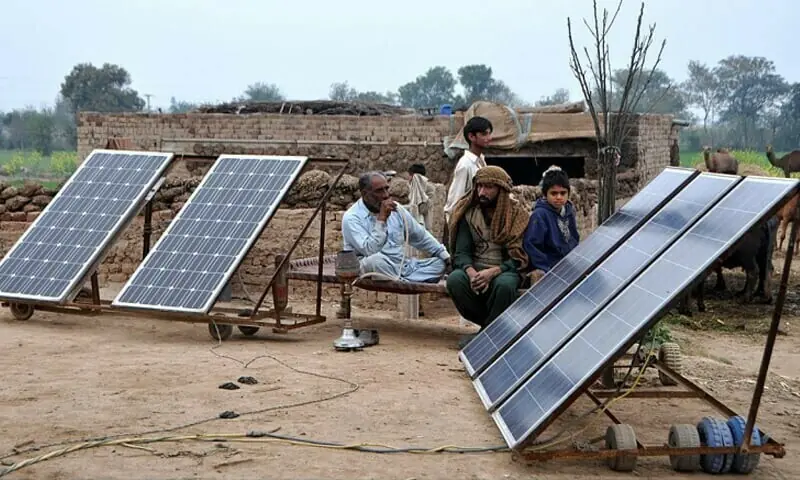
Under the Roshan Gharana umbrella, the scheme operates in two major streams: the residential solar programme (for households) and the Solar Tubewell Project (for agricultural irrigation). Both are running simultaneously under the broader CM Solarization Programme with a combined government budget of approximately Rs. 9.88 billion for the agricultural component alone.
The Latest: Deadline Extended to December 2026
The single biggest development of April 2026 is the official extension of the Punjab solar scheme phase 2 updates deadline. The programme was originally scheduled to conclude in June 2026, but on the instructions of Chief Minister Maryam Nawaz, the deadline has now been pushed to December 2026 — a full six-month extension.
The extension was announced in response to an extraordinary volume of public interest. Officials report that over 800,000 applications have already been received from citizens wishing to switch to solar energy. This figure far exceeded the government’s initial projections, making the six-month extension not just a policy choice but a practical necessity to serve the surge in demand.
The provincial government has set up an additional budget of approximately Rs. 10 billion to finance this extension, with the updated strategy targeting over 94,000 solar systems to be distributed to residents on low incomes.
The Punjab Chief Minister has urged citizens to get registered for the initiative, emphasising the government’s commitment to promoting renewable energy and supporting modest communities.
The extension effectively means that thousands of applicants who were waiting for the next balloting cycle — or who had not yet applied — now have a renewed and extended window to participate. It also signals that the Punjab government views the scheme not as a one-off project but as a sustained, multi-year energy transition effort.
Understanding the Three-Phase Structure
The Punjab Solar Scheme has been structured in distinct phases, each targeting a different tier of electricity consumption. This phased approach ensures that the most financially vulnerable households are prioritised first, while gradually expanding coverage to include a wider segment of the population.
Phase 1 — Lowest Consumption (0–100 Units): Ongoing
The first phase targets households consuming between 0 and 100 units of electricity per month — the most financially stretched segment of the population. These are lifeline and protected consumers, often rural families or low-income urban households with minimal appliance usage. Phase 1 is designated as ongoing, meaning eligible applicants in this bracket continue to be processed and installed throughout the programme’s lifespan.
Households in this bracket receive a 550-watt solar system at completely zero cost. This system is sufficient to power basic lighting, a fan, and phone charging — covering the essential energy needs of a low-consumption household.
Phase 2 — Mid-Range Consumption (101–300 Units): Currently Active
Phase 2 is where the most action is happening right now. This phase covers households consuming between 101 and 300 units per month and was slated for January–February 2026 rollout. With the deadline extension, Phase 2 processing and distribution is continuing well beyond that initial window.
Households consuming 101–200 units per month receive a 1,100-watt (1.1 kW) solar system free of cost. This is a meaningfully larger system, capable of supporting lighting, a fan, and a small refrigerator or television — covering the typical daytime energy needs of a middle-tier household.
The extension of the overall scheme deadline to December 2026 means that Phase 2 applicants who have not yet been selected in balloting will continue to have their applications considered throughout the year.
Phase 3 — Higher Consumption (Above 300 Units): Partial Subsidy
Phase 3, targeting households consuming more than 300 units per month, is scheduled for April–June 2026 with a partial cost model — meaning beneficiaries in this bracket will receive a subsidized (rather than free) solar system. The exact subsidy percentage for Phase 3 has been reported as high as 90% of the total system cost, making it extremely affordable even for middle-income consumers.
This phased, consumption-tiered structure represents a deliberate and fair approach to distribution: those who need it most get it first and free, while those with greater consumption capacity contribute a portion of the cost.
What Do Beneficiaries Actually Receive?
One common misconception about the scheme is that it distributes only solar panels. This is incorrect. Unlike standard subsidy programs, this scheme offers full solar installations including panels, inverters, batteries, and necessary wiring at no cost for qualifying households during certain phases, making it one of the most attractive energy relief programs in Pakistan’s history.
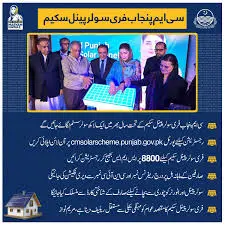
The complete system package provided to approved applicants includes:
Solar Panels — High-efficiency panels sized according to consumption bracket (550W for Phase 1, 1.1kW for Phase 2 up to 3kW for higher categories). The government has partnered with leading international solar manufacturers to source durable, certified panels.
Certified Inverter System — A grid-compatible inverter that converts the direct current from solar panels into usable alternating current for household appliances.
Battery Backup — A battery storage component for night-time usage and uninterrupted power during load-shedding — one of the most critical features for Pakistani households that face frequent grid outages.
Professional Installation and Safe Electrical Wiring — Government-certified technicians handle the entire installation process. Beneficiaries are not required to arrange or pay for any installation work.
Warranty Coverage — Both panels and inverters come with warranty coverage. Post-installation technical support is accessible through the official helpline.
Handover Certificate — After installation is complete, beneficiaries receive an official handover document confirming the system details and warranty terms.
Notably, the solar panels and inverters are linked to the beneficiary’s CNIC to prevent theft — a transparent and security-conscious measure by the government.
The financial impact for families is significant. The scheme can save families PKR 3,000 to PKR 6,000 per month or more on electricity bills. For households spending a major portion of their monthly income on electricity, this level of recurring saving is genuinely life-changing.
Eligibility Criteria: Who Can Apply?
The Punjab Solar Scheme has clearly defined eligibility requirements that are automatically verified through the government’s digital system at the time of application. These are not self-declared criteria — the portal cross-checks your data directly against DISCO (Distribution Company) records.
Permanent Residency in Punjab — Applicants must be permanent residents of Punjab province, with a valid CNIC reflecting a Punjab address.
Residential Electricity Connection — The scheme is exclusively for domestic consumers. Commercial buildings, factories, shops, and offices are not eligible under any phase.
Monthly Consumption Limit — Your electricity bill must show average consumption within the 0–200 unit range (for free phases). Higher consumption disqualifies you from the free tiers, though Phase 3 offers partial subsidies for higher usage.
Sanctioned Load Under 2 kW — Consumers with a sanctioned load of up to 2 kW are eligible. This limit ensures the scheme targets genuinely small-scale residential consumers.
Active Electricity Connection — You must hold a current, active connection with one of Punjab’s distribution companies: LESCO, MEPCO, FESCO, GEPCO, or PESCO.
Clean Payment Record — Applicants must have no involvement in electricity theft and must not be defaulters on utility payments.
No Prior Solar System — Applicants who have already received solar energy assistance under any government program are not eligible.
Priority Categories — While all eligible applicants enter the balloting system, special priority is given to widows and women-led households, disabled citizens, elderly residents, rural communities, and lifeline consumers (those using fewer than 100 units monthly).
Renters are not automatically excluded. Applicants living in rented accommodation can apply if the electricity bill is in their name and they can provide a landlord NOC (No Objection Certificate).
How to Apply: Three Official Methods
The Punjab government has made registration deliberately accessible through three different channels, ensuring that citizens without internet access are not left behind.
Method 1: Online Portal (Primary Method)
The official portal is accessible at cmsolarscheme.punjab.gov.pk, developed and managed by the Punjab Information Technology Board (PITB). The online application process works as follows:
Visit the official portal and create an account using your CNIC and mobile number. Enter your CNIC number and your electricity reference number — a 14-digit code printed on the top of your monthly bill. The system automatically verifies your eligibility by cross-checking your consumption data, connected load, and CNIC against DISCO records. If you meet all criteria, your application is entered into the ballot system.
Method 2: SMS Registration
You can register for the scheme through SMS by sending your bill reference number and CNIC to 8800. This method is specifically designed for citizens in rural or remote areas who may have limited internet access but can still participate via a basic mobile phone.
Method 3: Bank of Punjab Branch
Applicants can visit the nearest Bank of Punjab (BOP) branch and carry the following: original CNIC with photocopy, last three electricity bills, proof of ownership or landlord NOC, and one passport-size photograph. Bank staff assist applicants free of cost.
The government has also deployed mobile registration vans in remote and underserved villages to ensure that even the most geographically isolated communities can access the scheme.
Important Warning: Always use the official website to avoid fraud or fake registration. Registration on the official portal is completely free. Citizens should not pay any individual or third party claiming to facilitate the application process.
Required Documents Checklist
Before applying through any of the three methods, ensure you have the following documents ready:
- Original NADRA CNIC (front and back)
- Last three electricity bills (showing consumption history)
- Ownership deed or landlord NOC (if renting)
- Passport-size photograph
- Active mobile number linked to your CNIC
Incomplete or incorrect documentation is one of the most common reasons for application rejection. Double-check all details before submitting.
The Selection Process: Transparent Computerized Balloting
A key feature of the CM Punjab Solar Scheme that sets it apart from many previous government welfare programmes is its emphasis on transparency through digital verification and computerized balloting.
The selection method is described as fair and transparent computerized balloting, designed to prevent the kind of nepotism and favoritism that has plagued many past distribution initiatives in Pakistan.
The post-submission process follows these stages: document verification (cross-checking submitted information against WAPDA and DISCO databases), eligibility confirmation (verifying consumption patterns, payment history, and residential status), physical inspection in some cases (where government officials may conduct a brief site visit), and finally the computerized ballot draw. Selected applicants are then notified via SMS and scheduled for installation.
The verification process typically takes 2–3 weeks. After selection, installation is typically completed within 2–4 weeks, with the actual installation process itself completed within 1–2 days by certified technicians.
Applicants can track their status at any time through the official portal by entering their CNIC number, or by calling the official helpline at 042-111-267-200, or by sending their CNIC via SMS to 8800.
The Solar Tubewell Project: Phase 2 for Farmers
Running parallel to the household solar programme is the Punjab Solar Tubewell Project — a separate but equally significant component of CM Maryam Nawaz’s solarization agenda.
Phase 1 of the Solar Tubewell Project targeted 8,000 tubewells across priority districts including Faisalabad and Multan. Phase 2 has expanded the scope to 10,000 additional units, giving even more small and medium-scale farmers access to affordable irrigation technology that can last up to 25 years with minimal maintenance.
The financial case for farmers is compelling. Diesel-powered tubewells can cost a farmer roughly Rs. 3,000 per acre for a single irrigation cycle. Under the solar model, that same cost drops to nearly Rs. 50 per acre — a reduction of over 98%. Farmers who switch report daily savings of up to Rs. 10,000 during peak cropping seasons.
Eligibility for the agricultural scheme requires Punjab residency, ownership of at least one acre of registered agricultural land, an existing diesel or electric tubewell, a groundwater depth not exceeding 60 feet, no prior solar subsidy, and a clean record with no outstanding electricity or government agricultural loan defaults.
The government pays 75–80% of the total cost, with farmers repaying the remaining 20–25% in easy installments over five years. The application portal for the tubewell scheme is at cmstp.punjab.gov.pk.
Impact and Reach: The Numbers That Matter
The scale of the Punjab Solar Scheme is difficult to overstate. Consider the key figures:
800,000+ — Applications already received as of April 2026, vastly exceeding initial projections and necessitating the deadline extension.
100,000+ — Households targeted in the scheme’s initial phase for residential systems.
94,000 — Additional solar systems targeted under the extended Rs. 10 billion budget announced in April 2026.
Rs. 10 billion — Additional funding allocated for the six-month extension to December 2026.
Rs. 3,000–6,000 — Monthly savings reported by beneficiary households after solar installation.
98% — Reduction in per-acre irrigation cost for farmers switching from diesel to solar tubewells.
All 36 districts and all tehsils of Punjab — Geographic coverage of the scheme, ensuring it reaches beyond urban centres into rural and semi-rural communities.
15–20 days — Typical installation window after receiving an approval SMS.
Why This Scheme Matters: The Bigger Picture
Pakistan’s electricity sector crisis is not a new story. Circular debt has been a structural problem for over a decade. Electricity prices have risen sharply in recent years as the government has been forced to pass on the cost of expensive imported fuel and capacity payments to consumers. For low-income households — particularly those in Punjab, Pakistan’s most populous province — the monthly electricity bill has become one of the most stressful financial burdens.
For many families, solar access means choosing groceries over bills — dignity over stress. The Punjab Solar Scheme, whatever its logistical challenges, addresses this reality directly. It does not offer a cash handout or a temporary subsidy that disappears with a change in fuel prices. It provides a physical infrastructure upgrade — a solar system installed on a household’s roof — that continues to generate savings for 20–25 years.
The scheme is designed to be transparent and merit-based, using a verified digital system to ensure support reaches those who need it most. The PITB-managed portal, the CNIC-linked system registration, the computerized balloting, and the SMS-based status tracking are all elements of a digital-first governance approach that marks a significant improvement over how welfare programs have been historically administered in Pakistan.
Key Contact Information and Official Resources
| Channel | Details |
|---|---|
| Official Portal | cmsolarscheme.punjab.gov.pk |
| SMS Registration | Send bill reference number + CNIC to 8800 |
| Status Check SMS | SMS CNIC to 8800 |
| Helpline | 042-111-267-200 |
| Solar Tubewell Portal | cmstp.punjab.gov.pk |
| Offline Registration | Any Bank of Punjab branch |
| Application Status | Login to portal with CNIC |
Quick Reference: Phase Summary
| Phase | Consumption Range | System Size | Cost to Consumer | Status |
|---|---|---|---|---|
| Phase 1 | 0–100 units/month | 550 Watts | Free | Ongoing |
| Phase 2 | 101–300 units/month | 1.1 kW–3 kW | Free | Active (extended to Dec 2026) |
| Phase 3 | 300+ units/month | Larger systems | Partial subsidy | April–June 2026 |
| Tubewell Phase 1 | Agricultural | Pump system | 20–25% (installments) | Completed |
| Tubewell Phase 2 | Agricultural | 10,000 units | 20–25% (installments) | Active |
Conclusion: Act Now, the Window Is Open Until December 2026
The Punjab Solar Scheme Phase 2 extension to December 2026 is a genuine opportunity for hundreds of thousands of Punjab households who have not yet applied — or who applied earlier but were not selected in the first ballot cycle. The six-month window is substantial, but the balloting is competitive, and earlier applicants naturally benefit from being processed sooner.
If your household consumes between 101 and 300 units of electricity per month, you fall squarely within Phase 2’s target group. If you consume under 100 units, you are in the highest-priority Phase 1 category. In either case, the application is free, the registration takes minutes online or via SMS, and the potential benefit — a complete solar system worth hundreds of thousands of rupees, delivered and installed at no cost — is substantial.
The Punjab government’s commitment to this programme is reflected in the Rs. 10 billion additional allocation, the six-month deadline extension, and the deployment of mobile registration vans to reach citizens in the most remote tehsils of the province. This is not a programme being wound down — it is one being actively expanded.
For the millions of Punjab families who dread opening their monthly electricity bill, the Roshan Gharana Solar Programme represents exactly what its name promises: a brighter household, and a lighter burden.