Wednesday, March 18, 2026 | Day 18 of the US-Israel War on Iran
The conflict between the United States, Israel, and Iran has entered a devastating new phase. Iran has launched intensified attacks on Israel in retaliation for the killings of its security chief, Ali Larijani, and Basij force commander Gholamreza Soleimani, with at least two people killed in Israel. As Tehran holds funeral processions for two of its most senior surviving officials, the war — now in its eighteenth day — shows no signs of abating, with strikes cascading across the wider Middle East, oil markets reeling, and diplomatic fallout spreading across the globe.
Read More:Is Benjamin Netanyahu Dead? Debunking the Viral Rumors
The Assassinations: Larijani and Soleimani Confirmed Dead
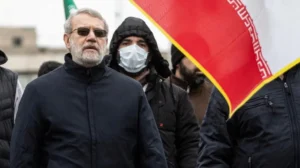
The killing of Ali Larijani sent shockwaves through Iran and the international community. Iran’s Supreme National Security Council confirmed the assassination of its secretary, Larijani, in a statement carried by Iran’s semi-official Mehr news. The statement read: “After a lifetime of striving for the elevation of Iran and the Islamic Revolution, he finally reached his long-cherished wish, answered the call of truth, and proudly attained the blessed rank of martyrdom.”
Iran’s Supreme National Security Council confirmed that Larijani was killed along with his son Morteza and the head of his office, Alireza Bayat, as well as several guards.
Simultaneously, the Islamic Revolutionary Guard Corps confirmed the death of Gholamreza Soleimani, head of the Basij volunteer paramilitary force — the internal militia Iran uses to suppress civilian protests — in a statement posted on Telegram by the semi-official Fars News Agency.
Larijani is the highest-ranking Iranian official killed in US-Israeli attacks on Iran since former Iranian Supreme Leader Ayatollah Ali Khamenei was assassinated on the first day of the war on February 28. He was a towering figure in the Islamic Republic’s power structure. Larijani had been a key political figure in the Iranian hierarchy for years, at one time leading the nation’s nuclear negotiations with the West, and had previously served as speaker of the Iranian parliament.
Larijani was seen as the right-hand man of Iran’s late supreme leader, Ayatollah Ali Khamenei. Since Khamenei’s death, Iran has retaliated by attacking its Gulf neighbors and targeting ships trying to pass through the strategically vital Strait of Hormuz.
Larijani had been a defiant voice since the war began. Just a week before his death, he warned President Trump that the Iranian people “do not fear your empty threats; even those greater than you have failed to erase them… so beware lest you be the ones who disappear.”
Israel’s Response: “Leaders of the Regime Are Being Killed”
Israeli leaders made no effort to conceal their satisfaction at the assassinations. Israeli Defence Minister Israel Katz said that “the leaders of the regime are being killed and their capabilities terminated.”
Netanyahu’s office posted a photo on social media of the Israeli leader on the phone, with a message saying only: “Prime Minister Benjamin Netanyahu orders the elimination of senior Iranian regime officials.”
Netanyahu framed the killings within a broader regime-change strategy. He said Israel was “determined” to win and urged listeners to “ignore voices of discouragement,” claiming Israel was “achieving historic accomplishments.” He added that overthrowing the clerical authorities would “not happen all at once” and “will not be easy,” but insisted that persistent pressure would “give them the opportunity to take their destiny into their own hands.”
Analysts, however, were skeptical. Mohamad Elmasry, professor at the Doha Institute for Graduate Studies, said the US and Israel were playing a “game of Whac-A-Mole” as they target Iranian leaders, noting there is “always another leader” and that the killings were unlikely to cause a collapse of the Iranian regime.
Iran’s Vow of Retribution: “Decisive and Regrettable”
Tehran wasted no time in promising revenge. Iran’s army commander-in-chief, Maj. Gen. Amir Hatami, declared that Iran’s response to Larijani’s death would be “decisive and regrettable,” adding that “the blood of this exalted martyr and other esteemed martyrs will be avenged.”
Maj. Gen. Ali Abdollahi, commander of Iran’s Khatam al-Anbiya Central Headquarters, said US President Donald Trump “must wait for our surprises” and that the armed forces’ response would be “more devastating than the actions and imagination of the enemy, and this path will continue until his surrender.”
Iran’s Islamic Revolutionary Guard Corps said its missiles had hit more than 100 military and security targets in Israel as “revenge” for the killing of Larijani, his son and aide.
The IRGC commander of Iran’s Aerospace Force announced a “rapid strike,” saying “tonight, the enemy’s sky will become more spectacular for you,” according to Iranian state media.
Two Killed in Israel, Funerals Held in Tehran
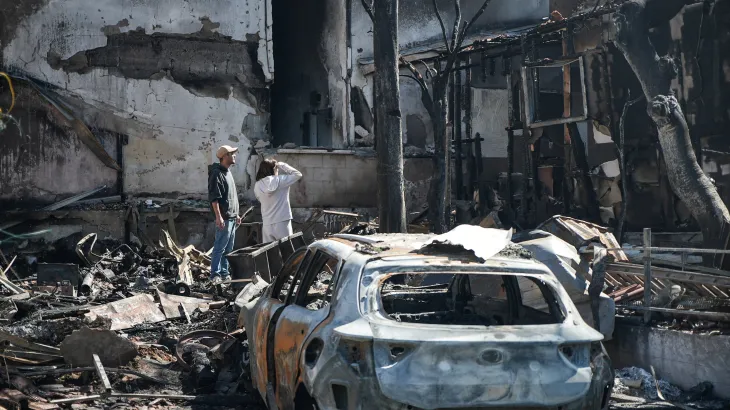
A barrage of Iranian missiles killed two people near Israel’s commercial hub Tel Aviv, while Gulf nations intercepted rockets and drones headed for targets including US bases in the region.
Two people were killed in central Israel on Wednesday morning after an Iranian missile strike. Iranian Foreign Minister Abbas Araghchi insisted that despite the wave of assassinations, Tehran’s political system remains strong and the assassination of its leaders will not set the country back
Iran held funerals Wednesday for Larijani and Gholamreza Soleimani, according to the Fars and Tasnim news agencies. Crowds of mourners gathered in Tehran as the Iranian state prepared for a day of national grief mixed with calls for revenge.
The Broader War: 18 Days of Destruction
The assassinations of Larijani and Soleimani are the latest chapter in a conflict that erupted on February 28, 2026. The current conflict has spread across at least a dozen countries, closed the Strait of Hormuz — the world’s major oil artery — and killed more than 2,300 people in the region.
At least 1,444 people have been killed and 18,551 injured by US-Israeli attacks on Iran since February 28, according to Iran’s Health Ministry. The toll on military personnel has been even higher. On March 14, the Hengaw Organization for Human Rights estimated that more than 4,400 members of Iranian military forces had been killed in the attacks.
The deadliest single incident of the war occurred in the city of Minab in southeastern Iran, where a strike on an elementary girls’ school killed more than 170 people, most of them schoolgirls.
According to the World Health Organization, at least 18 hospitals and health facilities have been hit.
At least 15 Israelis have been killed and more than 3,369 others wounded in Iranian attacks. The Pentagon says more than 200 US service members have been injured in the Middle East during the war, and 13 have been killed.
Mojtaba Khamenei was elected on March 8, 2026 to replace his father as supreme leader, and the IRGC as well as Iran’s top leaders pledged their allegiance to him. Trump called the new supreme leader “lightweight” and threatened that he would not last long without his approval.
US Embassy in Baghdad Targeted
Adding to the regional chaos, the US Embassy in Baghdad was targeted in another attack. Photos showed a large fire in the embassy’s compound. Two Iraqi security officials told the Associated Press that a drone crashed inside the embassy’s compound and two others were shot down by the embassy’s defense system.
The attack underscored the extent to which Iran-aligned proxy forces across the region continue to act in coordination with Tehran’s broader retaliatory strategy.
Lebanon: Ground Invasion Begins, Lebanese Soldier Killed
The war’s tentacles have reached Lebanon. On March 17, Israel launched a ground invasion of southern Lebanon. Israel’s defense minister said the operation would be similar to the Gaza war and suggested Israel could occupy some Lebanese territory indefinitely.
The Lebanese Army said Tuesday that one of its soldiers was killed and four others wounded as the result of a “hostile Israeli raid” in the south of the country. The troops were traveling in a car and on a motorcycle when they came under fire.
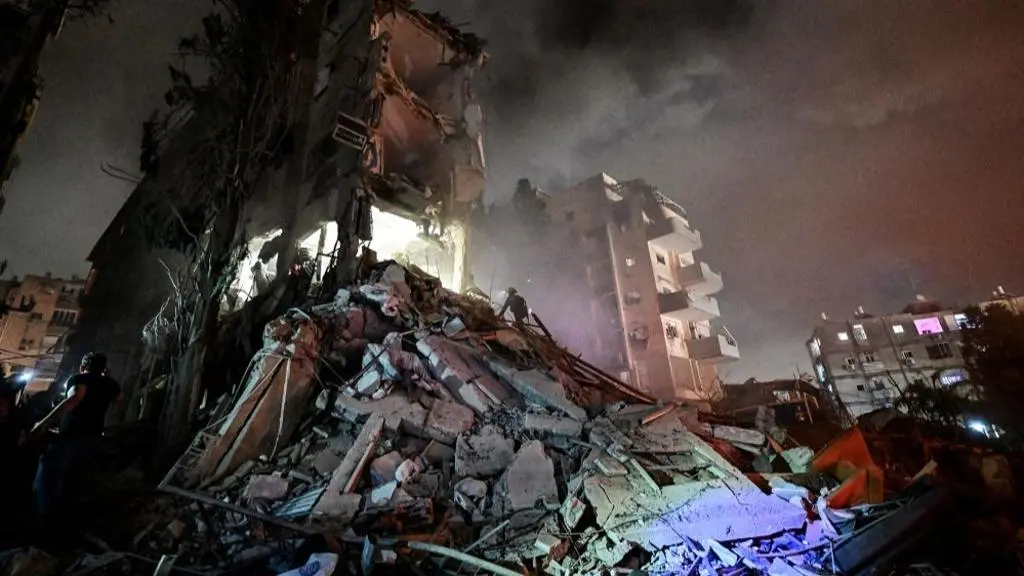
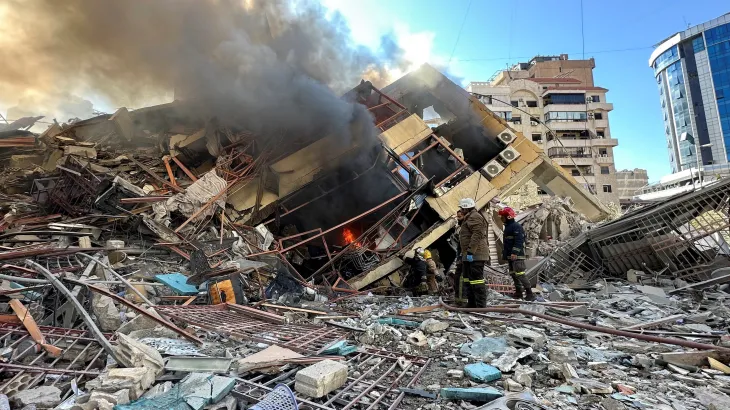
At least 17 people were killed and dozens injured by Israeli strikes across Lebanon on Tuesday night. In Beirut’s capital, six people were killed and 24 injured in two Israeli strikes, according to Lebanon’s Ministry of Public Health.
A joint statement from Canada, France, Germany, Italy, and the UK said such an operation in Lebanon should be avoided.
Gulf States on High Alert
Iran has expanded its retaliatory strikes well beyond Israel. Bahrain, Qatar, the UAE, and Saudi Arabia have all reported intercepting missiles and drones Al Jazeera fired by Iran as part of its broader retaliation strategy.
Kuwait’s Ministry of Defense said that over the last 24 hours, Kuwait’s air defenses had detected two ballistic missiles and 13 drones inside the country’s airspace. Two minor injuries were recorded as a result of falling debris.
The Strait of Hormuz and the Global Economy
Iran’s effective closure of the Strait of Hormuz — through which roughly a fifth of the world’s oil supply passes — has sent shockwaves through the global economy. Iranian attacks have kept crude oil prices hovering around $100 a barrel and US gas prices on the rise.
The Iran war could escalate further as President Trump has threatened to hit key oil infrastructure if Tehran doesn’t drop its chokehold on the Strait of Hormuz.
Trump struck a combative tone toward allies who declined to help. Trump struck a defiantly isolationist tone on Tuesday as US allies declined his calls to deploy military forces to help secure the Strait of Hormuz, which Iran has virtually closed to shipping traffic in retaliation for the war.
US Internal Dissent: Counterterrorism Director Resigns
The war has exposed deep cracks within the Trump administration itself. Joe Kent, the director of the National Counterterrorism Center, a retired Green Beret and longtime supporter of President Donald Trump, resigned over the war with Iran, saying the country “posed no imminent threat to our nation.” Trump slammed Kent, calling him “weak on security.”
Stay updated on the official Islamabad schools Eid holidays 2026 to plan your family vacation.
National Intelligence Director Tulsi Gabbard said that Trump made the call that Iran posed an imminent threat to the US, stating that Trump, as commander in chief, “is responsible for determining what is and is not an imminent threat.”
Weapons and Warfare: A Multi-Dimensional Conflict
The US has employed Tomahawk cruise missiles from Navy destroyers in the Arabian Sea. It has also deployed the Precision Strike Missile (PrSM) for the first time, as well as the Low-Cost Uncrewed Combat Attack System (LUCAS), a drone modeled on Iran’s Shahed. Additionally, MQ-9 Reaper drones as well as F/A-18 and F-35 aircraft have been used.
Iran, on the other hand, is using a trifecta of short- and medium-range ballistic missiles and one-way attack drones. Cheap, mass-produced Shahed drones have made it difficult for radar to spot them due to their ability to fly at low altitude.
“You can catch the latest matches on Sportsurge Live for real-time updates.”
By the tenth day of the war, Iran had fired a total of 300 missiles at Israel, of which nearly half had cluster submunitions, which can spread dozens of explosive warheads over a radius of 10 kilometres — a practice banned by the Convention on Cluster Munitions, an international treaty signed by more than 100 nations, but not Iran.
What Comes Next
The killing of Larijani and Soleimani has dramatically raised the stakes in an already catastrophic conflict. Iran’s promise of decisive retaliation, Israel’s continuing ground operations in Lebanon, the paralysis of the Strait of Hormuz, and the spread of proxy attacks across the Gulf all point toward an escalation that shows no diplomatic off-ramp in sight.
Larijani is the most prominent figure of the Islamic Republic killed since Israel and the United States launched their attacks on Iran on February 28 and killed Supreme Leader Ayatollah Ali Khamenei, igniting a war in the Middle East. His death, alongside Soleimani’s, represents a systematic decapitation of Iran’s leadership — a strategy Israel and the US are pursuing even as analysts warn it may only deepen Iranian resolve rather than break it.
As Tehran buries its dead on Wednesday, the region braces for what Iran’s military has promised will be a retaliatory wave beyond anything the enemy can imagine.